

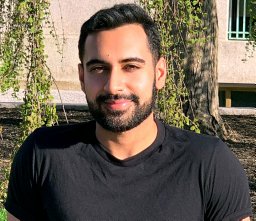
 Zaid Khan
· 5 previous affiliations
- Research Assistant (Machine Learning / NLP / Computer Vision) · Since 2024
- Current
- Doctor of Philosophy - PhD, Computer Science · 2024
- Research Scientist Intern · 2024
- NEC (United States)2022–2024
- Machine Learning Researcher · 2022–2024
- Northeastern University2020–2023
- Master of Science - MS, Computer Engineering · 2020–2023
- Research Assistant (Computer Vision) · 2020–2022
- Roadie2019–2020
- Data Engineer · 2019–2020
Research Overview
Zaid Khan focuses on multimodal agents, vision-language pretraining, and automated data generation for reasoning models. His earlier work explored parameter-efficient transfer learning and self-training strategies to align visual and textual representations under data scarcity. Recently, his research has shifted toward developing neurosymbolic world models and process reward systems that enable agents to navigate complex, long-horizon environments.
Research Trajectory
Khan's early research addressed multimodal classification and representation learning. He participated in the 5th Edition of the Recognizing Families In the Wild challenge, contributing to automated kinship recognition and tri-subject matching in Recognizing Families In the Wild (RFIW): The 4th Edition. He subsequently investigated multimodal target sentiment classification, introducing a two-stream model that translates images in input space using an object-aware transformer to better understand sentiment toward specific entities in Exploiting BERT for Multimodal Target Sentiment Classification through Input Space Translation.
In 2022, his focus expanded to the fundamental properties of representation learning and vision-language pretraining. He examined the behavior of representations learned from long-tailed data distributions, demonstrating that these representations are often brittle and fail to localize tail-class features compared to balanced distributions in Where is the bottleneck in long-tailed classification?. Concurrently, he developed SIMLA, an asymmetric single-stream architecture for vision-language pretraining that aligns images and text at global, local, and conceptual levels in Single-Stream Multi-level Alignment for Vision-Language Pretraining. This work advanced the broader research direction of Cross-Modal Masked Reconstruction by achieving high performance on retrieval and grounding tasks with greater data efficiency than massive models.
Continuing his work on vision-language models (VLMs), Khan explored methods to adapt and align these models under resource constraints. He investigated parameter-efficient contrastive alignment, showing how to update a small number of parameters in pre-trained unimodal encoders for latency-sensitive applications in Contrastive Alignment of Vision to Language Through Parameter-Efficient Transfer Learning. To address data scarcity in specialized domains, he introduced a self-training framework that leverages unlabeled images to generate question-answer pairs, improving VQA robustness without human annotation in Q: How to Specialize Large Vision-Language Models to Data-Scarce VQA Tasks? A: Self-Train on Unlabeled Images!. He also sought to improve the reasoning capabilities of VLMs by allowing them to dynamically break down complex problems. In Exploring Question Decomposition for Zero-Shot VQA, he proposed a selective decomposition strategy where models generate sub-questions when uncertain. This approach contributed to several research areas, including Breaking the Single Pass Bottleneck in Visual Reasoning, Compositional Generalization in Vision Language Models, and Input Adaptive Compute Allocation for Language Models.
As VLMs became more powerful but increasingly deployed as opaque systems, Khan addressed their reliability. He proposed a neighborhood-based approach for selective prediction in black-box vision-language models, enabling them to abstain from answering when uncertain in Consistency and Uncertainty: Identifying Unreliable Responses From Black-Box Vision-Language Models for Selective Visual Question Answering. His research then transitioned toward agentic systems and automated data generation. He developed a testbed for data-generation agents and teaching environments in DataEnvGym: Data Generation Agents in Teacher Environments with Student Feedback, aiming to automate the discovery of model weaknesses and the synthesis of corrective training data. He also collaborated on generative process reward models to guide AI agents through multi-step tasks in PRInTS: Reward Modeling for Long-Horizon Information Seeking. This work intersected with the research directions of Scaling Test-Time Compute via Candidate Selection and Context Compression via Recursive State Summarization.
Most recently, Khan has focused on enabling agents to understand and plan within complex, stochastic environments. In One Life to Learn: Inferring Symbolic World Models for Stochastic Environments from Unguided Exploration, he introduced methods for agents to infer probabilistic, symbolic world models—effectively learning the underlying rules of an environment on the fly to survive and plan without prior guidance.
Current Directions
Recent work investigates the development of autonomous agents capable of long-horizon reasoning and self-improvement in complex environments. The most recent papers in the evidence address the challenge of inferring symbolic world models from unguided exploration, allowing agents to deduce the probabilistic rules of stochastic settings on the fly. Additionally, current research explores automated data generation pipelines where agents act as teachers, synthesizing training data based on student model feedback to systematically address model weaknesses. This is complemented by the design of process reward models that utilize information gain scoring and trajectory summarization to guide smaller models through multi-step information-seeking tasks.
Profile updated
Loading new papers…
Other researchers whose papers cluster into the same research directions — a proxy for overlapping technical interests and shared intellectual neighborhoods.
See something wrong? Report a mistake