

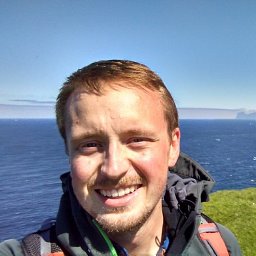
 Zachary Sunberg
· 6 previous affiliations
- University of Colorado BoulderSince 2019
- Assistant Professor · Since 2019
- University of California, Berkeley2018–2019
- Postdoctoral Scholar · 2018–2019
- Postdoc · 2018–2019
- Stanford University2013–2018
- Graduate Research Assistant · 2013–2018
- Software Engineering Intern · 2014
- Texas A&M University2007–2013
- Research Assistant · 2011–2013
- Undergrad student · 2007–2011
Research Overview
Zachary Sunberg focuses on decision-making under uncertainty, partially observable Markov decision processes (POMDPs), and sampling-based motion planning. His trajectory spans from early work in approximate dynamic programming for autonomous collision avoidance to foundational theoretical guarantees for online tree search algorithms in continuous spaces. Recently, his research emphasizes scaling Monte Carlo planning and heuristic search methods to handle complex, high-dimensional observation and action spaces.
Research Trajectory
Sunberg’s early research concentrated on applied decision-making and control for autonomous systems operating under uncertainty. As the first author of Optimized and Trusted Collision Avoidance for Unmanned Aerial Vehicles using Approximate Dynamic Programming (2016), he developed an offline simulation-based method to dynamically adapt resolution logic parameters for UAVs based on encounter states. This early focus on handling uncertainty in physical systems naturally led to his involvement in the broader area of Search and Planning in Continuous Action Spaces, where he began exploring how agents can simultaneously perform estimation and control tasks.
By 2020, acting as a principal investigator, Sunberg shifted toward providing rigorous theoretical foundations for online sampling-based algorithms. A major challenge in POMDPs is the intractability of continuous state and observation spaces. In Sparse Tree Search Optimality Guarantees in POMDPs with Continuous Observation Spaces (2020), his group proved that partially observable weighted sparse sampling (POWSS) accurately estimates Q-values with high probability. This work offered a formal theoretical justification for observation likelihood weighting, a technique that had shown practical success but lacked rigorous backing.
Building on these optimality guarantees, Sunberg expanded his focus to continuous and hybrid action spaces, contributing significantly to the research direction of Progressive Widening for Search in Continuous Action Spaces. The 2021 paper Voronoi Progressive Widening: Efficient Online Solvers for Continuous State, Action, and Observation POMDPs introduced a generalization of Voronoi optimistic optimization to POMDPs. This algorithm efficiently balanced local and global action searching and provided the first global convergence guarantees for continuous state, action, and observation POMDPs.
Sunberg’s lab continued to formalize the approximation errors inherent in particle filtering techniques used by online solvers. Generalized Optimality Guarantees for Solving Continuous Observation POMDPs through Particle Belief MDP Approximation (2022) established bounds on the error between a true POMDP and its corresponding finite sample approximation. Concurrently, he collaborated on applying these probabilistic frameworks to kinodynamic constraints. As a co-author on Gaussian Belief Trees for Chance Constrained Asymptotically Optimal Motion Planning (2022), he helped extend traditional tree-based planners into the belief space for linearizable systems, preserving asymptotic optimality while accounting for motion and measurement uncertainty.
Moving toward adversarial and nondeterministic environments, Sunberg co-authored Sampling-based Reactive Synthesis for Nondeterministic Hybrid Systems (2023). This work modeled the evolution of hybrid systems as a two-player game, combining sampling-based motion planning with bandit-based tree search to synthesize robust strategies that satisfy temporal and reachability goals despite adversarial nondeterminism.
Current Directions
The most recent papers in the evidence indicate a continued focus on scaling POMDP solvers to handle increasingly complex, high-dimensional state, action, and observation spaces. Recent collaborative work investigates the integration of offline generative models with online Monte Carlo tree search to manage high-dimensional image observations in visual POMDPs, bypassing the need for lengthy online training.
Additionally, Sunberg is participating in research on undiscounted POMDPs with reachability objectives, exploring heuristic search value iteration for model checking and maximal reachability probability problems. His latest efforts also address the efficiency of action sampling in progressive widening; recent work utilizes Bayesian optimization to model beliefs over action-value functions, aiming to improve the scalability and performance of Monte Carlo planning in domains with exceptionally large action spaces.
Profile updated
Loading new papers…
Other researchers whose papers cluster into the same research directions — a proxy for overlapping technical interests and shared intellectual neighborhoods.
See something wrong? Report a mistake