

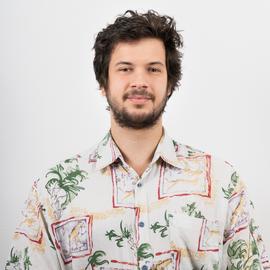
 Zaccharie Ramzi
· 10 previous affiliations
- Meta (United States)Since 2023
- Researcher · Since 2023
- AI Research Scientist · 2023–2025
- Mistral AI (France)Since 2025
- AI Scientist · Since 2025
- Current
- Postdoctoral Researcher · 2022–2023
- École Normale Supérieure - PSL2022–2023
- Postdoc · 2022–2023
- PhD student · 2019–2022
- PhD student · 2019–2022
- xbird GmbH2017–2018
- Data Scientist · 2017–2018
- MS student · 2016–2017
- ENS Paris-Saclay2016–2017
- Master 2 (M2), Mathématiques appliquées · 2016–2017
- Télécom Paris2013–2016
- MS student · 2013–2016
Research Overview
Zaccharie Ramzi focuses on solving inverse problems in medical imaging, developing implicit deep learning models, and building robust optimization frameworks. His early work explored the intersection of sparsity-based methods and neural networks for magnetic resonance imaging reconstruction. More recently, he investigates memory-efficient training techniques for implicit models and reproducible benchmarking for machine learning optimization.
Research Trajectory
The trajectory begins around 2020, heavily focused on inverse problems, particularly in the context of medical imaging and magnetic resonance imaging (MRI) reconstruction. A central theme of this early work is the tension and potential synergy between traditional sparsity-based methods and modern deep learning techniques. In Wavelets in the Deep Learning Era, he explored how the limits of classical sparsity approaches could be pushed by incorporating learning mechanisms, comparing these hybrid strategies against highly non-linear neural network architectures like U-nets.
Concurrently, he developed novel probabilistic approaches to these reconstruction challenges. He introduced a Bayesian framework in Denoising Score-Matching for Uncertainty Quantification in Inverse Problems, which leverages deep neural networks to learn prior distributions. By combining denoising score-matching with annealed Hamiltonian Monte Carlo sampling, this method not only achieves high-quality MRI reconstructions but also provides crucial uncertainty quantification for the resulting images. During this period, he also contributed to broader tooling for the imaging community, participating in the development of PySAP: Python Sparse Data Analysis Package for multidisciplinary image processing. This open-source framework facilitates compressed sensing and image reconstruction, supporting work in the broader area of Reconstructing High Resolution Medical Images from Accelerated Scans.
Continuing this focus on clinical imaging applications, he was involved in the large-scale evaluation of reconstruction models through the Results of the 2020 fastMRI Challenge for Machine Learning MR Image Reconstruction. This collaborative effort assessed various machine learning models designed to accelerate MRI scans by reconstructing clinical brain images from subsampled k-space data, with a specific emphasis on preserving pathological features.
By 2022, the research expanded to address foundational challenges in machine learning optimization and model architecture. He participated in the creation of Benchopt: Reproducible, efficient and collaborative optimization benchmarks, an open-source platform designed to automate and standardize the evaluation of optimization algorithms. This work helps mitigate reproducibility issues and addresses challenges related to the research direction of Cross-Framework Discrepancies in Deep Learning.
In parallel, he advanced the training methodologies for implicit deep learning models. In SHINE: SHaring the INverse Estimate from the forward pass for bi-level optimization and implicit models, he tackled the computational bottlenecks associated with these architectures. While implicit models offer memory-efficient ways to increase network depth, their training is notoriously slow. This work introduced techniques to accelerate bi-level optimization, making significant contributions to several distinct research areas: Jacobian Free Backpropagation for Implicit Models, Mitigating Iterative Solver Latency in Implicit Networks, and Warm Starting for Accelerated Iterative Optimization.
Current Directions
The most recent papers in the evidence, dating to 2022, indicate a shift toward the foundational mechanics of deep learning optimization and implicit model architectures. Recent work investigates methods to accelerate the training of memory-efficient implicit networks, focusing on bi-level optimization and inverse estimation techniques. Additionally, there is a strong emphasis on improving the rigorous evaluation of machine learning algorithms through standardized, reproducible benchmarking platforms.
Profile updated
Loading new papers…
Other researchers whose papers cluster into the same research directions — a proxy for overlapping technical interests and shared intellectual neighborhoods.
See something wrong? Report a mistake