

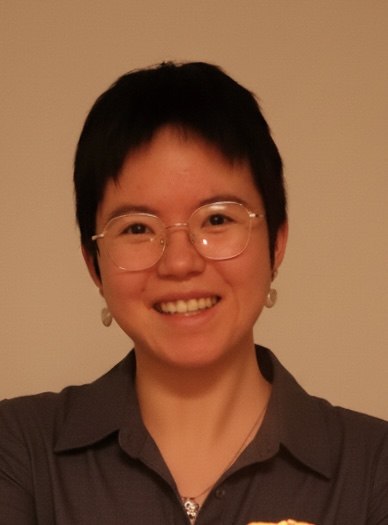
 Yuyou Zhang
· 4 previous affiliations
- Carnegie Mellon UniversitySince 2022
- PhD student · 2022–2027
- Current
- waymoSince 2026
- Phd intern · Since 2026
- Research Intern · 2024
- Shanghai Jiao Tong University2018–2022
- Student Researcher · 2020–2022
- Bachelor of Engineering - BE, Mechatronics, Robotics, and Automation Engineering · 2018–2022
Research Overview
Yuyou Zhang focuses on embodied artificial intelligence, spatial reasoning in vision-language models, and the safety alignment of large language models. His trajectory spans from early work in the visual control of soft and deformable robots to the development of robust quadrupedal locomotion systems. Currently, he investigates reasoning-based safety mechanisms for foundation models and perspective-aware spatial understanding in multimodal systems.
Research Trajectory
Zhang’s early research concentrated on the complex dynamics of soft robotics and deformable object manipulation. In 2022, he developed an adaptive image-based visual servoing algorithm to achieve precise shape control of cable-driven soft manipulators in unstructured environments, detailed in Adaptive Visual Servoing Shape Control of a Soft Robot Manipulator Using Bézier Curve Features. To bridge the simulation-to-reality gap in these complex systems, he introduced a hybrid learning framework that combined the global reasoning of graph neural networks with the real-time adaptability of linear residual models in Offline-Online Learning of Deformation Model for Cable Manipulation With Graph Neural Networks. This work advanced the area of Learning Representations for Deformable Object Manipulation by enabling precise control without requiring pre-collected real-world data. Collaborative work during this period further explored optimization-based strategies for non-fixed contact manipulation in Vision-Based Contact Point Selection for the Fully Non-Fixed Contact Manipulation of Deformable Objects and designed new control schemes for constrained environments in Hybrid Adaptive Vision-Force Control Under the Bottleneck Constraint.
Expanding his focus to versatile embodied agents, Zhang explored scalable control policies for articulated and legged robots. He contributed to the development of modular policies for complex morphologies in COMPOSER: Scalable and Robust Modular Policies for Snake Robots. Moving to quadrupedal systems, he designed a risk-adaptive reinforcement learning framework that dynamically adjusts risk preferences based on environmental uncertainty, enabling quadrupedal robots to walk on their hind legs and perform complex manipulation tasks, as presented in Bipedalism for Quadrupedal Robots: Versatile Loco-Manipulation Through Risk-Adaptive Reinforcement Learning. He also contributed to a novel framework allowing quadrupedal robots to dynamically adjust their locomotion noise levels without retraining in QuietPaw: Learning Quadrupedal Locomotion with Versatile Noise Preference Alignment, achieving a superior trade-off between agility and quiet operation in human-centric environments.
In parallel with his robotics research, Zhang has made significant contributions to the safety and reasoning capabilities of foundation models. In Safety is Not Only About Refusal: Reasoning-Enhanced Fine-tuning for Interpretable LLM Safety, he developed the RATIONAL framework, which trains models to perform explicit ethical reasoning rather than relying on shallow keyword refusal. This work advances the broader area of Deep Safety Alignment through Introspective Reasoning, alongside related research directions such as The Erosion of Safety Guardrails in Multi-Turn Dialogue and Mitigating the Inference Latency of Chain of Thought. He also participated in research addressing the challenge of Reasoning Fragility to Irrelevant Context, helping to introduce symmetry-enhanced data augmentation techniques that improve reasoning consistency when models face structural variations in prompts in Your Language Model May Think Too Rigidly: Achieving Reasoning Consistency with Symmetry-Enhanced Training.
Most recently, Zhang’s work has bridged multimodal reasoning with complex spatial and physical environments. He oversaw the development of a multi-agent framework that leverages multi-modal large language models to transform real-world crash reports into executable simulation scenarios in CrashAgent: Crash Scenario Generation via Multi-modal Reasoning, contributing to the domain of Realistic Adversarial Scenario Generation for Autonomous Vehicles. Investigating the fundamental spatial cognition of these models, he proposed a cognitively-inspired benchmark in SpinBench: Perspective and Rotation as a Lens on Spatial Reasoning in VLMs. This work evaluates 3D rotation and perspective-taking in vision-language models, revealing persistent egocentric biases in state-of-the-art systems and highlighting critical gaps in how artificial intelligence understands physical space. Turning to how vision-language models maintain memory in dynamic physical settings, Zhang co-developed RoboLiveMem: Is Robot Memory Solved When the World Does Not Wait?, a benchmark comparing robotic memory tasks under paused versus continuously running environments to reveal performance drops and temporal misalignments caused by real-time world changes.
Current Directions
Recent work investigates the intersection of spatial cognition, model safety, and embodied intelligence. A primary focus is on enhancing the spatial reasoning capabilities of vision-language models, specifically addressing their limitations in perspective-taking and 3D rotation to build systems that understand environments beyond an egocentric viewpoint. Concurrently, Zhang is advancing the interpretable safety alignment of large language models. Rather than relying on rigid refusal mechanisms, this research emphasizes deliberative, reasoning-based approaches that allow models to evaluate intent and ethics dynamically. Finally, his work continues to explore the application of multimodal reasoning to real-world physical challenges, from evaluating real-time robot memory in dynamic environments to developing versatile, risk-aware control policies for legged robots.
Profile updated
Loading new papers…
Other researchers whose papers cluster into the same research directions — a proxy for overlapping technical interests and shared intellectual neighborhoods.
See something wrong? Report a mistake