

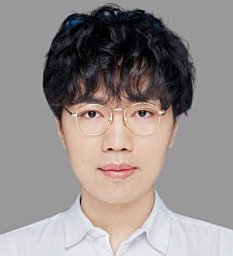
 Yuyang Ye
· 6 previous affiliations
- ByteDance (China)Since 2025
- Researcher · Since 2025
- TikTokSince 2025
- Research Scientist · Since 2025
- Researcher · Since 2026
- MS student · 2017–2020
- Undergrad student · 2013–2017
- Graduate Research Assistant · 2020–2025
- Adjunct Lecturer · 2024–2025
- Baidu (China)2018–2024
- Research Intern · 2024
- Research Intern · 2018–2021
- Research Intern · 2023
Research Overview
Yuyang Ye focuses on data mining, large language models, and reinforcement learning, with a particular emphasis on their applications in recommendation systems and industrial optimization. His research trajectory spans from early work in dynamic social profiling and graph learning to recent developments in multimodal fusion and generative recommendation architectures. Currently, he investigates the scaling laws and efficient integration of large language models for real-time, interactive recommendation environments.
Research Trajectory
Ye's early research explored predictive modeling and data mining across diverse domains. He contributed to Mutual Reinforcement of Academic Performance Prediction and Library Book Recommendation, which linked student habits to academic outcomes. Expanding into legal analytics, he participated in developing a hybrid deep learning framework in Patent Litigation Prediction: A Convolutional Tensor Factorization Approach, capturing technical content and historical competitive interactions. He then led work on human resource analytics, introducing a neural network-based dynamic social profiling approach to quantitatively identify high-potential employees in Identifying High Potential Talent: A Neural Network Based Dynamic Social Profiling Approach.
Between 2022 and 2024, his focus expanded to complex network structures and collaborative filtering. He participated in research on implicit feedback mechanisms in Collaborative List-and-Pairwise Filtering From Implicit Feedback. Addressing the multiplex nature of workplace communication, he developed MANE: Organizational Network Embedding With Multiplex Attentive Neural Networks to model the semantic and structural complexities of organizational networks. He applied similar graph-based methodologies to educational data, proposing a data-driven approach in University Evaluation Through Graduate Employment Prediction: An Influence Based Graph Autoencoder Approach. Concurrently, he explored reinforcement learning for industrial sustainability, developing PAIL: Performance based Adversarial Imitation Learning Engine for Carbon Neutral Optimization to optimize sequential processes without requiring predefined reward functions.
A significant portion of Ye's recent trajectory involves multimodal learning and its integration into recommendation systems. He contributed to Tackling Uncertain Correspondences for Multi-Modal Entity Alignment. To address the unreliability of real-world sensor data, he co-developed Decoupling and Reconstructing: A Multimodal Sentiment Analysis Framework Towards Robustness, advancing the research direction of Cross Modal Hallucination for Robust Multimodal Learning and the broader area of Disentangling Shared and Specific Features in Multimodal Learning. In the healthcare domain, he helped design SAFER: A Calibrated Risk-Aware Multimodal Recommendation Model for Dynamic Treatment Regimes, a framework that combines structured patient data with unstructured clinical notes while using conformal prediction to ensure statistical safety guarantees. He further extended multimodal capabilities to sequential recommendations in Harnessing Multimodal Large Language Models for Multimodal Sequential Recommendation, addressing the challenges of fusing image and text modalities within LLM-based paradigms.
Most recently, Ye has focused on the efficiency and scaling of large recommendation models. He participated in the design of BlossomRec: Block-level Fused Sparse Attention Mechanism for Sequential Recommendations, which utilizes a novel sparse attention mechanism to reduce memory usage and accelerate inference for long sequences. He also contributed to FuXi-β: Towards a Lightweight and Fast Large-Scale Generative Recommendation Model, an architecture that replaces standard query-key attention maps to improve performance and training speed. This work aligns with his contributions to the research direction of Efficient LLM Integration for Real Time Recommendation. Exploring interactive systems, he collaborated on Thought-Augmented Planning for LLM-Powered Interactive Recommender Agent, a multi-agent framework designed to handle complex user queries. Finally, he contributed to Scaling New Frontiers: Insights into Large Recommendation Models, which investigates the area of Scaling Laws for Generative Recommendation and the transition in the field of Multimodal Feature Fusion for Recommender Systems.
Current Directions
The most recent papers in the evidence indicate a strong focus on the intersection of large language models and recommendation systems. Recent work investigates the architectural efficiency of generative recommendation models, exploring sparse attention mechanisms and attention-free token mixers to handle long user sequences in real-time environments. Additionally, there is an ongoing emphasis on multimodal fusion, specifically adapting large language models to process both structured behavioral data and unstructured modalities like text and images. This includes developing multi-agent systems for interactive recommendations and analyzing the scaling laws that govern dense parameter performance in complex user behavior modeling.
Profile updated
Loading new papers…
Other researchers whose papers cluster into the same research directions — a proxy for overlapping technical interests and shared intellectual neighborhoods.
See something wrong? Report a mistake