

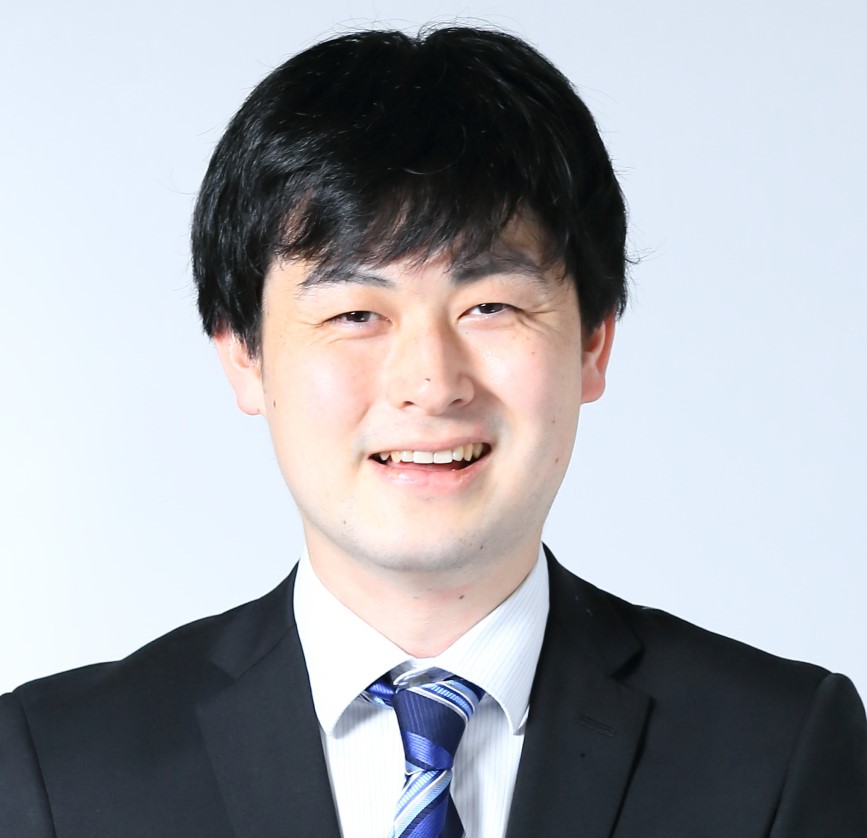
 Yuya Hikima
· 4 previous affiliations
- Institute of Science TokyoSince 2026
- Assistant Professor · Since 2026
- Current
- The University of Tokyo2022–2026
- PhD student · 2022–2026
- NTT (Japan)2018–2026
- Researcher · 2023–2026
- Researcher · 2018–2023
- 研究員
- Kyoto University2012–2018
- MS student · 2016–2018
- Undergrad student · 2012–2016
Research Overview
Yuya Hikima focuses on mathematical optimization and its applications to pricing, transportation, and resource allocation. His early work addressed stochastic matching and utility-aware dispatching in ride-hailing systems, gradually expanding to broader combinatorial optimization challenges. Recently, his research investigates zeroth-order methods and decision-dependent uncertainty, tackling performative distribution shifts in machine learning and complex black-box systems.
Research Trajectory
Yuya Hikima’s research arc begins with applied optimization problems in transportation and platform economics, specifically focusing on how to better align pricing and dispatching mechanisms with user behavior. In 2021, he introduced Price and Time Optimization for Utility-Aware Taxi Dispatching, which formulated a new optimization problem for taxi services. Recognizing that existing data-driven dispatch systems often ignored individual trade-offs between time and money, he incorporated transportation economics models of acceptance probability to generate personalized price and time proposals. He expanded on this framework the following year with Price and Time Proposal Optimization for Ride-Hailing Services Based on Individual Utilities, further demonstrating how matching algorithms that account for individual priorities can improve both requester utility and provider profit.
Concurrently, Hikima began investigating the theoretical underpinnings of stochastic matching when the underlying probabilities are not fixed. In Integrated Optimization of Bipartite Matching and Its Stochastic Behavior: New Formulation and Approximation Algorithm via Min-cost Flow Optimization, he addressed matching services where "control variables" can influence edge probabilities, formulating an optimization problem to determine these variables alongside the matching itself. He advanced this line of inquiry in Online Matching with Controllable Rewards and Arrival Probabilities, proposing the OM-CRA problem to simultaneously optimize matching strategies, rewards, and arrival probabilities. This work contributed significantly to the research direction of Online Resource Allocation under Non-Stationary Demand, providing solutions for environments where decision-makers must actively shape the parameters of the matching market.
By 2023, Hikima’s focus broadened to encompass general resource allocation platforms and crowd-sourcing. He developed An Improved Approximation Algorithm for Wage Determination and Online Task Allocation in Crowd-Sourcing, which provided a fast approximation algorithm to simultaneously optimize task allocation and worker wages, overcoming the myopic settings of prior methods. Continuing to bridge complex matching with scalable algorithms, he later introduced Joint Pricing and Matching for Resource Allocation Platforms via Min-cost Flow Problem. By reducing a non-convex stochastic matching problem to a convex min-cost flow problem, this work offered a fast algorithm with a guaranteed approximation ratio, advancing the broader area of Tightening Approximation Guarantees for Combinatorial Optimization.
A pivotal shift in Hikima’s trajectory occurred as he began formalizing optimization problems where the environment reacts to the decisions being made—a concept known as decision-dependent uncertainty or performative prediction. He introduced a foundational framework for this in the preprint Stochastic Approach for Price Optimization Problems with Decision-dependent Uncertainty, which was subsequently refined and published as Stochastic approach for price optimization problems with decision-dependent uncertainty. This research provided an unbiased stochastic gradient estimator with a built-in variance reduction baseline, enabling scalable price determination in non-convex scenarios where demand uncertainty shifts in response to the price itself. This body of work is a core contribution to the research direction of Optimization with Decision Dependent Uncertainty.
Because decision-dependent distributions often obscure the explicit gradient of the objective function, Hikima increasingly turned to zeroth-order optimization methods. In Zeroth-Order Methods for Nonconvex Stochastic Problems with Decision-Dependent Distributions, he addressed the limitations of existing zeroth-order techniques, which often required overly strong assumptions about the underlying functions and distributions. This work directly engaged with the area of Optimizing for Performative Distribution Shifts. He further improved upon these techniques in Guided Zeroth-Order Methods for Stochastic Non-convex Problems with Decision-Dependent Distributions, introducing a method that leverages known components of the objective function's gradient to steer the search direction. This approach significantly improved sample efficiency, contributing to the research direction of Optimization Under Performative Distribution Shifts.
Most recently, Hikima has applied these advanced zeroth-order techniques to the domain of deep learning hardware. Guiding a collaborative effort, he developed Natural Perturbations for Black-box Training of Neural Networks by Zeroth-Order Optimization. This research tackles the challenge of training neural networks on emerging hardware—such as optical neural networks and analog in-memory computing—where manufacturing variations and complex physics make standard backpropagation impossible. By utilizing zeroth-order optimization for black-box training, this work advances the research direction of High Dimensional Zeroth Order Optimization for Deep Learning.
Current Directions
The most recent papers in the evidence indicate that Hikima’s current research is heavily focused on the intersection of zeroth-order optimization, performative prediction, and machine learning. Having established robust frameworks for decision-dependent uncertainty in pricing and resource allocation, his recent work investigates how to optimize complex, non-convex systems when the data distribution shifts in response to the model's actions.
A major ongoing theme is the development of sample-efficient zeroth-order methods for environments where explicit gradients are unavailable. This includes both theoretical advancements—such as guided zeroth-order methods that utilize partial gradient information to navigate performative environments—and highly practical applications in hardware-aware machine learning. By applying these black-box optimization techniques to emerging physical neural network architectures, his current work addresses critical bottlenecks in systems where traditional backpropagation cannot be deployed.
Profile updated
Loading new papers…
Other researchers whose papers cluster into the same research directions — a proxy for overlapping technical interests and shared intellectual neighborhoods.
See something wrong? Report a mistake