

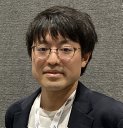
 Yusuke Kato
· 5 previous affiliations
- Panasonic (Japan)Since 2018
- Senior Engineer · Since 2022
- Researcher · Since 2018
- AI Engineer · 2020–2022
- Video Codec Engineer · 2018–2020
- Panasonic (United States)Since 2025
- Senior Engineer · Since 2025
- Panasonic North AmericaSince 2025
- Senior Enginner · Since 2025
- Kyoto University2015–2018
- Master's degree, Mathematics · 2015–2018
- The University of Tokyo2011–2015
- Bachelor's degree, Mathematics · 2011–2015
Research Overview
Yusuke Kato focuses on multimodal reasoning, advanced image segmentation, and the alignment of generative models. His collaborative work spans from hierarchical object representation to the development of vision-language models that power mobile agents and any-to-any generation. Recently, his research investigates inference-time scaling and iterative refinement for diffusion models and multimodal understanding.
Research Trajectory
Kato's early collaborative work focused on bridging the gap between region-based and object-centric computer vision models. In Refine and Represent: Region-to-Object Representation Learning, he and his co-authors developed a self-supervised pretraining method that dynamically refines simple image segments into complex object masks over the course of training. This approach advanced dense prediction tasks, such as object detection and semantic segmentation, by employing hierarchical training for coarse-to-fine representation and overcoming traditional texture biases in object segmentation.
Building on this foundation, Kato contributed to unified generalist architectures capable of handling diverse visual granularities. The 2023 paper Hierarchical Open-vocabulary Universal Image Segmentation (HIPIE) introduced a model that masters segmentation from entire scenes down to specific subparts. By separating the processing of distinct objects with defined shapes from amorphous background regions, this work made significant strides in the area of Decoupling Localization and Classification for Open Vocabulary Segmentation. Furthermore, the HIPIE framework leveraged techniques in the research direction of Bidirectional Co-Attention for Multimodal Reasoning and the broader area of Hierarchical Knowledge Transfer for Zero Shot Generalization to achieve strong zero-shot performance across numerous benchmarks.
In 2024, Kato's research expanded into the alignment and customization of generative foundation models. In Aligning Diffusion Models by Optimizing Human Utility, his collaborative efforts explored scalable alignment via automated preference feedback. This work investigated non-linear risk sensitivity to better align diffusion models with human expectations, ensuring that generated outputs more accurately reflect human utility through targeted latent adaptation.
By 2025, Kato's trajectory shifted toward complex multimodal understanding and the development of autonomous agents. He participated in the creation of MobileWorldBench: Towards Semantic World Modeling For Mobile Agents, which introduced semantic state abstraction for reinforcement learning in mobile graphical user interfaces. Rather than predicting pixel-level future screens, this research trained vision-language models to generate high-level natural language descriptions of state transitions, significantly improving mobile agent task success rates through synthetic trajectories and visual element tagging. Concurrently, Kato contributed to LaViDa: A Large Diffusion Language Model for Multimodal Understanding. This work introduced a family of vision-language models built on discrete diffusion rather than standard autoregressive generation. By moving away from left-to-right generation, LaViDa enabled massive speedups through parallel decoding and superior control over complex, bidirectional tasks like text-infilling.
The theme of iterative refinement and reasoning became a focal point in Kato's most recent collaborations. In SegLLM: Multi-round Reasoning Segmentation with Large Language Models, he and his colleagues introduced a conversational memory mechanism for interactive image segmentation. By feeding previous segmentation masks back into the reasoning engine, the model successfully handled complex, relational queries over multiple rounds of dialogue, establishing new iterative feedback loops for visual reasoning. Similarly, Reflect-DiT: Inference-Time Scaling for Text-to-Image Diffusion Transformers via In-Context Reflection applied iterative self-correction to generative systems. This research allowed Diffusion Transformers to reflect on their own mistakes with the help of a vision-language model, dramatically reducing the number of samples needed to navigate the Pareto frontier of aesthetic and semantic alignment. Finally, Kato contributed to OmniFlow: Any-to-Any Generation with Multi-Modal Rectified Flows, which advanced the rectified flow framework to handle the joint distribution of multiple modalities. This novel architecture bridged modalities through language catalysts, enabling flexible, multi-condition guidance for synergistic multimodal understanding and any-to-any generation tasks.
Current Directions
Recent work investigates the intersection of multimodal reasoning and iterative refinement in generative models. A primary focus is on scaling inference-time compute to allow models to self-correct and deliberate, as seen in recent applications of in-context reflection for Diffusion Transformers and conversational memory for segmentation tasks. Additionally, Kato's recent collaborations explore unified architectures for complex generation and understanding. This includes advancing rectified flow frameworks for any-to-any multimodal generation and shifting vision-language models toward discrete diffusion paradigms to improve parallel decoding and bidirectional control. Finally, this research extends to semantic world modeling, where vision-language models are adapted to predict high-level state transitions for autonomous mobile agents.
Profile updated
Loading new papers…
Other researchers whose papers cluster into the same research directions — a proxy for overlapping technical interests and shared intellectual neighborhoods.
See something wrong? Report a mistake