

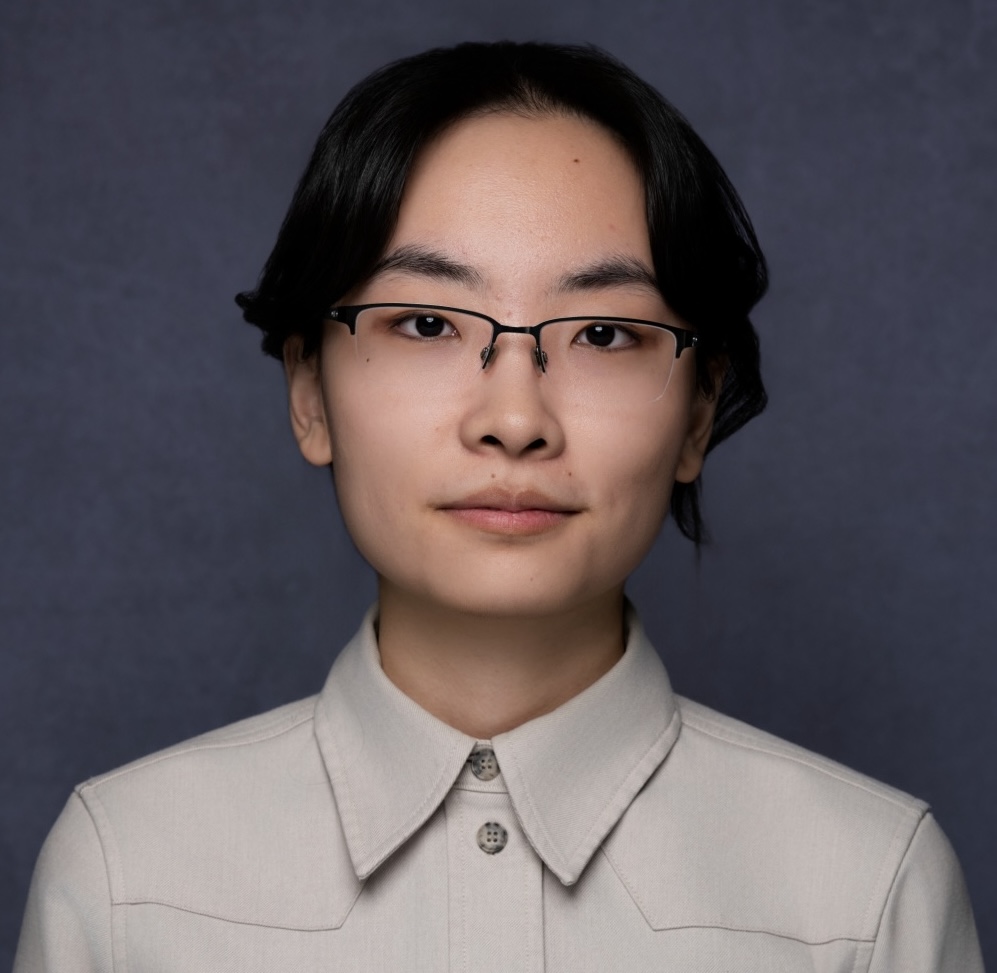
 Yuqing Wang
· 3 previous affiliations
- Johns Hopkins UniversitySince 2025
- Postdoc · Since 2025
- Postdoc · 2024
- Georgia Institute of Technology2018–2024
- PhD student · 2018–2024
10 other authors named Yuqing Wang: Yuqing Wang (Stanford University · Meta (United States) · 14 papers), Yuqing Wang (University of Hong Kong · 6 papers), Yuqing Wang (3 papers), Yuqing Wang (University of Illinois Urbana-Champaign · 2 papers), Yuqing Wang (2 papers), and 5 more
Research Overview
Yuqing Wang focuses on the mathematical foundations of deep learning, specifically investigating the intersection of optimization, stochastic dynamics, and high-dimensional geometry. Their work employs a dynamical systems perspective to analyze how training hyperparameters, architectural configurations, and data distributions govern the convergence and generalization of neural networks. Wang’s research trajectory has evolved from studying the linearization of deep networks in the infinite-width regime to characterizing the implicit biases of large learning rates and developing geometric principles for data selection in large language models.
Research Trajectory
The early phase of Wang’s research centered on the theoretical analysis of network architectures through the lens of Linearizing Deep Learning via the Neural Tangent Kernel. This work addressed the fundamental question of why certain architectural innovations, such as residual connections, consistently outperform standard feedforward designs. By applying the Neural Tangent Kernel (NTK) framework, Wang demonstrated that while deep feedforward networks often suffer from The Geometry of Kernel Collapse in Deep Networks—where internal representations become indistinguishable as depth increases—residual networks maintain a stable kernel structure. This stability is closely linked to Depth Dependent Residual Scaling, allowing ResNets to remain "learnable" and generalize effectively even at extreme depths where standard architectures fail.
Following this foundational work on architectures, Wang shifted focus toward the dynamics of optimization, particularly the non-classical behavior of gradient descent when using large learning rates. Traditional optimization theory often assumes small learning rates to ensure stable convergence; however, empirical deep learning frequently utilizes large rates that lead to complex dynamical phenomena. Wang’s work in this area identified and characterized several implicit biases induced by these regimes, including the "balancing" effect in homogeneous models and the "edge of stability." This research provided a unified view of how the regularity of the objective function dictates which implicit biases—such as the catapult effect or balancing—will emerge during training. By moving beyond the infinitesimal learning rate assumptions of the NTK regime, this work offered a more accurate theoretical description of practical neural network training.
In the subsequent period, Wang expanded these optimization insights into constrained settings and generative modeling. This included the development of momentum-based optimizers for the Stiefel manifold, which are critical for maintaining orthogonality in structures like Vision Transformers and Optimal Transport solvers. More recently, Wang’s research has addressed the "design space" of diffusion-based generative models, providing an end-to-end theoretical framework that links the training loss weighting to the optimal sampling schedule.
Wang’s most recent work focuses on the geometric properties of data itself, specifically for the pre-training of large language models. This research introduces "data uniformity" as a quantitative principle for data selection. By demonstrating that more uniformly distributed data improves training efficiency and model performance, Wang provides a theoretical justification for data curation strategies that go beyond simple measures of quality or diversity. This current direction seeks to establish a convergence framework that operates beyond the limitations of the NTK regime, accounting for the complex, non-linear dynamics of modern transformer-based models.
Representative Work
[Why Do Deep Residual Networks Generalize Better than Deep Feedforward Networks?
- A Neural Tangent Kernel Perspective](/work/why-do-deep-residual-networks-generalize-better-than) In this 2020 study, Wang provides a theoretical justification for the success of residual networks (ResNets) over deep feedforward networks (FFNets). Using the Neural Tangent Kernel framework, the paper analyzes the evolution of the kernel as network depth approaches infinity. The findings reveal that FFNets experience a form of mathematical "unlearnability" due to the collapse of the kernel, whereas ResNets preserve a healthy, informative structure. This work was among the first to rigorously show how residual connections prevent the vanishing of the NTK's expressivity, thereby enabling effective generalization in very deep architectures.
Large Learning Rate Tames Homogeneity: Convergence and Balancing Effect This research investigates the benefits of using large learning rates in gradient descent, specifically within the context of homogeneous matrix factorization. Wang proves a convergence theory for constant learning rates that significantly exceed the classical $2/L$ limit (where $L$ is the largest eigenvalue of the Hessian). The paper rigorously establishes an implicit bias termed "balancing," where the magnitudes of different factors in the model are equalized over time. This balancing effect is shown to be a direct consequence of the large learning rate, providing a theoretical link between aggressive optimization schedules and improved model regularization.
Momentum Stiefel Optimizer, with Applications to Suitably-Orthogonal Attention, and Optimal Transport Addressing the challenges of optimization on the Stiefel manifold—where parameters must satisfy orthogonality constraints—Wang introduced a novel momentum-based optimizer derived from a variational principle. By discretizing continuous-time dynamics in a way that exactly preserves the manifold structure, the algorithm avoids the high computational overhead typically associated with maintaining momentum in changing tangent spaces. The optimizer demonstrated significant performance gains in tasks requiring orthogonal attention mechanisms and in solving optimal transport problems, bridging the gap between theoretical manifold dynamics and practical deep learning applications.
Evaluating the design space of diffusion-based generative models In this work, Wang develops a comprehensive theoretical framework for diffusion models that encompasses both the training and sampling phases. The research mathematically justifies several empirical techniques used in the field, such as bell-shaped loss weighting, by showing how they interact with the generative reverse-time dynamics. By bridging the gap between the score-matching objective and the final sampling quality, the paper provides a principled method for selecting sampling schedules based on the specific characteristics of the trained model, reducing the need for heuristic tuning in the diffusion design space.
Provable Acceleration of Nesterov's Accelerated Gradient for Asymmetric Matrix Factorization and Linear Neural Networks This collaborative research provides theoretical guarantees for the acceleration of Nesterov’s Accelerated Gradient (NAG) in nonconvex settings, specifically for asymmetric matrix factorization and linear neural networks. The authors demonstrate that with a specific "unbalanced" initialization, NAG reduces the iteration complexity from $O(\kappa^2)$ to $O(\kappa)$, where $\kappa$ is the condition number. This contribution is significant for providing one of the first provable acceleration results for NAG in these non-convex regimes while requiring significantly less network width than previous theoretical frameworks.
Data Uniformity Improves Training Efficiency and More, with a Convergence Framework Beyond the NTK Regime Wang’s recent work on data selection principles introduces the concept of "data uniformity" as a key driver of training efficiency in large-scale models. The paper establishes that a more uniform distribution of training data—measured by the minimum pairwise distance between samples—leads to faster convergence and enhanced downstream performance. By developing a convergence framework that does not rely on the restrictive assumptions of the NTK regime, Wang provides a quantitative tool for data curation that is particularly relevant for the pre-training of large language models and other data-intensive tasks.
Profile updated
Loading new papers…
Other researchers whose papers cluster into the same research directions — a proxy for overlapping technical interests and shared intellectual neighborhoods.
See something wrong? Report a mistake