

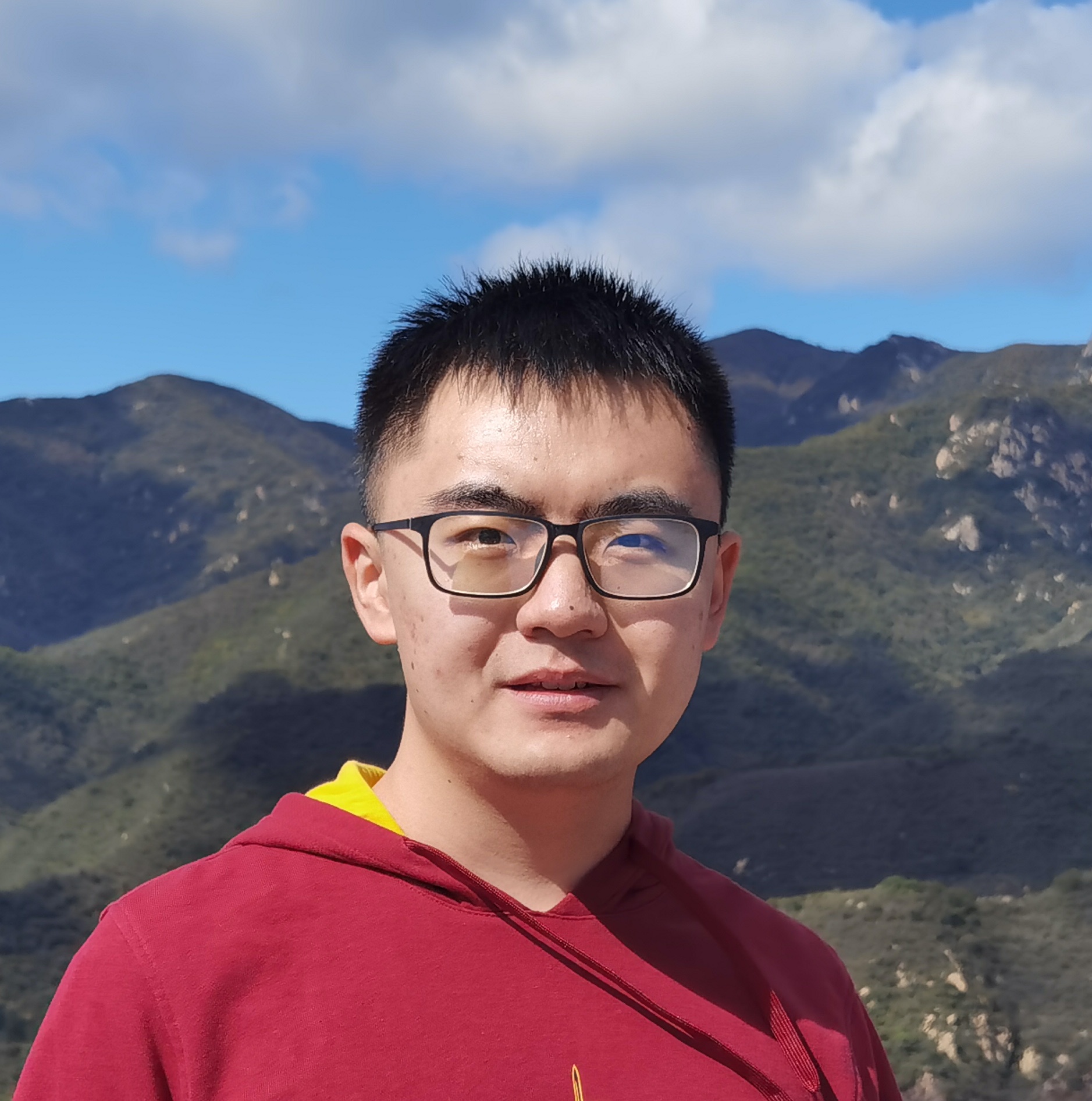
 Yunxiang Zhang
· 2 previous affiliations
- University of MichiganSince 2022
- PhD student · 2022–2027
- Current
- Peking University2018–2022
- Undergrad student · 2018–2022
2 other authors named Yunxiang Zhang: Yunxiang Zhang (New York University · 2 papers), Yunxiang Zhang (1 paper)
Research Overview
Yunxiang Zhang focuses on large language model reasoning, autonomous agents, and the robustness of natural language processing systems. His trajectory spans from evaluating model sensitivity to textual perturbations and cultural nuances to developing advanced memory and ideation frameworks for machine learning engineering. Currently, his research emphasizes test-time adaptation and multi-agent architectures for complex, long-horizon tasks.
Research Trajectory
Yunxiang Zhang's early research focused on the robustness and interpretability of natural language processing models. In 2021, he developed a causal framework to quantify model sensitivity to spurious features in Causally Estimating the Sensitivity of Neural NLP Models to Spurious Features. This work introduced CENT, an estimand based on average treatment effects, to rank prominent NLP architectures against artificial noise injections. He expanded on this theme in Interpreting the Robustness of Neural NLP Models to Textual Perturbations (2022), proposing "perturbation learnability" as a metric to measure how easily models identify specific types of noise. The study revealed an inverse relationship between a perturbation's learnability and a model's inherent robustness against it.
Concurrently, his work explored figurative language and cultural reasoning. He designed an unsupervised framework for hyperbole generation in MOVER: Mask, Over-generate and Rank for Hyperbole Generation, utilizing a mask-and-infill pipeline to transform literal sentences without relying on parallel corpora. To probe the limits of creative wordplay, he contributed to the research direction of Language Agnostic Reasoning in Multilingual Models through the development of BiRdQA: A Bilingual Dataset for Question Answering on Tricky Riddles. This dataset exposed significant performance gaps between state-of-the-art models and human comprehension of veiled meanings. Extending this focus to logographic languages, he advanced the area of Sub-Character Structural Awareness for Logographic Language Models and the broader area of Structural Decomposition of Logographic Characters with CC-Riddle: A Question Answering Dataset of Chinese Character Riddles. This large-scale dataset further highlighted the generative shortcomings of modern models when tasked with character-level puzzles, contributing as well to work in the direction of Phonetic Grounding for Text Centric Language Models.
In 2023, his focus shifted toward contextual reasoning and knowledge integration. He formalized the challenge of generative commonsense reasoning under specific constraints in SituatedGen: Incorporating Geographical and Temporal Contexts into Generative Commonsense Reasoning, requiring models to generate coherent, contrastive sentences based on geographical or temporal keywords. Addressing the persistent issue of hallucination in open-domain question answering, he introduced the COMBO framework in Merging Generated and Retrieved Knowledge for Open-Domain QA. This approach effectively reconciled external retrieved passages with the parametric knowledge generated by large language models.
By 2025 and 2026, his trajectory centered heavily on the evaluation and architectural design of autonomous language agents. Recognizing the need for rigorous evaluation, he introduced MLRC-Bench: Can Language Agents Solve Machine Learning Research Challenges? to assess agents on real-world research tasks, demonstrating that current systems still fall far short of human experts. He participated in further benchmarking efforts with LiveOIBench: Can Large Language Models Outperform Human Contestants in Informatics Olympiads?, which tested models against elite human performance in competitive programming. He also contributed to multimodal evaluations in LLMs as Rules Oracles: Exploring Real-World Multimodal Reasoning in Tabletop Strategy Game Environments, revealing severe degradation in reasoning when models attempt to apply written rules to complex visual game states.
To actively improve agent capabilities, he developed Learning to Ideate for Machine Learning Engineering Agents, introducing MLE-IDEATOR. This dual-agent framework isolates the ideation phase from implementation, using reinforcement learning to generate superior engineering strategies. Further advancing agent autonomy, he proposed AdaMEM: Test-Time Adaptive Memory for Language Agents. This hybrid memory framework enables agents to dynamically synthesize strategies and self-correct during long-horizon tasks, moving beyond static retrieval to achieve significant performance gains in shifting environments.
Current Directions
Recent work investigates the design and evaluation of autonomous language agents capable of executing complex, long-horizon tasks. A major focus is on moving beyond static prompting toward dynamic, test-time adaptation, allowing agents to self-correct and synthesize new strategies on the fly. This includes exploring modular, multi-agent architectures that separate ideation from implementation to improve performance in specialized domains like machine learning engineering. Concurrently, there is an ongoing effort to develop rigorous, real-world benchmarks that test the limits of multimodal reasoning and agentic problem-solving against elite human baselines.
Profile updated
Loading new papers…
Other researchers whose papers cluster into the same research directions — a proxy for overlapping technical interests and shared intellectual neighborhoods.
See something wrong? Report a mistake