

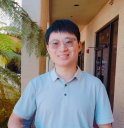
 Yuntian Chen
· 3 previous affiliations
- Eastern Institute for Advanced StudySince 2022
- Assistant Professor · 2022–2028
- Peng Cheng Laboratory2020–2021
- Postdoc · 2020–2021
- Peking University2015–2020
- PhD student · 2015–2020
Research Overview
Yuntian Chen focuses on physics-informed machine learning, symbolic regression, and data-driven equation discovery for complex physical systems. His research trajectory spans from gradient-free optimization and geomechanical modeling to the development of generative frameworks that extract governing physical laws from observational data. Currently, he investigates advanced neural operators and unified predictive models for aerodynamics and time series forecasting.
Research Trajectory
The trajectory begins with foundational work in optimization and the integration of physical principles into neural architectures. In 2019, he introduced Ensemble Neural Networks (ENN): A gradient-free stochastic method, which leveraged ensemble randomized maximum likelihood algorithms to optimize network weights without derivatives, enabling robust uncertainty quantification. Building on this interest in physical systems, he developed Physics-Constrained Deep Learning of Geomechanical Logs to estimate critical subsurface parameters for resource exploration. This focus on physical consistency culminated in Theory-guided hard constraint projection (HCP): A knowledge-based data-driven scientific machine learning method, a significant contribution to the research direction of Hard Constraints for Physically Consistent Neural Networks.
Moving forward, the research expanded into the automated discovery of governing equations from observational data. He presented Symbolic genetic algorithm for discovering open-form partial differential equations (SGA-PDE), a method representing equations as binary tree forests to identify complex fractional and compound structures. This was followed by Physics-Guided Discovery of Highly Nonlinear Parametric Partial Differential Equations, which further refined the extraction of nonlinear dynamics. Concurrently, he participated in collaborative work exploring the area of Hypercomplex Representations for Multimodal Fusion through Domain Prompt Learning with Quaternion Networks, adapting large vision-language models to specialized domains like remote sensing. Returning to equation discovery, his group developed A Data-Driven Framework for Discovering Fractional Differential Equations in Complex Systems, utilizing Gauss-Jacobi quadrature to capture memory effects and non-local interactions, advancing the broader area of Robust Equation Discovery via Weak Integral Formulations.
In 2025, the work diversified across generative AI for science, advanced time series forecasting, and applied energy systems. He led the development of Beyond empirical models: Discovering new constitutive laws in solids with graph-based equation discovery, which reimagined equations as directed graphs to uncover highly accurate constitutive laws for materials science. Pushing generative capabilities further, he introduced Generative discovery of partial differential equations by learning from math handbooks, a framework that learns the syntax of physics from mathematical texts to identify intricate PDEs from noisy data. He also synthesized the field's progress in A comprehensive review of physics-informed deep learning and its applications in geoenergy development.
Parallel to equation discovery, he addressed complex forecasting challenges. His team proposed Context-Alignment: Activating and Enhancing LLMs Capabilities in Time Series, utilizing dual-scale graph neural networks to encode structural relationships and improve zero-shot forecasting. This aligned with contributions to the research direction of Modeling Cross-Variable Dependencies in Multivariate Time Series, as seen in Client: Cross-variable linear integrated enhanced transformer for multivariate long-term time series forecasting, which optimized Transformer architectures by shifting attention to cross-variable dependencies. These predictive modeling techniques were applied to critical infrastructure and meteorology, including Enhancing wind power forecasting accuracy through LSTM with adaptive wind speed calibration (C-LSTM) for renewable energy stability, and All-day cloud property and occurrence probability dataset based on satellite remote sensing data, which bridged observational gaps in satellite imagery. Additionally, he explored urban resilience in Using electric vehicles as emergency power sources for extreme weather.
The most recent phase of his trajectory focuses on sophisticated neural operators and generative spaces for physical modeling. He guided the creation of Riesz Neural Operator for Solving Partial Differential Equations, which explicitly models local directional derivatives within a spectral framework to capture complex phenomena like turbulence. In the domain of symbolic regression, his group developed GenSR: Symbolic regression based on equation generative space, mapping discrete mathematical structures into a continuous latent space to accelerate equation discovery. This work contributes to the research areas of Complexity Constrained Symbolic Regression for Scientific Laws and Robust Symbolic Regression for Scientific Discovery. Finally, he oversaw UniDrag: Unified Multi-Field Prediction and Robust Shape Optimization for Vehicle Aerodynamics, integrating physics-aware attention with engineering constraints to achieve manufacturable drag reduction in vehicle design.
Current Directions
The most recent papers in the evidence address the intersection of generative AI, neural operators, and physical sciences. Current work investigates continuous latent spaces for symbolic regression to accelerate the discovery of scientific laws, as well as the development of advanced neural operators that bridge global spectral efficiency with local sensitivity for solving complex partial differential equations. Additionally, recent efforts focus on unified frameworks for multi-field prediction and robust shape optimization in engineering applications, particularly in vehicle aerodynamics.
Profile updated
Loading new papers…
Other researchers whose papers cluster into the same research directions — a proxy for overlapping technical interests and shared intellectual neighborhoods.
See something wrong? Report a mistake