

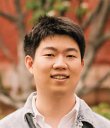
 Yunpeng Chen
· 9 previous affiliations
- ByteDance (China)Since 2025
- Researcher · 2025–2026
- Current
- Doctor of Philosophy - PhD, Electrical and Computer Engineering · 2015–2019
- Alkaid Pte. Ltd.2023–2025
- Founder & CEO · 2023–2025
- Non-Trivial2023–2025
- Self-employed · 2023–2025
- Meitu Inc2021–2023
- Director of Algorithm · 2021–2023
- YITUTech2019–2021
- Research Director · 2019–2021
- Yitu Technology Ltd.2019–2021
- Senior Researcher · 2019–2021
- Researcher · 2018
- Bachelor's degree, Computer Science and Technology · 2011–2015
1 other author named Yunpeng Chen: Yunpeng Chen (3 papers)
Research Overview
Yunpeng Chen focuses on deep learning architecture engineering, computer vision, and efficient neural network design. His trajectory spans foundational improvements to convolutional and recurrent network topologies, advancing into spatio-temporal modeling and neural architecture search. Recently, his work investigates parameter-efficient adaptation and spatial understanding in generative diffusion models.
Research Trajectory
Chen’s early research explored the internal dynamics and feature representations of deep neural networks. In 2016, he and his colleagues addressed cross-layer heterogeneities in Collaborative Layer-Wise Discriminative Learning in Deep Neural Networks, proposing a method to enhance discriminative capability by allowing layers to focus on samples of varying complexities. The following year, he participated in developing models for complex visual and affective tasks. This included work on Estimation of Affective Level in the Wild with Multiple Memory Networks, which utilized memory networks to capture temporal relations in facial expressions, and Multi-Path Feedback Recurrent Neural Networks for Scene Parsing, which improved long-range context modeling by propagating top-layer features through multiple weighted recurrent connections.
A major focus of his 2017 work was structural innovation in convolutional networks. He introduced Dual Path Networks, a topology that unified the feature re-usage capabilities of ResNets with the feature exploration strengths of DenseNets. This work significantly advanced the research direction of Overcoming the Memory Bottlenecks of Dense Feature Concatenation. Concurrently, he explored representation diversity in Training Group Orthogonal Neural Networks with Privileged Information, proposing a framework to untangle representations using privileged image segmentation annotations during training.
Moving into 2018, Chen’s focus expanded to spatio-temporal modeling and parameter efficiency. He developed A^2-Nets: Double Attention Networks, which introduced a double attention block to aggregate and propagate global features from the entire spatio-temporal space of inputs. This contribution intersected with broader areas such as Parameter Efficient Neural Networks via Strategic Attention and Global Covariance Pooling for Deep Visual Recognition. To further optimize deep residual networks, he proposed Sharing Residual Units Through Collective Tensor Factorization To Improve Deep Neural Networks, utilizing block term decomposition to share core factors across residual units. He also addressed the computational cost of 3D networks in Multi-fiber Networks for Video Recognition, designing an architecture that slices complex networks into lightweight ensembles connected by multiplexer modules.
In subsequent years, Chen investigated automated architecture design and specialized segmentation tasks. With collaborators, he developed AdversarialNAS: Adversarial Neural Architecture Search for GANs (2020), enabling the simultaneous, differentiable search of generator and discriminator architectures without requiring extra evaluation metrics. His collaborative work also extended to instance segmentation in SODAR: Exploring Locally Aggregated Learning of Mask Representations for Instance Segmentation (2021), which improved upon grid-based prediction models by aggregating neighboring mask predictions. Around the same time, he oversaw research on robust domain adaptation in Adversarial Domain Adaptation With Prototype-Based Normalized Output Conditioner (2021).
More recently, Chen has focused on the customization and efficiency of generative models. In 2023, he contributed to Mix-of-Show: Decentralized Low-Rank Adaptation for Multi-Concept Customization of Diffusion Models. This framework addresses concept conflicts when combining multiple independently trained Low-Rank Adaptations (LoRAs), aligning with research directions like Overcoming Parameter Interference in Model Merging, Data-Free Model Merging for Multi-Task Systems, and Region Constrained Cross-Attention for Precise Attribute Binding.
Continuing his work on network efficiency and domain adaptation, he co-authored Cross-Domain Few-Shot Classification via Dense-Sparse-Dense Regularization (2024) and Hybrid Composition with IdleBlock: More Efficient Networks for Image Recognition (2024). The latter introduced a pruning building block that passes portions of input directly to the output, reducing computation while maintaining accuracy. Most recently, his research has explored spatial reasoning in text-to-image generation, as seen in Enhancing Spatial Understanding in Image Generation via Reward Modeling (2026), which introduces a specialized reward model to evaluate and improve the spatial accuracy of generated scenes through reinforcement learning.
Current Directions
The most recent papers in the evidence indicate a strong focus on the intersection of generative AI customization, spatial reasoning, and continued network efficiency. Current work investigates the precise control of diffusion models, utilizing reward modeling and reinforcement learning to enforce accurate spatial relationships and complex scene composition in text-to-image generation. Additionally, there is an ongoing emphasis on hardware-aligned model compression and efficient layer sequencing, exploring novel building blocks that dynamically prune connections to maintain high recognition accuracy with significantly reduced computational overhead.
Profile updated
Loading new papers…
Other researchers whose papers cluster into the same research directions — a proxy for overlapping technical interests and shared intellectual neighborhoods.
See something wrong? Report a mistake