

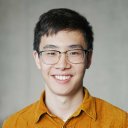
 Yunke Ao
· 6 previous affiliations
- Universitätsklinik BalgristSince 2022
- PHD Student · Since 2022
- ETH AI CenterSince 2022
- Doctoral Fellow · Since 2022
- ETH ZurichSince 2019
- Doctor's Degree, Computer science · 2022–2026
- Master's degree with distinction, Robotics, Systems and Control · 2019–2022
- ABB2021
- Research Intern · 2021
- Shanghai Jiao Tong University2015–2019
- Undergrad student · 2015–2019
- Research Assistant · 2018
- Research Assistant · 2018
Research Overview
Yunke Ao focuses on robotic control, deep reinforcement learning, and medical image analysis, with an emphasis on safe and efficient autonomous systems. His early work developed automated motion planning strategies for sensor calibration in visual-inertial systems. More recently, his research addresses safe control frameworks and simulation environments for computer-assisted surgical robotics and medical imaging.
Research Trajectory
Ao’s early research investigated automated methods for sensor calibration, seeking to replace manual, labor-intensive processes with learned motion policies. In 2020, he collaborated on Learning Trajectories for Visual-Inertial System Calibration via Model-based Heuristic Deep Reinforcement Learning. This work utilized deep reinforcement learning to generate complex motions that efficiently calibrate both camera intrinsics and inter-sensor extrinsics. This contribution intersected with several broader research areas, including the direction of Motion Excitation for Autonomous Sensor Self Calibration and the area of Scaling Motion Planning to High Dimensional Spaces. The methodology also addressed challenges in the research direction of Automated Multi-Objective Alignment for Reinforcement Learning and the broader area of Closing the Sim-to-Real Gap in Robotics.
Building on these foundations, he introduced Unified Data Collection for Visual-Inertial Calibration via Deep Reinforcement Learning in 2022. This system trained a motion policy for a robotic arm to automatically gather the precise measurements necessary for determining camera-IMU parameters. By automating the data collection process, the approach achieved significantly faster calibration times compared to traditional manual methods.
As his focus expanded toward robust control and safety guarantees in autonomous systems, Ao developed new mathematical frameworks for handling uncertainty. He presented Stochastic Model Predictive Control for Sub-Gaussian Noise, which proposed a novel control framework for linear systems affected by sub-Gaussian noise—a broader and more realistic class of distributions than the commonly assumed Gaussian noise. By characterizing this noise through matrix variance proxies and propagating the uncertainty, the method enabled more accurate probabilistic reachable sets and less conservative safety guarantees, advancing work in the research area of Adaptive Safety Margins for Uncertain Autonomous Systems.
Concurrently, Ao applied reinforcement learning and safe control principles to the domain of computer-assisted surgery. Recognizing a bottleneck in the training of autonomous medical robots, he developed SonoGym: High Performance Simulation for Challenging Surgical Tasks with Robotic Ultrasound. This work provided a realistic simulation environment necessary to train learning-based robotic ultrasound systems for complex tasks such as anatomy reconstruction and surgical guidance. In a related surgical application, he introduced SafeRPlan: Safe deep reinforcement learning for intraoperative planning of pedicle screw placement. This system enabled online screw trajectory planning during robotic surgery. It utilized a distance-based safety filter to handle noisy partial data, outperforming standard registration approaches, and incorporated domain randomization for surface reconstruction to improve generalizability.
Alongside his work in robotic control, Ao has contributed to medical image analysis. With collaborators, he participated in the development of Generalizable Single-Source Cross-Modality Medical Image Segmentation via Invariant Causal Mechanisms. This research combined causality-inspired theoretical insights on domain-invariant representations with diffusion-based augmentation. Guided by an "intervention-augmentation equivariant" principle, the approach utilized controlled diffusion models to improve the generalization of segmentation models across diverse medical imaging modalities from a single source domain.
Current Directions
The most recent papers in the evidence indicate a strong focus on the intersection of safe reinforcement learning, robust control, and medical robotics. Current work investigates the deployment of autonomous systems in high-stakes clinical environments, emphasizing the need for rigorous safety filters and realistic simulation platforms to train robotic ultrasound and surgical planning systems. Additionally, recent research addresses robust model predictive control under non-Gaussian uncertainty and the generalization of medical image segmentation models across different imaging modalities. Together, these directions reflect a broader interest in building reliable, adaptable, and mathematically grounded autonomous systems for complex real-world tasks.
Profile updated
Loading new papers…
Other researchers whose papers cluster into the same research directions — a proxy for overlapping technical interests and shared intellectual neighborhoods.
See something wrong? Report a mistake