

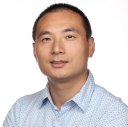
 Yunfei Huang
· 2 previous affiliations
- Helmholtz-Zentrum HereonCurrent
- Current
- Postdoc · 2021–2025
- Forschungszentrum Jülich2017–2021
- PhD student · 2017–2021
Research Overview
Yunfei Huang focuses on the data-driven modeling of biophysical systems, with a particular emphasis on cell mechanics, fluid dynamics, and the identification of governing equations. Their work integrates physics-based insights with machine learning, Bayesian inference, and information theory to address inverse problems and uncertainty quantification in complex biological and physical processes. Currently a postdoctoral researcher at the Technical University Dortmund, Huang’s research trajectory has evolved from specialized biophysical measurement techniques toward the development of physically and geometrically constrained neural architectures for solving partial differential equations (PDEs).
Research Trajectory
Huang’s early research, conducted during their doctoral studies at the University of Cologne, centered on the mechanics of cell motion and the development of robust computational tools for biophysics. A primary focus of this period was Traction Force Microscopy (TFM), a technique used to estimate the mechanical forces exerted by cells on their environment. This work addressed the inherent ill-posedness of recovering force distributions from noisy displacement data. In A Bayesian traction force microscopy method with automated denoising in a user-friendly software package, Huang (as first author) introduced a Bayesian framework that automated the denoising process, providing a more objective and reproducible method for force reconstruction compared to traditional regularization techniques. This effort culminated in a broader investigation into Advanced data analysis for traction force microscopy and data-driven discovery of physical equations, which sought to bridge the gap between experimental observations and the underlying physical laws governing cellular behavior.
Following their PhD, Huang transitioned into the development of neural surrogates for physical systems, specifically focusing on fluid dynamics and geophysical flows. During a postdoctoral tenure at Helmholtz-Zentrum Hereon, Huang began exploring how to embed mathematical symmetries and physical conservation laws directly into neural network architectures. This shift addressed a critical limitation of purely data-centric deep learning: the tendency of models to produce physically inconsistent results or fail when generalizing beyond their training data. This research direction explored the use of equivariant convolutional layers and hard constraints to ensure that neural solvers respect the fundamental symmetries of the PDEs they approximate.
More recently, Huang’s work has expanded to include stochastic processes and advanced optimization. At Ludwig Maximilian University of Munich, they investigated stochastic automatic differentiation techniques for Monte Carlo processes, further refining the mathematical tools available for modeling systems with inherent randomness. Their current research at TU Dortmund synthesizes these various strands—Bayesian inference, geometric deep learning, and physical constraints—to tackle uncertainty quantification in inverse problems, such as image reconstruction and the identification of governing ordinary, partial, and stochastic differential equations (ODEs, PDEs, and SDEs).
Current Directions
Huang’s current work is characterized by the pursuit of "synergistic" constraints in neural PDE integration. This involves moving beyond simple physics-informed losses (soft constraints) toward hard-coding physical and geometric properties into the network's structure. By utilizing staggered grids—a standard in classical computational fluid dynamics—and designing novel input/output layers that support both scalar and vector fields, Huang aims to close the performance gap between traditional numerical solvers and modern neural surrogates.
A significant portion of this recent work focuses on long-term stability and generalization. In fluid dynamics simulations, errors often accumulate over time, leading to non-physical solutions. Huang’s research demonstrates that by enforcing symmetry equivariance and conservation laws as hard constraints, neural models can achieve significantly higher accuracy and stability in long-term inference, even when faced with new initial conditions.
Representative Work
The following papers represent key contributions to the fields of biophysics and physics-informed machine learning, highlighting Huang's focus on integrating physical principles with computational models.
In A Bayesian traction force microscopy method with automated denoising in a user-friendly software package, Huang developed a method to improve the reliability of force measurements in biological samples. By applying Bayesian inference, the work provided a systematic way to handle experimental noise without the need for manual parameter tuning, which is a common source of bias in biophysical analysis.
The transition toward constrained machine learning is detailed in Symmetry Constraints Enhance Long-term Stability and Accuracy in Unsupervised Learning of Geophysical Fluid Flows. This research addresses the high computational cost of classical numerical integrations by proposing solver networks that respect PDE symmetries. By constructing equivariant convolutional layers for mixed scalar-vector fields, the work demonstrates how geometric deep learning can capture the inherent symmetries of fluid dynamical systems, leading to more stable unsupervised learning.
Huang’s most recent first-author work, Geometric and Physical Constraints Synergistically Improve Neural PDE Integration (also presented as Geometric and Physical Constraints Synergistically Enhance Neural PDE Surrogates), provides a systematic investigation into how different types of constraints affect model performance. The research introduces specialized layers for staggered grids and shows that the combination of symmetry equivariance and physical conservation laws leads to superior generalization and stability in challenging tasks, such as simulating shallow water equations and decaying incompressible turbulence.
Beyond these core areas, Huang has participated in interdisciplinary applications of machine learning. This includes work on multimodal dialogue systems, as seen in Generating Emotional Coherence and Diverse Responses in a Multimodal Dialogue System, which utilized heterogeneous graph neural networks and conditional variational autoencoders. Additionally, Huang contributed to medical imaging research in Automatic construction of coronary artery tree structure based on vessel blood flow tracking, which employed deep neural networks for the segmentation and structural analysis of coronary arteries in angiograms. While these papers represent a departure from Huang's primary focus on biophysics and PDE solvers, they demonstrate a broad competence in applying advanced neural architectures to complex, high-dimensional data.
Profile updated
Loading new papers…
Other researchers whose papers cluster into the same research directions — a proxy for overlapping technical interests and shared intellectual neighborhoods.
See something wrong? Report a mistake