

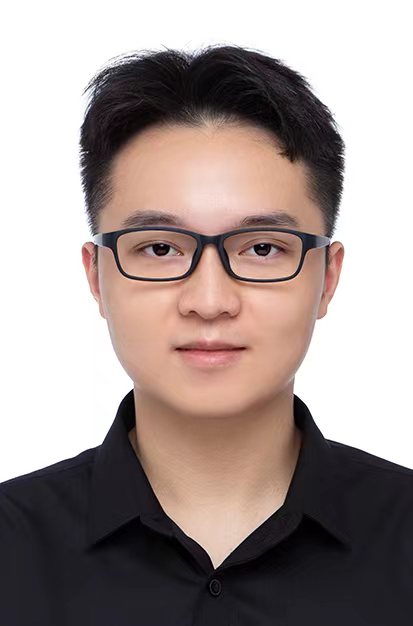
 Yunfan Wu
2 previous affiliations
- Chinese Academy of Sciences2019–2026
- PhD student · 2019–2026
- Undergrad student · 2015–2019
Research Overview
Yunfan Wu focuses on trustworthy recommender systems, generative recommendation, and the adversarial robustness of graph neural networks. His trajectory spans early work on graph vulnerabilities to the development of robust collaborative filtering and large language model-driven recommendation frameworks. Currently, he investigates human-centered recommendation paradigms and foundation models that integrate explicit reasoning capabilities.
Research Trajectory
Wu's early research examined the structural vulnerabilities and scalability challenges of graph-based machine learning models. In 2021, he investigated the area of Adversarial Node Injection in Graph Neural Networks and the related field of Transferable Structural Perturbations for Graph Neural Networks through the publication of Single Node Injection Attack against Graph Neural Networks. This work highlighted how adversaries could manipulate graph topology to degrade model performance. Concurrently, he addressed the limitations of traditional collaborative filtering systems, which typically rely on fixed user and item IDs and struggle with new, unseen data. He introduced a model-agnostic plug-in detailed in INMO: A Model-Agnostic and Scalable Module for Inductive Collaborative Filtering (alongside its preprint Inductive Representation Based Graph Convolution Network for Collaborative Filtering). By representing users and items as combinations of template entities rather than unique identifiers, this approach transformed transductive models into inductive ones. The method significantly reduced parameter counts while maintaining high-quality recommendations for cold-start users and items.
Moving into 2023 and 2024, Wu's focus expanded to the broader reliability of recommender systems, tackling both algorithmic bias and adversarial threats. He contributed to research on mitigating feedback loops, as seen in Popularity Debiasing from Exposure to Interaction in Collaborative Filtering, which sought to prevent popular items from monopolizing exposure at the expense of niche, long-tail content. Returning to graph robustness, he participated in developing defensive strategies in Graph Adversarial Immunization for Certifiable Robustness. This work proposed edge- and node-level immunization techniques to proactively protect graph structures from injection attacks without relying on computationally intensive adversarial training.
His expertise in adversarial dynamics directly translated to securing recommender systems against data poisoning. He analyzed the computational bottlenecks of simulating attacks in Accelerating the Surrogate Retraining for Poisoning Attacks against Recommender Systems, identifying how single-user representation changes could be leveraged to enable more efficient assessment of system vulnerabilities. To counter these threats, he contributed to the broader direction of Generalizing Adversarial Defense against Unforeseen Attacks. This included Improving the Shortest Plank: Vulnerability-Aware Adversarial Training for Robust Recommender System, which applied targeted perturbations to vulnerable user subsets rather than applying uniform noise across the entire system. Recognizing that traditional defenses often rely on predefined rules extracted from known attacks, he also co-developed LoRec: Combating Poisons with Large Language Model for Robust Sequential Recommendation. This approach leveraged the open-world knowledge of large language models to identify and neutralize injected fraudster profiles that manipulate sequential item transitions.
By 2025, Wu's research integrated foundation models into core recommendation architectures. He was a key contributor to the OpenOneRec Technical Report, which introduced a unified generative framework and benchmark designed to evolve recommenders from narrow pattern-matchers into intelligent agents. Utilizing a novel two-stage pre-training and three-stage post-training pipeline, the project demonstrated how foundation models could achieve state-of-the-art results across diverse recommendation tasks while retaining general reasoning capabilities. This line of inquiry was further advanced in OneRec-Think: In-Text Reasoning for Generative Recommendation, a collaborative effort that embedded explicit, human-readable reasoning into generative models. By aligning item identifiers with natural language and employing a "Think-Ahead" architecture, the framework moved beyond black-box predictions and successfully scaled to massive industrial platforms.
Alongside these technical advancements, Wu has advocated for a paradigm shift in how recommendation systems are evaluated and designed. He helped organize The 1st Workshop on Human-Centered Recommender Systems, aligning with the research direction of Modeling User Agency in Information Diffusion and Recommendation. This initiative prioritized human values, well-being, and active user participation over purely algorithmic optimization. Synthesizing his extensive work on system reliability, he co-authored the comprehensive survey Robust Recommender System: A Survey and Future Directions, establishing a taxonomy for defending against malicious attacks and natural noise to ensure trustworthy user experiences.
Current Directions
The most recent papers in the evidence indicate a dual focus on generative recommendation architectures and the human-centric evaluation of these systems. Recent work investigates how large language models can be adapted to serve as foundational recommendation agents, emphasizing explicit, human-readable reasoning over traditional black-box predictions. This involves developing specialized pre-training and post-training pipelines that allow models to retain general reasoning capabilities while excelling at personalized item retrieval. Concurrently, Wu is actively exploring human-centered recommendation paradigms, advocating for system designs that prioritize user agency, transparency, and long-term well-being. This is complemented by ongoing efforts to systematize the field of robust recommendation, ensuring that next-generation generative models remain resilient against data poisoning, popularity bias, and adversarial manipulation.
Profile updated
Loading new papers…
Other researchers whose papers cluster into the same research directions — a proxy for overlapping technical interests and shared intellectual neighborhoods.
See something wrong? Report a mistake