

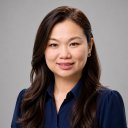
 Yun Sing Koh
· 4 previous affiliations
- University of AucklandSince 2007
- Full Professor · Since 2024
- Professor · Since 2023
- Associate Professor · 2021–2023
- Senior Lecturer · 2014–2021
- Research Fellow · 2010–2013
- Lecturer · 2007–2010
- Auckland University of Technology2007–2010
- Lecturer · 2007–2010
- University of Otago2004–2007
- PhD, Computer Science · 2004–2007
- Master of Sofware Engineering
Research Overview
Yun Sing Koh focuses on machine learning for non-stationary data streams, concept drift adaptation, and continual learning. Her research addresses the challenges of maintaining predictive accuracy in evolving environments by developing frameworks that detect distribution shifts and selectively transfer knowledge. Recently, she has expanded into domain generalization and targeted machine unlearning to preserve model plasticity.
Research Trajectory
Koh's early research explored foundational problems in data mining, such as rule extraction without predefined support thresholds, as seen in Mining Non-coincidental Rules without a User Defined Support Threshold. By the mid-2010s, her focus shifted toward the challenges of dynamic environments, investigating methods for identifying distribution shifts in Drift Detection Using Stream Volatility.
This interest in evolving data naturally extended into transfer learning. She introduced AccGenSVM, a hypothesis transfer learning method that selectively transfers support vectors from previous models to new tasks without requiring access to the original source data (AccGenSVM: Selectively Transferring from Previous Hypotheses). This work contributed to the broader research area of Mitigating Negative Transfer in Cross Domain Learning, alongside methods for similarity-based source selection and aligning heterogeneous feature spaces.
A major theme of Koh's subsequent work has been managing concept drift in non-stationary environments. She developed the Enhanced Concept Profiling Framework (ECPF), a meta-learning system that recognizes and reuses previously successful classifiers to handle recurring concepts efficiently (Recurring concept meta-learning for evolving data streams). This advanced the direction of Learning in Non-Stationary Data Streams, addressing challenges in detecting gradual distribution shifts and retaining knowledge in continual deep learning. Building on this, she collaborated on FiCSUM, a framework that combines supervised and unsupervised fingerprints to track concept behavior dynamically (Fingerprinting Concepts in Data Streams with Supervised and Unsupervised Meta-Information). This approach helped balance feature extraction overhead in adaptive systems and improved online learning in evolving feature spaces.
To further improve adaptation in data streams, Koh introduced the AiRStream framework, which provides a real-time repair mechanism to identify and correct adaptation errors by evaluating inactive models (Analyzing and repairing concept drift adaptation in data stream classification). This research explored the temporal window size trade-off and bridged the temporal generalization gap in predictive models by learning adaptive dynamics via latent context inference. She later formalized these adaptation strategies through SELeCT, a Bayesian probabilistic framework that continuously evaluates the relevance of historical concepts using data likelihoods and learned transition priors (A Probabilistic Framework for Adapting to Changing and Recurring Concepts in Data Streams). This work provided robust solutions for statistical gating and continuous model adaptation, further expanding her contributions to Learning in Non-Stationary Data Streams.
Expanding her focus to continual learning architectures, Koh developed CABLE (Continual Adapter-Based Learning), a reinforcement learning framework that manages lightweight task-specific layers within frozen pre-trained models to reduce catastrophic forgetting (Building adaptive knowledge bases for evolving continual learning models). This contribution advanced autonomous task identification and bidirectional knowledge transfer in continual learning. Additionally, she has contributed to the development of practical tools for the community, participating in the creation of Machine Learning for Data Streams with CapyMOA.
Current Directions
Recent work investigates domain generalization, machine unlearning, and the application of large language models to complex, unstructured data. To address the limitations of offline distillation in domain generalization, Koh and her collaborators proposed Balanced Online knowLedge Distillation (BOLD), which leverages multi-domain expert teachers to balance domain-invariant and domain-specific knowledge (Balancing Invariant and Specific Knowledge for Domain Generalization with Online Knowledge Distillation).
A significant emerging focus is the strategic use of unlearning to maintain model plasticity and generalization. She guided the development of DEDUCE, a framework that dynamically detects negative transfer and selectively unlearns conflicting historical information (Detect, Decide, Unlearn: A Transfer-Aware Framework for Continual Learning). This work addresses the loss of plasticity in continual learning and continues her long-standing interest in the area of Mitigating Negative Transfer in Cross Domain Learning. Similarly, she introduced an "Identify and Unlearn" module that uses targeted gradient ascent to remove domain-specific biases during training (Unlearning during Training: Domain-Specific Gradient Ascent for Domain Generalization), contributing to research on mitigating shortcut learning in deep neural networks.
Beyond core algorithmic improvements, Koh's most recent papers apply advanced machine learning to qualitative and multimodal analysis. This includes developing Thematic-LM, a multi-agent system designed to automate large-scale thematic analysis while avoiding the narrow viewpoints often introduced by human-in-the-loop LLM interactions (Thematic-LM: a LLM-based Multi-agent System for Large-scale Thematic Analysis). She has also applied multimodal modeling to youth well-being, analyzing student narratives to better understand the factors influencing school attendance (Understanding School Attendance Through Multimodal Modelling of Student Narratives).
Profile updated
Loading new papers…
Other researchers whose papers cluster into the same research directions — a proxy for overlapping technical interests and shared intellectual neighborhoods.
See something wrong? Report a mistake