

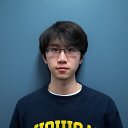
 Yulong Cao
· 2 previous affiliations
- Nvidia (United States)Since 2023
- Researcher · Since 2023
- University of Michigan2017–2022
- PhD student · 2017–2022
Research Overview
Yulong Cao focuses on machine learning security, sensor security, and the robustness of autonomous driving systems. His early work systematically exposed vulnerabilities in LiDAR and multi-sensor fusion perception pipelines against physical-world adversarial attacks. Recently, his research has expanded to address the safety and alignment of large language and vision-language models deployed as autonomous agents and driving controllers.
Research Trajectory
Cao’s early research examined foundational systems security, including participation in a 2017 systematic study of Client-side Name Collision Vulnerability in the New gTLD Era: A Systematic Study. By 2019, his focus shifted toward the physical and perceptual security of autonomous vehicles (AVs). He investigated how machine learning models interpreting 3D sensor data could be deceived by physical objects. In Adversarial Objects Against LiDAR-Based Autonomous Driving Systems, he demonstrated that optimizing the geometric shape of 3D-printed objects could cloak them from LiDAR detection, contributing to the broader research direction of Manifold Constrained Adversarial Perturbations for 3D Point Clouds. He further formalized these vulnerabilities in Adversarial Sensor Attack on LiDAR-based Perception in Autonomous Driving, introducing an adversarial methodology that strategically crafted spoofed LiDAR data to trick perception models into hallucinating obstacles.
Continuing this line of inquiry into 2020, Cao collaborated on Towards Robust LiDAR-based Perception in Autonomous Driving: General Black-box Adversarial Sensor Attack and Countermeasures, which introduced a black-box attack exploiting general vulnerabilities in LiDAR systems alongside physical occlusion-based defenses. To improve the underlying resilience of these models, he explored self-supervised learning proxy tasks in Adversarially Robust 3D Point Cloud Recognition Using Self-Supervisions, evaluating how different architectures like PointNet and transformers respond to adversarial training.
A significant milestone in his trajectory was addressing the assumption that multi-sensor fusion (MSF) inherently provides security. In Invisible for both Camera and LiDAR: Security of Multi-Sensor Fusion based Perception in Autonomous Driving Under Physical-World Attacks, Cao presented a physical-world attack capable of simultaneously deceiving both camera and LiDAR sensors, effectively defeating industry-standard fusion designs. He continued to probe fusion vulnerabilities with collaborators in Security Analysis of Camera-LiDAR Fusion Against Black-Box Attacks on Autonomous Vehicles, which introduced a stealthy "frustum attack" exploiting the geometric relationship between the two modalities.
Moving beyond initial perception, Cao began analyzing the downstream components of the autonomous driving pipeline, particularly trajectory prediction. In Robust Trajectory Prediction against Adversarial Attacks, he identified methods for defending prediction models through adversarial training and domain-specific data augmentation, advancing work in the area of Balancing Natural Accuracy and Adversarial Robustness. He also developed an optimization-based framework to generate realistic adversarial trajectories in AdvDO: Realistic Adversarial Attacks for Trajectory Prediction. This comprehensive view of AV vulnerabilities was synthesized in his 2023 work, Toward Secure and Safe Autonomous Driving: an Adversary's Perspective. Concurrently, he introduced novel methods for manipulating AV environments, such as exploiting LiDAR filtering mechanisms to erase genuine obstacles from the vehicle's perception in You Can't See Me: Physical Removal Attacks on LiDAR-based Autonomous Vehicles Driving Frameworks.
In recent years, Cao’s research has expanded to encompass the integration of large language models (LLMs) and vision-language models (VLMs) into autonomous systems. He investigated the security of web-integrated agents in WIPI: A New Web Threat for LLM-Driven Web Agents, demonstrating how hidden natural language instructions in webpages could hijack decision-making processes, a key contribution to the field of Indirect Prompt Injection in Autonomous LLM Agents. Returning to the driving domain, he applied reinforcement learning from human feedback to traffic generation in Reinforcement Learning with Human Feedback for Realistic Traffic Simulation.
His most recent work focuses on advanced multimodal reasoning and robust end-to-end driving architectures. In dVLM-AD: Enhance Diffusion Vision-Language-Model for Driving via Controllable Reasoning, he helped develop a framework that aligns high-level reasoning with planned paths using iterative denoising. He also contributed to Language-Image Models with 3D Understanding, showing that 3D spatial reasoning can emerge in multimodal models through data scaling. To address the unreliability of heterogeneous sensors in adverse conditions, he co-authored Cocoon: Robust Multi-Modal Perception with Uncertainty-Aware Sensor Fusion. Finally, in Latent Chain-of-Thought World Modeling for End-to-End Driving, Cao and collaborators replaced text-based reasoning with a latent language of action proposals, touching upon the research direction of Group Relative Policy Optimization for Large Reasoning Models to achieve safer and lower-latency driving decisions.
Current Directions
Recent work investigates the deployment of foundation models—specifically large language and vision-language models—in autonomous driving and embodied agent scenarios. The most recent papers in the evidence address the challenge of aligning complex, multimodal spatial reasoning with safe, real-time execution. This includes developing diffusion-based frameworks for controllable driving reasoning, scaling language-image models to natively understand 3D environments without specialized architectures, and designing uncertainty-aware sensor fusion mechanisms that remain robust in adverse physical conditions. Additionally, ongoing research explores latent world modeling, seeking to replace slow, text-based chain-of-thought processes with efficient, vector-space simulations of counterfactual futures to improve the reaction time and safety of end-to-end driving systems.
Profile updated
Loading new papers…
Other researchers whose papers cluster into the same research directions — a proxy for overlapping technical interests and shared intellectual neighborhoods.
See something wrong? Report a mistake