

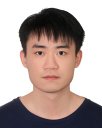
 Yujun Huang
2 previous affiliations
- Tsinghua University2020–2025
- PhD student · 2020–2025
- Sun Yat-sen University2016–2020
- Undergrad student · 2016–2020
1 other author named Yujun Huang: Yujun Huang (1 paper)
Research Overview
Yujun Huang focuses on image compression, multi-view vision systems, and resource-efficient deep learning for Internet of Things (IoT) applications. His trajectory spans from early work in spatio-temporal forecasting to advanced distributed source coding and compressive sensing techniques. Most recently, his research investigates the integration of 3D geometric priors, such as 3D Gaussian Splatting, to improve multi-view image compression and scene reconstruction.
Research Trajectory
Starting in 2019, his early research addressed graph-structured spatio-temporal forecasting. He developed Diffusion Convolutional Recurrent Neural Network with Rank Influence Learning for Traffic Forecasting to capture complex dependencies in urban traffic flow. By introducing a rank influence factor, this model dynamically adjusted the importance of neighboring sensor nodes at different proximity ranks, improving the accuracy of traffic predictions.
By 2022, his focus expanded to the challenges of deploying deep neural networks on resource-constrained IoT devices. To address limited computing and storage capacities, he introduced Compressive Sensing based Asymmetric Semantic Image Compression for Resource-constrained IoT system. This framework utilized a lightweight front-end encoder on the device and offloaded a deep iterative decoder to the server, optimizing the system specifically for semantic recognition tasks. Continuing this line of inquiry into efficient sampling, he developed MB-RACS: Measurement-Bounds-based Rate-Adaptive Image Compressed Sensing Network, a framework that adaptively allocates sampling rates to different image blocks based on their complexity, guided by traditional measurement bounds theory. He also contributed to collaborative efforts in this domain, participating in the design of CMCL: Cross-Modal Compressive Learning for Resource-Constrained Intelligent IoT Systems, which explored end-to-end learnable compressed sensing to mitigate privacy breaches and performance degradation associated with initial signal reconstruction.
Parallel to his work in compressive sensing, he investigated distributed source coding for multi-view and stereo vision systems. In 2023, he proposed Learned Distributed Image Compression with Multi-Scale Patch Matching in Feature Domain. Recognizing that traditional image-domain patch matching struggles with scale, shape, and illumination variances caused by different viewing angles, this work shifted the matching process to the feature domain to better utilize side information and resolve parallax issues. In a related effort to reduce the high decoding latency typical of deep-distributed stereo image compression, he collaborated on FFCA-Net: Stereo Image Compression via Fast Cascade Alignment of Side Information, which leveraged feature-based fast cascade alignment to efficiently process side information at the decoder.
In 2025, his research trajectory shifted toward the intersection of 3D scene representation and compression. He designed 3D-LMVIC: Learning-based Multi-View Image Compression with 3D Gaussian Geometric Priors, a framework that moves beyond simple 2D pixel matching by utilizing 3D Gaussian Splatting to understand underlying scene geometry. By leveraging these geometric priors for disparity estimation and optimizing the compression order of camera views, the method achieved significant bitrate reductions over traditional multi-view standards. This methodology intersects with several broader research areas, including the direction of Overcoming Correspondence Failure in Wide Baseline Images, the area of Feed-Forward 4D Gaussian Reconstruction for Dynamic Scenes, and the field of Generative View Synthesis for Monocular to Stereo Conversion.
To support the rapid development of these 3D techniques, he participated in building Splatwizard: A Benchmark Toolkit for 3D Gaussian Splatting Compression. This open-source toolkit provides a unified framework for evaluating rendering speed, memory footprint, and geometric accuracy, and introduced a compression model combining pruning, distillation, and vector quantization. This toolkit aligns with the broader research direction of Importance-Aware Pruning for 3D Gaussian Splatting.
His recent work also encompasses fundamental compression acceleration and computational photography. He contributed to EDPC: Accelerating Lossless Compression via Lightweight Probability Models and Decoupled Parallel Dataflow, which focuses on optimizing the speed of lossless compression pipelines. Additionally, he has explored unsupervised methods for image restoration, as detailed in Generative Adversarial CLIPs for Unsupervised Backlit Image Enhancement.
Current Directions
The most recent papers in the evidence indicate a strong focus on integrating explicit 3D geometric priors into neural image compression pipelines. Rather than relying solely on 2D feature matching across multiple views, current work investigates how 3D Gaussian Splatting can be used to model scene geometry directly, thereby providing highly accurate disparity estimation for multi-view compression. A major open problem in this space is balancing the geometric fidelity of these 3D representations with the strict memory and bandwidth constraints required for transmission.
Consequently, another active theme is the standardization and optimization of 3D Gaussian Splatting models. Recent efforts address the need for unified benchmarking to fairly evaluate the trade-offs between rendering speed, memory footprint, and visual quality. This involves developing sophisticated compression strategies for the 3D models themselves—such as importance-aware pruning, knowledge distillation, and vector quantization—to make high-fidelity 3D scene reconstruction viable for real-world, bandwidth-limited applications. Alongside these 3D-centric approaches, there remains an ongoing interest in accelerating fundamental lossless compression algorithms through decoupled parallel dataflows and lightweight probability modeling.
Profile updated
| Paper | Venue | Year |
|---|---|---|
| EDPC: Accelerating Lossless Compression via Lightweight Probability Models and Decoupled Parallel DataflowGitHubMagie0/ | ACM Multimedia | 2025 |
Loading new papers…
Other researchers whose papers cluster into the same research directions — a proxy for overlapping technical interests and shared intellectual neighborhoods.
See something wrong? Report a mistake