

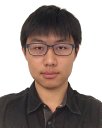
 Yujie Tang
· 3 previous affiliations
- Peking UniversitySince 2022
- Assistant Professor · Since 2022
- Harvard University2019–2022
- Postdoc · 2019–2022
- California Institute of Technology2013–2019
- PhD student · 2013–2019
Research Overview
Yujie Tang focuses on the intersection of optimization, control theory, and machine learning, with a particular emphasis on developing algorithms for large-scale cyber-physical systems and network-based multi-agent environments. His work addresses the theoretical foundations and practical implementation of Scaling Zeroth-Order Optimization for Large Models, Benign Nonconvexity in Policy Optimization for Control, and Initial Stabilization in Data Driven Control. By integrating classical control insights with modern data-driven techniques, Tang develops model-free and distributed methods for complex network systems, including smart grids and multi-agent robotic platforms.
Research Trajectory
Tang’s early research focused on signal processing and sparse estimation, specifically investigating the performance bounds of signal reconstruction when the sensing matrix is subject to perturbations. This initial work established a foundation in mathematical analysis and robustness, which transitioned into a focus on constrained optimization during his doctoral studies. Between 2019 and 2020, he developed systematic methods for handling nonlinear inequality constraints in convex optimization, utilizing augmented primal-dual gradient dynamics to achieve semi-global exponential stability.
Following his doctoral work, Tang’s focus shifted toward the challenges of high-dimensional "black-box" optimization and reinforcement learning (RL). This period marked a significant move into zeroth-order (ZO) optimization, where gradients are unavailable and must be estimated from function evaluations. He introduced novel techniques to improve the efficiency of these estimators, such as incorporating high-pass and low-pass filters from control theory to reduce variance. This work expanded into the domain of multi-agent systems, where he developed distributed RL algorithms for decentralized control, allowing agents to learn local controllers through limited communication and consensus-based cost estimation.
In recent years, Tang has concentrated on the theoretical properties of nonconvex landscapes in optimal and robust control. While nonconvexity traditionally presents significant hurdles for local search algorithms, his work identifies "benign" structures in classic control frameworks like Linear Quadratic Gaussian (LQG) and $H_\infty$ control. By developing the "Extended Convex Lifting" framework, he has demonstrated that many seemingly difficult nonconvex control problems possess a "hidden convexity" that guarantees global optimality for local stationary points. His most recent contributions continue to refine the query efficiency of zeroth-order methods, particularly for high-dimensional nonconvex problems with unknown constraints.
Current Directions
Tang’s current research is organized around three primary pillars: the refinement of zeroth-order optimization, the analysis of Optimization under Hidden Convexity, and the application of these tools to smart grid infrastructure.
In the realm of zeroth-order optimization, Tang is investigating methods to escape saddle points efficiently. Traditional ZO methods often require a number of function evaluations proportional to the problem dimension to navigate complex landscapes; however, Tang’s recent work suggests that isotropic perturbations and two-point estimators can significantly accelerate this process. This is particularly relevant for training high-dimensional models where backpropagation is impractical or where the underlying system dynamics are unknown.
A second major focus is the formalization of the Extended Convex Lifting (ECL) framework. This research seeks to map nonconvex policy spaces to convex sets through smooth transformations, providing a unified theoretical basis for why gradient-based methods succeed in various optimal and robust control settings. This work aims to bridge the gap between classical control theory and modern reinforcement learning by providing global optimality guarantees for data-driven controllers.
Finally, Tang applies these theoretical insights to the operational challenges of modern power systems. As renewable energy and distributed resources increase grid volatility, he develops data-driven techniques for voltage control and distributed demand response. These applications utilize zeroth-order feedback-based optimization to manage grid assets without requiring perfect mathematical models of the power network, thereby enhancing the resilience and efficiency of smart grids.
Representative Work
Semi-global exponential stability of augmented primal-dual gradient dynamics for constrained convex optimization This work extends augmented primal-dual gradient dynamics to accommodate general convex and nonlinear inequality constraints. Tang establishes that these dynamics achieve semi-global exponential stability when the objective function is strongly convex, providing a rigorous foundation for saddle-point solvers in constrained optimization.
Improve Single-Point Zeroth-Order Optimization Using High-Pass and Low-Pass Filters Addressing the high variance inherent in single-point zeroth-order gradient estimation, this paper introduces the HLF-SZO algorithm. By integrating high-pass and low-pass filters, the method achieves a improved theoretical complexity of $O(d^{3/2}/\epsilon^{3/2})$, demonstrating how classical signal processing tools can enhance derivative-free optimization.
Distributed Reinforcement Learning for Decentralized Linear Quadratic Control: A Derivative-Free Policy Optimization Approach Tang proposes the Zero-Order Distributed Policy Optimization (ZODPO) algorithm for large-scale systems with partial observations. The approach enables agents to learn linear local controllers in parallel by estimating global costs through consensus, requiring minimal communication and storage.
Benign Nonconvex Landscapes in Optimal and Robust Control, Part I: Global Optimality This paper provides a theoretical justification for the success of gradient-based methods in LQG and $H_\infty$ robust control. Tang proves that for a broad class of these controllers, the optimization landscape is benign, meaning any point where the gradient vanishes is a global optimum.
Benign Nonconvex Landscapes in Optimal and Robust Control, Part II: Extended Convex Lifting In the second part of this series, Tang introduces Extended Convex Lifting (ECL), a mathematical framework that reveals hidden convexity in nonconvex control problems. The framework uses smooth transformations to map nonconvex policy spaces to convex sets, offering a unified perspective on the global optimality of local search in control theory.
Escaping saddle points in zeroth-order optimization: the power of two-point estimators This research demonstrates that zeroth-order algorithms can escape saddle points in high-dimensional spaces using only two function evaluations per iteration. By applying isotropic perturbations, the proposed method finds second-order stationary points significantly faster than previous approaches that relied on dimension-dependent evaluations.
Profile updated
Loading new papers…
Other researchers whose papers cluster into the same research directions — a proxy for overlapping technical interests and shared intellectual neighborhoods.
See something wrong? Report a mistake