

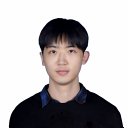
 Yujiang Pu
· 2 previous affiliations
- Michigan State UniversitySince 2023
- PhD student · 2023–2028
- Current
- Communication University of China2020–2023
- MS student · 2020–2023
Research Overview
Yujiang Pu focuses on computer vision and machine learning, particularly vision-language perception and generative modeling. His early work addressed video understanding tasks such as action recognition, temporal grounding, and weakly supervised anomaly detection. More recently, he investigates image and video generation, developing world models and unifying instructional visual generation with diffusion models.
Research Trajectory
His early research centered on video understanding, with a particular emphasis on anomaly and violence detection. He explored local-to-global embeddings for identifying violent events in Semantic multimodal violence detection based on local-to-global embedding. Alongside this, he investigated weakly supervised approaches to video analysis, developing a Locality-Aware Attention Network with Discriminative Dynamics Learning for Weakly Supervised Anomaly Detection.
He continued to refine weakly supervised video anomaly detection in Learning Prompt-Enhanced Context Features for Weakly-Supervised Video Anomaly Detection. This work addressed the computational costs of multi-branch parallel architectures and the limitations of multiple instance learning constraints by improving fine-grained discriminability within video features. Expanding into vision-language tasks, he contributed to SHINE: Saliency-aware HIerarchical NEgative Ranking for Compositional Temporal Grounding. This research tackled the challenge of compositional generalizability in video moment retrieval by moving beyond random sampling to create semantically plausible negative queries, helping models learn rational compositions.
More recently, the trajectory shifts toward generative models and complex procedural understanding. He introduced Show Me: Unifying Instructional Image and Video Generation with Diffusion Models, a framework that treats image manipulation and video prediction as interconnected action-object states. This work contributes to the broader research direction of Separating Foreground Motion from Stochastic Background Clutter. Building on the analysis of actions and their outcomes, he collaborated on Procedural Mistake Detection via Action Effect Modeling. This framework combines temporal action execution dynamics with multimodal outcome analysis to identify errors in egocentric videos. This research advances work in areas such as Upstream Detection Bottlenecks in Structured Visual Reasoning and the related domain of Compounding Errors in Long Horizon Agent Execution.
Current Directions
Recent work investigates the intersection of generative modeling and procedural video understanding. The most recent papers in the evidence address the generation of instructional visual content using diffusion models, unifying image manipulation and video prediction into a cohesive framework. Additionally, current research focuses on evaluating complex human activities, specifically detecting procedural mistakes by modeling both the temporal dynamics of an action and its multimodal effects on object states and spatial relations.
Profile updated
Loading new papers…
Other researchers whose papers cluster into the same research directions — a proxy for overlapping technical interests and shared intellectual neighborhoods.
See something wrong? Report a mistake