

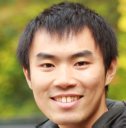
 Yujia Li
· 3 previous affiliations
- Google (United States)Since 2016
- Research Scientist · Since 2016
- Current
- University of Toronto2011–2016
- PhD student · 2011–2016
1 other author named Yujia Li: Yujia Li (1 paper)
Research Overview
Yujia Li focuses on the development of deep learning architectures for structured data, with a particular emphasis on graph neural networks, program induction, and large-scale code generation. His research explores how neural models can capture complex relational structures and generalize to algorithmic tasks that require sophisticated logical reasoning. Currently a Research Scientist at Google DeepMind, Li has contributed to the evolution of generative modeling and the application of reinforcement learning to automated algorithm discovery and competitive programming.
Research Trajectory
Li’s early research, beginning around 2013, was centered on structured output learning and the modeling of high-order patterns in computer vision and machine learning. This work addressed the challenge of developing tractable models capable of capturing complex dependencies in labels, such as those found in image segmentation. During this period, he investigated the relationship between pattern-like high-order potentials and Restricted Boltzmann Machines (RBMs), establishing theoretical equivalences that informed the design of more efficient learning algorithms.
By 2015, Li’s focus shifted toward deep generative modeling. He introduced methods for learning generative models that could produce independent samples through a single feedforward pass, bypassing the need for the iterative sampling processes common in earlier stochastic models. This period also saw his involvement in stabilizing the training of Generative Adversarial Networks (GANs) through the application of conjugate duality, which allowed for the reformulation of saddle-point objectives into more manageable maximization problems.
In the mid-to-late 2010s, Li became a significant contributor to the field of Graph Neural Networks (GNNs). His work in this area addressed the fundamental problem of Automated Discovery of Structural Patterns in Graphs, moving away from hand-crafted heuristics toward learned representations. A major theme of this era was the development of Recurrent Graph Neural Networks for Iterative Reasoning, which utilized message-passing frameworks to handle structured data like social networks and molecular bonds. This work was critical in managing the trade-off between model depth and parameter explosion, while also addressing the necessity of Permutation Invariance in Deep Graph Learning and Generation.
Li also explored the computational efficiency of these models, participating in research on the Node Reordering for Efficient Graph Representation and Computation to reduce the bandwidth of adjacency matrices. His contributions extended to the practical scaling of these architectures, including work on training sparse GNNs on hardware typically optimized for dense computations.
Since 2020, Li’s research has increasingly converged on program induction and the capabilities of Large Language Models (LLMs). He led the development of systems designed to solve complex, unseen programming problems that require algorithmic reasoning rather than simple instruction translation. This trajectory led to the creation of AlphaCode, a system capable of achieving competition-level performance in programming contests. This work often utilizes Diversity Constrained Generation for Design and Reasoning, where the model generates a wide array of potential solutions to find one that satisfies rigorous functional constraints.
Current Directions
Li’s current work at Google DeepMind involves the integration of LLMs with advanced reasoning techniques and reinforcement learning. He is a key contributor to the Gemini family of multimodal models and the continued evolution of AlphaCode. A primary focus of his recent research is Robust Generalization Across Structural Complexity, ensuring that models can apply learned logic to problems of increasing scale and difficulty.
He is also involved in the discovery of optimized algorithms using deep reinforcement learning, as evidenced by contributions to the discovery of faster sorting algorithms (AlphaDev). Furthermore, he explores new prompting methodologies, such as analogical prompting, which encourages LLMs to self-generate relevant examples to improve their problem-solving performance on complex tasks.
Representative Work
Exploring Compositional High Order Pattern Potentials for Structured Output Learning In this first-author work, Li investigated Compositional High Order Pattern Potentials (CHOPPs) for modeling structured outputs. The paper established a link between these potentials and Restricted Boltzmann Machines, demonstrating that performance in structured prediction is significantly influenced by the degree of high-order modeling. This research provided a foundation for capturing complex spatial and logical structures in discriminative models.
Generative Moment Matching Networks As the lead author, Li proposed a method for learning deep generative models using a single feedforward pass through a multilayer perceptron. By utilizing maximum mean discrepancy (MMD) as a training objective, this work offered an alternative to the complex MCMC-based sampling required by traditional deep Boltzmann machines, contributing to the broader shift toward more efficient generative architectures.
Dualing GANs This first-author paper addressed the inherent instability of GAN training. Li applied conjugate duality to reformulate the standard saddle-point objective into a maximization problem. This approach allowed the generator and discriminator to act in concert, providing a more stable training signal for both linear and non-linear discriminator formulations.
Graph Matching Networks for Learning the Similarity of Graph Structured Objects In this work, Li introduced Graph Matching Networks (GMNs) to address the problem of retrieving and matching graph-structured data. Unlike standard GNNs that compute independent graph embeddings, GMNs compute similarity scores through a cross-graph attention mechanism. This allowed the model to capture fine-grained differences between structures, significantly improving performance in graph similarity tasks.
Strong Generalization and Efficiency in Neural Programs Li led this research into neural program induction, focusing on models that can generalize to arbitrary input sizes. By combining imitation learning with reinforcement learning, the work demonstrated that neural models could not only learn to execute algorithms like sorting and searching but also discover new, more efficient versions of these algorithms that outperformed human-written solutions.
Competition-Level Code Generation with AlphaCode As the first author of the AlphaCode technical report, Li detailed the development of a system capable of reaching the top 54% of participants in competitive programming contests. The work highlighted the importance of large-scale transformer models combined with specialized fine-tuning and a massive-scale sampling and filtering pipeline. This research marked a significant milestone in the ability of AI to perform complex, multi-step algorithmic reasoning.
Profile updated
| Paper | Venue | Year |
|---|---|---|
| CompILE: Compositional Imitation Learning and ExecutionGitHubtkipf/ | ICML | 2019 |
Loading new papers…
Other researchers whose papers cluster into the same research directions — a proxy for overlapping technical interests and shared intellectual neighborhoods.
See something wrong? Report a mistake