

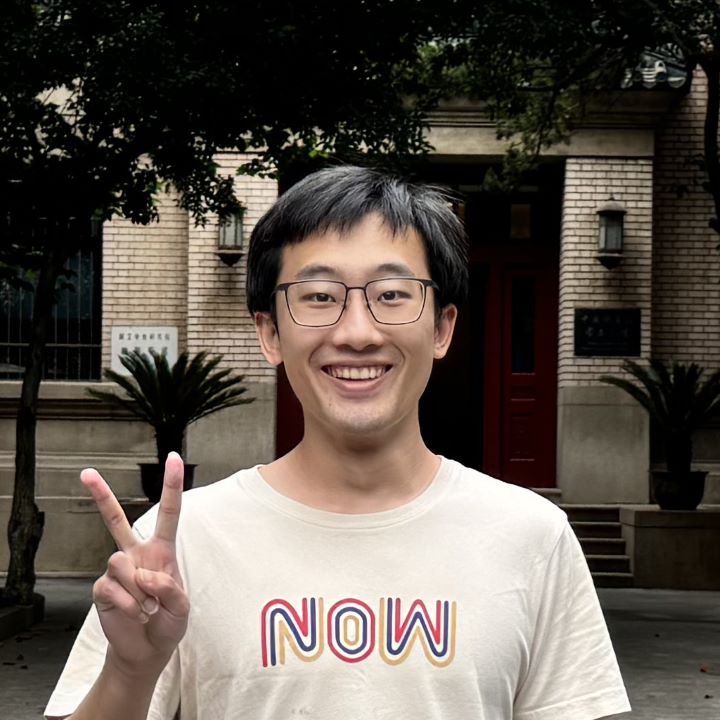
 Yuji Yang
1 previous affiliation
- Sun Yat-sen University2018–2024
- Researcher · 2020–2024
- MS student · 2018–2020
Research Overview
Yuji Yang focuses on real-time physics simulation, 3D reconstruction, and the development of differentiable physical models to bridge the gap between virtual and physical environments. Currently an engine engineer at SGRA-Studio (Tencent) and formerly a research assistant at Sun Yat-sen University, Yang’s work integrates continuum mechanics with neural representation methods to improve the fidelity and efficiency of physical property identification. This research trajectory reflects an evolution from applied statistical modeling in diverse domains toward high-level mathematical theory and, ultimately, the engineering of sophisticated simulation frameworks for robotics and computer graphics.
Research Trajectory
The early phase of Yang’s research career, spanning roughly 2004 to 2015, was characterized by the application of modeling and statistical analysis to complex social, environmental, and engineering systems. This period involved investigating public health challenges, such as the psychological status of orphans and the prevention of mother-to-infant HIV transmission, as well as educational methodologies in medical training. By the mid-2010s, this focus shifted toward environmental and civil engineering, specifically the use of empirical models to analyze nitrogen pollution in river basins and the development of fluid-theory-based models for traffic congestion. These works established a foundation in using mathematical frameworks to describe and predict the behavior of physical and social systems.
Between 2021 and 2024, Yang’s work underwent a significant shift toward pure mathematics, specifically within the Langlands program. This period focused on the "local-global compatibility" conjecture, a central problem in number theory and harmonic analysis. By exploring automorphic representations over CM fields, Yang contributed to the theoretical understanding of how local data (at a specific prime) relates to global data (across all primes). This work required a transition into advanced algebraic geometry and representation theory, marking a period of intense theoretical rigor.
Most recently, Yang has pivoted toward the intersection of computer graphics, physics-based animation, and robotics. This current phase focuses on making physical simulations differentiable and integrating them with modern neural rendering techniques like 3D Gaussian Splatting (3DGS). The objective is to enable "sim-to-real" transitions, where physical properties of real-world objects—such as Young’s modulus and Poisson’s ratio—can be identified from visual data and then accurately simulated in virtual environments. This work represents a synthesis of previous experience in mathematical modeling and engine-level development.
Current Directions
Yang’s current research is centered on differentiable physical simulation and its applications in 3D reconstruction. A primary focus is the development of frameworks that can infer the material properties of objects directly from video sequences. By combining the Material Point Method (MPM) with neural representations, Yang aims to create simulations that are not only visually realistic but also physically grounded, allowing for more effective robot learning and interaction in complex environments.
Another significant direction is the optimization of real-time physics engines. This involves implementing finite element methods (FEM) and other continuum mechanics solvers in high-performance programming languages to support both explicit and implicit simulations. The goal is to provide game engines and robotic simulators with the ability to handle large-scale elastic deformations and multi-body interactions with high efficiency.
Representative Work
In GIC: Gaussian-Informed Continuum for Physical Property Identification and Simulation, Yang (as a co-first author) presents a framework that bridges the gap between visual reconstruction and physical simulation. The work addresses the challenge of identifying material properties from multi-view videos by integrating 3D Gaussian Splatting with the Material Point Method. By treating the Gaussians as particles within a continuum mechanics framework, the system can backpropagate gradients from rendering losses to physical parameters. This allows for the simultaneous reconstruction of an object's geometry and the identification of its mechanical properties, such as elasticity, which can then be used for downstream simulation tasks.
The paper A Rank-Two Case of Local-Global Compatibility for l = p represents Yang’s primary contribution to the Langlands program. In this work, Yang proves a new case of the local-global compatibility conjecture for $GL_2$ over CM fields, specifically focusing on the scenario where the prime $l$ is equal to the characteristic $p$. By utilizing automorphy lifting theorems, the research demonstrates that the monodromy on the Galois side matches the automorphic side. This result is significant for the definition of Fontaine-Mazur $\mathcal{L}$-invariants, providing a deeper link between the arithmetic of Galois representations and the analytic properties of automorphic forms.
Furthering this mathematical thread, An Ordinary Rank-Two Case of Local-Global Compatibility for Automorphic Representations of Arbitrary Weight Over CM Fields tackles the compatibility conjecture for representations of arbitrary weight. Yang establishes that for ordinary representations, the local and global components of the Langlands correspondence align as predicted. This work extends previous results that were often restricted to specific weights or field types, contributing to the broader effort to unify various branches of number theory through the Langlands conjectures.
In the domain of civil engineering and logistics, Yang contributed to the development of the Queue Length Model of Road Sections Casued by Traffic Accidents. This research applies two-fluid theory and the principle of flow conservation to model how traffic accidents create bottlenecks and subsequent queues on multi-lane roads. The model accounts for the duration of the accident, the upstream traffic flow, and the reduced capacity of the accident cross-section. This work provided a practical mathematical tool for estimating the rate of queue growth and dissipation, which is essential for traffic management and emergency response planning.
Yang also participated in environmental modeling research, as seen in the Analysis of Economic Factors Affecting Total Nitrogen Pollution from Agricultural Non-Point Source of Daling River Basin. This study utilized the STIRPAT model and ridge regression analysis to identify the economic drivers behind nitrogen pollution. By estimating pollution loads from 2005 to 2011, the work highlighted how specific economic activities contribute to agricultural non-point source pollution, providing an empirical basis for sustainable development policies in the Western Liaoning province.
Earlier work in the medical and social domains is exemplified by the investigation into the Focusing Children AIDS and AIDS Orphans. This research addressed the escalating AIDS crisis in China by analyzing transmission vectors and advocating for composite measures—including pharmacological intervention and obstetric care—to reduce mother-to-infant transmission. While distinct from Yang's later technical work, these early studies demonstrate a long-standing interest in using structured analysis to address complex, real-world problems.
Profile updated
Loading new papers…
Other researchers whose papers cluster into the same research directions — a proxy for overlapping technical interests and shared intellectual neighborhoods.
See something wrong? Report a mistake