

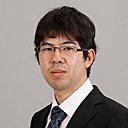
 Yuichi Yoshida
· 1 previous affiliation
- National Institute of InformaticsSince 2022
- Full Professor · Since 2022
Research Overview
Yuichi Yoshida focuses on theoretical computer science, specifically sublinear-time algorithms, property testing, and approximation algorithms. His research trajectory spans from foundational work on bounded-degree constraint satisfaction problems to non-linear spectral graph theory. Recently, his focus has expanded to algorithmic stability, exploring how to design robust algorithms for discrete optimization and machine learning.
Research Trajectory
Yoshida's early work established fundamental results in sublinear-time algorithms and property testing. He introduced an improved constant-time approximation algorithm for maximum matchings and other problems on degree-bounded graphs (An improved constant-time approximation algorithm for maximum matchings). Building on this, he developed optimal constant-time approximation algorithms and unconditional inapproximability results for every bounded-degree constraint satisfaction problem (Optimal constant-time approximation algorithms and (unconditional) inapproximability results for every bounded-degree CSP), contributing to the broader area of The Computational Cost of High Precision. In the domain of property testing, he collaborated on testing subdivision-freeness in bounded-degree graphs (Testing subdivision-freeness: property testing meets structural graph theory), advancing the research direction of One-Sided Error and Structural Certificates in Property Testing. He also provided a characterization of locally testable affine-invariant properties via decomposition theorems (A characterization of locally testable affine-invariant properties via decomposition theorems), which intersects with work in the field of Property Testing Independent of Ambient Dimension.
Transitioning into network analysis and discrete optimization, Yoshida explored non-linear operators, introducing a nonlinear Laplacian for directed graphs (Nonlinear Laplacian for Digraphs and its Applications to Network Analysis). Around the same time, he addressed submodular maximization under knapsack constraints, leveraging the curvature of the objective function to break the traditional approximation barrier (Maximizing a Monotone Submodular Function with a Bounded Curvature under a Knapsack Constraint). His research then expanded into the area of Non-linear Spectral Theory for Hypergraph Analysis, where his group developed the first algorithm for constructing nearly linear size spectral sparsifiers for hypergraphs, overcoming the challenges posed by the non-linear hypergraph Laplacian (Spectral Hypergraph Sparsifiers of Nearly Linear Size). Concurrently, he began investigating the stability of algorithms, analyzing the average sensitivity of graph algorithms to understand how minor input perturbations affect outputs (Average Sensitivity of Graph Algorithms).
The theme of algorithmic stability became a central pillar of his subsequent work, contributing heavily to the research direction of Trading Optimality for Algorithmic Stability. He extended sensitivity analysis to dynamic programming frameworks (Average Sensitivity of Dynamic Programming) and later applied these concepts to resource allocation, formalizing the average sensitivity of the knapsack problem to ensure stable scheduling and planning (Average sensitivity of the Knapsack Problem). This work intersects with the broader area of Randomized Thresholding for Algorithmic Stability and Statistical Power. He also established the first polynomial lower bounds on the sensitivity of randomized approximation algorithms for fundamental combinatorial problems, re-engineering the Probabilistically Checkable Proof framework to be sensitivity-preserving (Sensitivity Lower Bounds for Approximaiton Algorithms).
Alongside stability, Yoshida continued to advance property testing and hypergraph theory. He introduced the concept of "stochastic distance" in property testing, designing ultra-fast distributed testing algorithms for properties like k-edge-connectivity (Stochastic Distance in Property Testing). In hypergraph sparsification, his team provided the first online algorithm capable of processing arriving hyperedges in a stream while maintaining spectral properties (Online Algorithms for Spectral Hypergraph Sparsification). Additionally, he contributed to computational complexity by exploring hardness magnification, specifically deriving lower bounds for the Minimum Circuit Size Problem (MCSP) on restricted computational models (One-Tape Turing Machine and Branching Program Lower Bounds for MCSP).
In his most recent work, Yoshida has bridged theoretical stability guarantees with machine learning and data analysis. He proposed a novel approach to the maximum matching problem by sampling from Gibbs distributions to achieve significantly lower sensitivity bounds, providing a robust framework for differential privacy (Low-Sensitivity Matching via Sampling from Gibbs Distributions). Moving into deep learning, he investigated the "simplicity bias" of Transformer models, introducing noise stability as a metric to quantify this bias and proposing regularization methods to accelerate training and generalization (Noise Stability of Transformer Models). Addressing the replicability crisis in reinforcement learning, his group developed a near-optimal sample-efficient algorithm for replicable reinforcement learning in episodic environments, proving that stable policies can be learned without prohibitive data requirements (From Generative to Episodic: Sample-Efficient Replicable Reinforcement Learning). Finally, he explored online variants of Principal Component Analysis and spectral clustering, demonstrating that a subspace-preserving regularizer can provide provable approximation and consistency guarantees when new data points are added (Consistent PCA and Spectral Clustering). Furthermore, Yoshida has brought property testing techniques into database theory by characterizing the testability of homomorphism inadmissibility for conjunctive queries, proving that constant-query one-sided error testing is possible if and only if the relational structure's core is α-acyclic (Testability of Homomorphism Inadmissibility: Property Testing Meets Database Theory).
Current Directions
The most recent papers in the evidence indicate a strong focus on extending algorithmic stability and replicability into complex machine learning domains. Recent work investigates the noise stability of large-scale neural architectures, such as Transformers, to better understand and improve their generalization capabilities. Additionally, there is an emphasis on designing sample-efficient algorithms for replicable reinforcement learning, ensuring that policies remain stable and repeatable across episodic environments. This commitment to robust, trustworthy algorithms also extends to unsupervised learning, where current efforts address the consistency of spectral clustering and PCA in online settings, ensuring that data representations remain stable as new information is introduced.
Profile updated
| Paper | Venue | Year |
|---|---|---|
| Average Sensitivity of Decision Tree LearningGitHubsato9hara/ | ICLR | 2023 |
Loading new papers…
Other researchers whose papers cluster into the same research directions — a proxy for overlapping technical interests and shared intellectual neighborhoods.
See something wrong? Report a mistake