

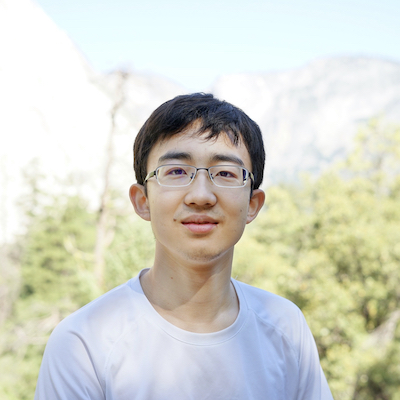
 Yuhui Zhang
· 2 previous affiliations
- Stanford UniversityCurrent
- Current
- Postdoc · 2025–2026
- PhD student · 2021–2025
- MS student · 2019–2021
- Tsinghua University2015–2019
- Undergrad student · 2015–2019
1 other author named Yuhui Zhang: Yuhui Zhang (Institute of Science Tokyo · 1 paper)
Research Overview
Yuhui Zhang focuses on the foundations of multimodal machine learning and its applications to computational science. His research investigates the geometric properties of cross-modal representations, the evaluation of vision-language models, and the use of generative AI for simulating cellular biology. Recently, he has been developing flow-matching techniques for cellular morphology prediction and exploring multimodal logical reasoning.
Research Trajectory
Beginning in 2024, Zhang's work heavily examined the foundational mechanisms and limitations of multimodal machine learning. He introduced Connect, Collapse, Corrupt: Learning Cross-Modal Tasks with Uni-Modal Data, a mathematically grounded three-step method ($C^3$) designed to bridge the modality gap in embedding spaces. This approach enabled state-of-the-art zero-shot performance on tasks like image captioning and text-to-image generation without requiring expensive paired datasets during training. Concurrently, he investigated the architectural constraints of multimodal systems, publishing Pre-trained Language Models Do Not Help Auto-regressive Text-to-Image Generation. This research demonstrated that the distinct semantics of discrete visual tokens render pre-trained language models largely ineffective for auto-regressive visual generation. He also explored the diagnostic evaluation of these systems in Why are Visually-Grounded Language Models Bad at Image Classification?, utilizing linear probing of internal network representations to understand failure modes in basic visual tasks.
In 2025, Zhang expanded his focus to the intersection of generative AI and computational biology. He developed CellFlux: Simulating Cellular Morphology Changes via Flow Matching, a generative model that simulates how cellular shapes respond to chemical or genetic perturbations. By framing this as a distribution-to-distribution problem and utilizing flow matching to map unperturbed cell distributions to perturbed states, the model effectively filters out experimental noise and outperforms existing diffusion and GAN-based models. This work contributes significantly to the research direction of Correcting Technical Batch Effects for Cross-Study Biological Integration, advancing the development of "virtual cells" for drug discovery. Alongside his biological research, Zhang continued to refine multimodal evaluation methodologies. He proposed an agentic framework in Automated Generation of Challenging Multiple-Choice Questions for Vision Language Model Evaluation to convert open-ended visual question answering prompts into objective multiple-choice formats, supporting the broader area of Shifting from Static Benchmarks to Dynamic Evaluation.
Moving into 2026, Zhang's collaborative efforts have increasingly focused on rigorous reasoning and the reliability of AI in expert domains, aligning with the broader research area of Why General Language Models Fail at Expert Tasks. He participated in the development of MuSLR: Multimodal Symbolic Logical Reasoning, a benchmark comprising over a thousand instances designed to test the deterministic deduction capabilities of vision-language models using formal logic. In the medical domain, he contributed to Can Large Language Models Match the Conclusions of Systematic Reviews?, which introduced the MedEvidence benchmark. This study revealed that advanced models often struggle with scientific skepticism and trust low-quality data that human experts would discard, noting that medical fine-tuning can surprisingly degrade performance on this task. Additionally, he collaborated on Transductive Visual Programming: Evolving Tool Libraries from Experience for Spatial Reasoning, a framework that allows vision-language models to abstract successful code patterns from past experiences to build reusable tools for complex 3D spatial reasoning. Zhang also contributed to Tool Verification for Test-Time Reinforcement Learning, introducing a verification-aware test-time reinforcement learning method ($T^3\text{RL}$) that uses external tool evidence to avoid false-popular consensus rewards when adapting reasoning models. In representation learning, Zhang co-authored Learning to See Through Language: An Exploration of Language Modeling's Effect on Visual Representations, probing multimodal LLMs across dense visual tasks to show that language modeling enhances semantic visual representations while introducing cross-layer adapters for downstream vision tasks. Furthermore, in AutoMem: Automated Learning of Memory as a Cognitive Skill, Zhang collaborated on treating memory management as a trainable skill through dual-loop optimization of memory structures and proficiency for long-horizon agent tasks.
Current Directions
The most recent papers in the evidence indicate a dual focus on rigorous multimodal reasoning and the application of generative models to scientific simulation. In the realm of multimodal systems, recent work investigates how vision-language models handle complex spatial reasoning, visual representation learning through language modeling, test-time reinforcement learning with tool verification, and learnable memory skills for long-horizon agents. Concurrently, in computational biology, ongoing research addresses the simulation of cellular morphology, utilizing flow matching techniques to model biological perturbations and correct for experimental artifacts in cross-study integration.
Profile updated
Loading new papers…
Other researchers whose papers cluster into the same research directions — a proxy for overlapping technical interests and shared intellectual neighborhoods.
See something wrong? Report a mistake