

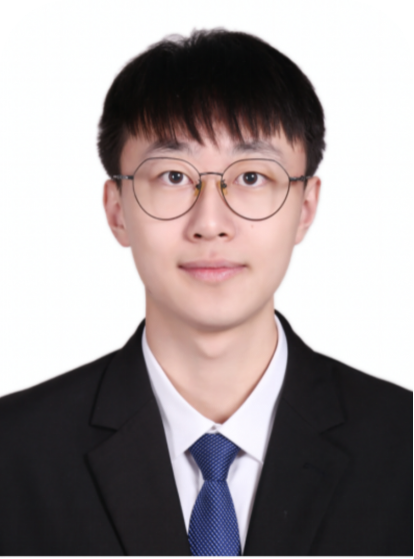
 Yuhao Wang
· 1 previous affiliation
- Dalian University of TechnologySince 2020
- MS student · Since 2024
- Current
- Undergrad student · 2020–2024
16 other authors named Yuhao Wang: Yuhao Wang (Google (United States) · 38 papers), Yuhao Wang (Tsinghua University · 26 papers), Yuhao Wang (Alibaba Group (China) · City University of Hong Kong · 17 papers), Yuhao Wang (Nanyang Technological University · 7 papers), Yuhao Wang (Amazon (United States) · National University of Singapore · 6 papers), and 11 more
Research Overview
Yuhao Wang focuses on multi-modal computer vision, specifically object re-identification and semantic segmentation across diverse sensory inputs. His work addresses the challenges of aligning features from different spectra, mitigating background noise, and efficiently processing complex visual data. Recently, his research investigates advanced architectures like state-space models and hypergraph interactions to improve cross-modal fusion and perception in adverse environments.
Research Trajectory
Wang’s research trajectory is characterized by a sustained focus on integrating diverse visual modalities to improve the robustness of computer vision systems, particularly in scenarios where single-modal data is insufficient. Beginning in 2024, his work heavily emphasized multi-spectral and multi-modal object re-identification (ReID), a challenging domain where variations in lighting, background clutter, and missing spectral information frequently degrade performance.
He introduced a novel framework to address these specific distribution gaps in TOP-ReID: Multi-Spectral Object Re-identifcation with Token Permutation. Recognizing the potential of Vision Transformers (ViTs) for this task, Wang developed a cyclic token permutation module alongside a complementary reconstruction module. These components were designed to effectively align features across different spectra and synthesize missing spectral information. This approach significantly improved re-identification accuracy in challenging, incomplete-data scenarios, directly advancing the research direction Bridging the Modality Gap in Cross Spectral Vision.
In parallel, Wang collaborated on further refining multi-modal ReID systems by addressing the interference caused by irrelevant backgrounds. He contributed to the development of Magic Tokens: Select Diverse Tokens for Multi-modal Object Re-Identification. This work proposed the EDITOR learning framework, which utilizes a shared Vision Transformer to extract tokenized features from various input modalities. By implementing a spatial-frequency token selection mechanism, the framework successfully isolates diverse, highly relevant tokens while discarding background noise, thereby mitigating the modality gaps that often hinder multi-modal fusion.
Expanding his focus beyond object re-identification, Wang also applied multi-modal techniques to scene understanding and semantic segmentation. He contributed to Sigma: Siamese Mamba Network for Multi-Modal Semantic Segmentation, which sought to enhance AI perception in adverse conditions such as low-light or overexposed environments. Traditional approaches to this problem have relied on Convolutional Neural Networks (CNNs), which suffer from limited local receptive fields, or Vision Transformers, which incur quadratic computational complexity. To overcome these architectural limitations, Wang and his collaborators leveraged the advanced Mamba state-space architecture. By fusing traditional RGB data with complementary X-modalities like thermal and depth information within a Siamese Mamba network, the model achieved more reliable predictions without the prohibitive computational costs of standard ViTs.
The most recent work in the evidence, published in 2026, demonstrates Wang’s continued participation in designing complex, noise-resistant multi-modal architectures. He was part of the research team that developed STMI: Segmentation-Guided Token Modulation with Cross-Modal Hypergraph Interaction for Multi-Modal Object Re-Identification. This framework tackles persistent issues of background noise and information loss in ReID by utilizing segmentation masks to explicitly guide feature modulation. Furthermore, it employs learnable queries to create compact token representations and utilizes hypergraphs to facilitate intricate cross-modal interactions. These mechanisms align closely with the broader area of Mask-Guided Feature Extraction for Precise Visual Understanding and the research direction Information Filtering for Robust Multimodal Fusion, highlighting a trajectory that increasingly relies on structural priors and advanced graph-based interactions to synthesize disparate visual signals.
Current Directions
Based on the most recent papers in the evidence, Wang’s current research investigates highly efficient, structurally guided architectures for multi-modal visual understanding. A primary theme is the transition away from standard Vision Transformers toward alternative foundational architectures, such as state-space models (e.g., Mamba), to achieve global receptive fields without quadratic scaling costs. This enables the processing of high-resolution, multi-modal inputs—such as paired RGB, thermal, and depth data—more efficiently in adverse environmental conditions.
Additionally, recent work addresses the persistent challenge of background noise in cross-modal fusion by incorporating explicit structural priors. This includes utilizing segmentation masks to modulate token extraction and employing hypergraph structures to model complex, higher-order relationships between different modalities. Together, these directions indicate a focus on creating robust, computationally efficient perception systems that can reliably filter information and align features across diverse sensory inputs.
Profile updated
Loading new papers…
Other researchers whose papers cluster into the same research directions — a proxy for overlapping technical interests and shared intellectual neighborhoods.
See something wrong? Report a mistake