

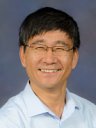
 Yuguang Fang
· 4 previous affiliations
- City University of Hong KongSince 2022
- Full Professor · 2022–2099
- Current
- University of FloridaSince 2000
- Emeritus · 2022–2099
- Full Professor · 2005–2022
- Associate Professor · 2003–2005
- Assistant Professor · 2000–2003
- Boston University1995–1997
- PhD student · 1995–1997
- Case Western Reserve University1989–1994
- PhD student · 1989–1994
Research Overview
Yuguang Fang focuses on wireless networking, mobile computing, and the security of connected autonomous systems. His early research established foundational analytical models for performance and location management in wireless networks. More recently, his work addresses collaborative perception for autonomous vehicles, edge computing optimization, and the adversarial robustness of artificial intelligence models.
Research Trajectory
Fang’s early research established rigorous mathematical foundations for the analysis of wireless mobile networks. In the early 2000s, he developed comprehensive analytical frameworks to evaluate network performance and mobility management. This work included General Modeling and Performance Analysis for Location Management in Wireless Mobile Networks (2002), which provided a generalized approach to understanding location tracking overhead. He subsequently expanded these methodologies in Modeling and performance analysis for wireless mobile networks: a new analytical approach (2005), offering new mathematical tools to capture the complex dynamics of mobile user behavior and network resource allocation.
As wireless networks evolved to support distributed computation and machine learning, Fang’s focus expanded to edge computing and resource orchestration. His research group has investigated how to efficiently deploy AI models across distributed, resource-constrained environments, contributing to the research direction of Joint Communication and Computation Resource Allocation. In PartialLoading: User Scheduling and Bandwidth Allocation for Parameter-sharing Edge Inference (2025), he and his collaborators introduced a scheduling framework that exploits parameter sharing among AI models to bypass significant memory loading overheads, thereby increasing the number of users served within strict latency deadlines. To address the challenges of federated learning in heterogeneous wireless environments, he co-developed FedOC: Multi-Server FL with Overlapping Client Relays in Wireless Edge Networks (2025). This framework utilizes clients in overlapping coverage areas as both communication relays and training participants to reduce latency. Additionally, his work on aerial networks includes UAV-enabled Computing Power Networks: Task Completion Probability Analysis (2025), which uses stochastic geometry to model drones as dynamic relays that bridge ground users with scattered computing resources. Expanding on multi-UAV coordination, Fang co-developed CA3D: Computing Accessibility-Aware Cooperative 3D Deployment of Multiple UAVs (2026) to optimize three-dimensional deployment while accounting for computing accessibility.
A major theme in Fang’s recent trajectory is the connectivity, perception, and safety of autonomous systems. He has extensively explored how autonomous vehicles can share sensor data to overcome individual line-of-sight limitations, advancing the broader areas of Overcoming Sensor Occlusion Through Collaborative Perception and Collaborative Perception for Networked Autonomy. This research includes PACP: Priority-Aware Collaborative Perception for Connected and Autonomous Vehicles (2024) and a comprehensive overview of the domain in Collaborative Perception for Connected and Autonomous Driving: Challenges, Possible Solutions and Opportunities (2025). To enhance high-capacity vehicular communications, Fang also co-authored Shatter Throughput Ceilings: Leveraging Reflection Surfaces to Enhance Transmissions for Vehicular Fast Data Exchange (2026), examining reconfigurable reflection surfaces to overcome throughput bottlenecks during fast vehicular data exchange. In parallel, Fang's group introduced Mobility Helps Learning: Unsupervised Model Adaptation for Object Recognition via Movement (2026), presenting MoCaFe to capitalize on multi-view prediction variance from agent mobility for unsupervised test-time adaptation and reliable pseudo-label generation.
Recognizing the vulnerabilities inherent in multi-agent systems that rely on shared sensor data, Fang has developed robust defense mechanisms against malicious "insider" attacks, contributing to the area of Adversarially Robust Collaborative Perception in Autonomous Networks. In GCP: Guarded Collaborative Perception with Spatial-Temporal Aware Malicious Agent Detection (2025), his team introduced a framework that verifies the spatial consistency and temporal motion patterns of shared data to neutralize sophisticated blind-area confusion attacks. Similarly, CP-Guard: A Unified, Probability-Agnostic, and Adaptive Framework for Malicious Agent Detection and Defense in Multi-Agent Embodied Perception Systems (2025) provides a real-time, adaptive thresholding mechanism to detect adversarial messages without requiring prior knowledge of attack frequencies. His investigation into vehicular security also extends to physical-world vulnerabilities, as seen in The Fluorescent Veil: A Stealthy and Effective Physical Adversarial Patch Against Traffic Sign Recognition (2025). This work, which aligns with the research direction of Overcoming the Digital to Physical Domain Gap, demonstrates how invisible fluorescent ink triggered by ultraviolet light can deceive autonomous vehicle perception systems in low-light conditions.
Most recently, Fang’s research has addressed the broader security and intellectual property challenges of generative AI and deep neural networks. A significant portion of this work focuses on model watermarking. In RecoverMark: Robust Watermarking for Localization and Recovery of Manipulated Faces (2026), he explored proactive defenses against AI-generated face manipulation, addressing the fragility of dual-watermark strategies. To mitigate the intrusiveness of traditional watermarking, his group proposed NWaaS: Nonintrusive Watermarking as a Service for X-to-Image DNN (2026), which aims to protect model ownership without altering internal parameters or behavior. He has also investigated the vulnerabilities of existing protection schemes, demonstrating in Box-Free Model Watermarks Are Prone to Black-Box Removal Attacks (2026) that sophisticated black-box methods can overwrite watermarks in image processing models. To counter such threats, he co-authored Decoder Gradient Shield: Provable and High-Fidelity Prevention of Gradient-Based Box-Free Watermark Removal (2026), introducing a protection layer in the decoder API to prevent gradient-based attacks.
Alongside AI security, Fang has also explored the efficiency of reasoning models. In Optimizing Agentic Reasoning with Retrieval via Synthetic Semantic Information Gain Reward (2026), he and his collaborators developed a framework that trains reasoning agents to optimize their information retrieval by rewarding them for reducing their own uncertainty, resulting in more accurate and efficient search steps. Fang also contributed to generative video modeling in Hindsight Forcing: Learning Better History from the Future in Autoregressive Video Diffusion (2026), introducing a latent straight-through bridge that routes gradients from future chunk outcomes back to historical denoising steps without incurring backpropagation-through-time memory explosions.
Current Directions
Based on his most recent work, Fang’s current research is heavily focused on the intersection of artificial intelligence, security, and distributed systems. A primary direction involves the intellectual property protection and integrity verification of deep learning models. This includes developing nonintrusive watermarking services for generative AI, analyzing the vulnerabilities of box-free watermarking to black-box removal attacks, and designing provable defenses against gradient-based exploitation.
Another major ongoing theme is the adversarial robustness of collaborative perception in autonomous networks. His recent papers investigate how to secure multi-agent embodied systems against both digital insider attacks—by leveraging spatial-temporal consistency and adaptive anomaly detection—and physical-world adversarial patches that exploit sensor perception gaps. Finally, his work continues to optimize the performance of AI at the network edge, exploring parameter-sharing inference scheduling, multi-server federated learning, and the optimization of agentic reasoning through mathematically grounded information gain rewards.
Profile updated
Loading new papers…
Other researchers whose papers cluster into the same research directions — a proxy for overlapping technical interests and shared intellectual neighborhoods.
See something wrong? Report a mistake