

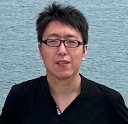
 Yueming Lyu
· 4 previous affiliations
- Senior Research Scientist · Since 2026
- Research Scientist · 2022–2026
- University of Technology Sydney2018–2022
- PhD student · 2018–2022
- Tencent (China)2017–2018
- Research intern · 2017–2018
- City University of Hong Kong2015–2017
- Student · 2015–2017
1 other author named Yueming Lyu: Yueming Lyu (Nanjing University · 31 papers)
Research Overview
Yueming Lyu focuses on statistical machine learning, black-box optimization, and approximation theory. His research trajectory spans from scalable kernel methods and Quasi-Monte Carlo sampling to advanced zeroth-order optimization techniques for reinforcement learning and generative models. Currently, his work addresses multi-agent coordination, neuro-symbolic planning, and efficient inference for large-scale video generation models.
Research Trajectory
The early trajectory of this research addressed the scalability bottlenecks inherent in kernel methods. In Spherical Structured Feature Maps for Kernel Approximation (2017), he tackled the computational explosion associated with large datasets by developing structured feature maps to make Gaussian Processes and Support Vector Machines more tractable.
This foundational interest in approximation theory naturally extended to Quasi-Monte Carlo (QMC) methods. Contributing to the research direction of Low Discrepancy Sampling for High Dimensional Problems, he introduced a closed-form rank-1 lattice construction method based on group theory in Subgroup-based Rank-1 Lattice Quasi-Monte Carlo (2020). This approach significantly reduced the time required to generate regular lattices for integral approximation and Bayesian inference. Concurrently, he explored robust machine learning paradigms, addressing label corruption through Curriculum Loss: Robust Learning and Generalization against Label Corruption (2020). This work proposed an adaptive loss function that acts as a tighter upper bound to the 0-1 loss, allowing networks to focus on clean data without relying on complex multi-network architectures.
In 2021, the focus expanded into black-box optimization, a critical area for reinforcement learning and scientific design where only function queries are available. He developed a novel framework in Black-box Optimizer with Implicit Natural Gradient, offering a robust and precise alternative to existing methods like CMA-ES for challenging, ill-conditioned problems. This theoretical groundwork was further solidified by his research on Efficient and Robust Black-box Integral-approximation and Optimization.
Building on these optimization frameworks, subsequent work bridged QMC sampling with high-dimensional optimization. In Fast Rank-1 Lattice Targeted Sampling for Black-box Optimization (2023), he utilized structured rank-1 lattices to reduce Gaussian Process training costs from cubic to near-linear time, achieving significant computational speedups and advancing the area of Scalable Bayesian Optimization Beyond Gaussian Processes. This expertise in optimization was then applied to generative models. To enable user-preferred targeted generation using only black-box scores, he and his collaborators developed Covariance-Adaptive Sequential Black-box Optimization for Diffusion Targeted Generation (2024), contributing to the broader field of Sample Efficient Optimization for High Cost Objectives. Returning to the intersection of deep learning and kernel methods, he also introduced the Neural Optimization Kernel in Neural Optimization Kernel: Towards Robust Deep Learning (2024), framing neural network optimization as monotonic descent steps on implicit regularization problems to improve robustness against input noise and adversarial attacks.
The focus on black-box optimization continued to evolve with Nonparametric Distributional Black-box Optimization via Diffusion Process (2025), which leveraged diffusion models to learn and sample from complex, non-parametric distributions, bypassing the limitations of traditional Gaussian-based exploration. In parallel, his research expanded into multi-agent systems, as seen in Graph Potential Field Neural Network for Massive Agents Group-wise Path Planning (2025), which addressed scalable search and learning for complex pathfinding scenarios.
Most recently, his work has encompassed neural operators, agentic AI, and efficient video generation. His research introduced IKNO: Infinite-order Kernel Neural Operators (2026), a novel architecture that uses infinite-order kernel integrals to overcome expressivity limitations in partial differential equation (PDE) benchmarks. In the domain of long-horizon multi-agent coordination, he contributed to Grounding Long-Horizon Agent Coordination in GUI Environments via Contract-based Structural Planning (2026), which introduced a framework to mitigate context drift by grounding coordination in shared plan substrates rather than transient textual histories. He also explored neuro-symbolic skill induction in Lifting Traces to Logic: Programmatic Skill Induction with Neuro-Symbolic Learning for Long-Horizon Agentic Tasks (2026), translating raw interaction histories into robust, logic-grounded programs. Finally, addressing the computational bottlenecks of large-scale models, his collaborative work includes DSA: Efficient Inference For Video Generation Models via Distributed Sparse Attention (2026), advancing the research direction of Scaling Video Transformers via Spatiotemporal Sparsity by combining sparse attention patterns with mixed parallelism to accelerate inference.
Current Directions
The most recent papers in the evidence indicate a strong focus on scaling and grounding complex AI systems, particularly in multi-agent and generative contexts. Recent work investigates long-horizon agent coordination, utilizing neuro-symbolic learning and contract-based structural planning to prevent context drift and improve robustness in GUI environments. By lifting raw interaction traces into modular, logic-grounded programs, this research aims to build agents capable of handling complex workflows with branching logic.
Additionally, ongoing research addresses the computational efficiency of large-scale models, exploring distributed sparse attention mechanisms to break the quadratic bottleneck and accelerate inference in video generation. Another active area involves advancing approximation theory through infinite-order kernel neural operators, aiming to solve complex, industrial-scale partial differential equations with higher accuracy and global information aggregation.
Profile updated
Loading new papers…
Other researchers whose papers cluster into the same research directions — a proxy for overlapping technical interests and shared intellectual neighborhoods.
See something wrong? Report a mistake