

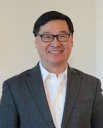
 Yuefan Deng
· 1 previous affiliation
- Stony Brook UniversitySince 1990
- Full Professor · Since 1990
Research Overview
Yuefan Deng focuses on computational science, algorithm development, and machine learning for complex physical systems. Their trajectory spans from adversarial robustness in deep learning to advanced optimization and generative modeling for molecular dynamics and partial differential equations. Recent work investigates physics-constrained diffusion models and resolution-invariant neural operators for scientific computing.
Research Trajectory
The trajectory begins with contributions to deep learning security, specifically addressing the fragility of neural networks to adversarial attacks. In 2022, Deng and collaborators developed AGKD-BML: Defense Against Adversarial Attack by Attention Guided Knowledge Distillation and Bi-directional Metric Learning. This work introduced a novel adversarial training model that transfers attention knowledge from a clean teacher model to a student model trained on adversarial examples. By employing bi-directional metric learning, the approach regularizes feature space representations, advancing research in the area of Aligning Attention Maps for Adversarial Robustness and mitigating vulnerabilities related to the direction of Adversarial Hijacking of Neural Attention Mechanisms.
Subsequent research shifted toward the intersection of machine learning, physical systems, and advanced optimization algorithms. A major focus has been the development of robust models for scientific computing. In the domain of parametric partial differential equations (PDEs), Deng led the development of APOD: Adaptive PDE-Observation Diffusion for Physics-Constrained Sampling. This framework dynamically couples PDE constraints with measurement data during the reverse diffusion sampling process, balancing PDE-consistency with data-fidelity to produce physically valid solutions even under sparse or noisy observations.
Parallel to this, Deng has advanced classical optimization techniques by integrating them with modern machine learning. The paper RL‑QESA: Reinforcement‑Learning Quasi‑Equilibrium Simulated Annealing presents a framework that couples simulated annealing with an adaptive, learning-based cooling schedule. By utilizing a policy network to observe block-level statistics and adjust temperatures based on quasi-equilibrium predictions, this approach accelerates convergence for challenging global optimization tasks while retaining classical theoretical guarantees.
Deng's work also extends to computational biology and molecular dynamics. Addressing the challenges of mapping coarse-grained protein representations back to fine-grained atomistic details, they introduced An Iterative Framework for Generative Backmapping of Coarse Grained Proteins. Utilizing conditional Variational Autoencoders and graph-based neural networks, this multistep scheme enables stepwise refinement of complex biomolecules. This research contributes significantly to the broader area of Graph Neural Networks for Molecular and Materials Representation, improving both the accuracy and computational efficiency of reconstructions for ultra-coarse representations.
Further exploring the theoretical and practical limitations of machine learning in scientific computing, Deng participated in research examining neural operators. The study Discretization-invariance? On the Discretization Mismatch Errors in Neural Operators investigates the discrepancy in outputs when neural operators process data at different resolutions. The findings highlight that training at lower resolutions and inferring at finer ones can introduce significant errors. To resolve this, the authors proposed a cross-resolution operator-learning pipeline free of aliasing, advancing the research direction of Resolution Invariant Neural Operators for Continuous Physical Systems and supporting efforts in the areas of Learning Partial Differential Equations on Irregular Domains and Mitigating Error Propagation in Deep Model Compression.
Current Directions
The most recent papers in the evidence indicate a strong focus on integrating deep learning with rigorous physical constraints and classical optimization frameworks. Current work investigates the use of diffusion models for physics-constrained sampling, particularly in scenarios involving partial or noisy observations of partial differential equations. Additionally, Deng is exploring the application of reinforcement learning to automate and optimize temperature schedules in simulated annealing, as well as advancing generative graph-based models for the multiscale simulation and backmapping of complex biological macromolecules.
Profile updated
Loading new papers…
Other researchers whose papers cluster into the same research directions — a proxy for overlapping technical interests and shared intellectual neighborhoods.
See something wrong? Report a mistake