

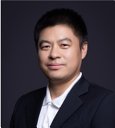
 Yuedong Yang
· 3 previous affiliations
- Sun Yat-sen UniversitySince 2017
- Full Professor · Since 2025
- Full Professor · Since 2017
- Griffith University2013–2017
- Principal Researcher · 2013–2017
- Researcher · 2006–2013
1 other author named Yuedong Yang: Yuedong Yang (The University of Texas at Austin · 8 papers)
Research Overview
Yuedong Yang focuses on the development of advanced machine learning methodologies for bioinformatics, computational biology, and efficient deep learning. His work spans the design of graph neural networks for molecular and cellular analysis, self-supervised language models for genomic sequences, and optimization frameworks for resource-constrained environments. Currently, his research emphasizes the integration of multi-omics data and the development of scalable, interpretable models for drug discovery and precision medicine.
Research Trajectory
The evolution of Yang’s research reflects a transition from general computer vision and pattern recognition toward specialized applications in the life sciences and high-performance computing. In his early career, Yang investigated fundamental problems in video analysis, such as View-invariant action recognition using interest points, which utilized space-time interest points and Bayesian classification to handle viewpoint variability. This early work established a foundation in feature extraction and statistical modeling that would later inform his approach to biological data.
By the late 2010s, Yang shifted his focus toward structural biology and genomics, applying machine learning to predict molecular interactions. He addressed the challenge of identifying protein-peptide binding sites, a critical task for drug discovery, by developing Structure-based prediction of protein- peptide binding regions using Random Forest. This period marked a move toward integrating structural information with supervised learning to improve the efficiency of experimental biological studies.
As single-cell sequencing technologies matured, Yang’s work expanded into transcriptomics. He recognized that traditional clustering methods often failed to capture the complex relationships between individual cells. To address this, he introduced GraphSCC, a method for Accurately Clustering Single-cell RNA-seq data by Capturing Structural Relations between Cells through Graph Convolutional Network. This work demonstrated the utility of graph-based representations in biological domains, a theme that became central to his subsequent research. He further refined these techniques to handle batch effects and biological variations across different platforms and species through scAdapt: virtual adversarial domain adaptation network for single cell RNA-seq data classification across platforms and species.
In the early 2020s, Yang began addressing the computational overhead associated with training large-scale models. This led to a series of contributions in Budget-Aware Optimization for Efficient Deep Learning and Accelerating Training by Reducing Backward Pass Overhead. A key contribution in this area was the development of SUGAR: Efficient Subgraph-level Training via Resource-aware Graph Partitioning, which enabled the training of large graph neural networks on edge devices by minimizing inter-device communication.
Yang has also integrated large-scale pretraining and multimodal learning into their research program. They developed self-supervised models for genomic sequences, such as Self-supervised learning on millions of primary RNA sequences from 72 vertebrates improves sequence-based RNA splicing prediction, and explored the capabilities of multimodal large language models (MLLMs) in understanding complex visual information through OIG-Bench: A Multi-Agent Annotated Benchmark for Multimodal One-Image Guides Understanding.
Continuing into 2025, Yang pushed single-cell foundation modeling to unprecedented scales by introducing CellFM: a large-scale foundation model pre-trained on transcriptomics of 100 million human cells and investigated self-supervised multi-omics clustering in Integrating single-cell multi-omics data through self-supervised clustering, alongside participating in Hypergraph-driven spatial multimodal fusion for precise domain delineation and tumor microenvironment decoding to resolve spatial cellular niches. In protein modeling, Yang advanced multi-modal representation by Integrating Evolutionary Sequences with Geometric Protein Structures in A Novel Framework for Multi-Modal Protein Representation Learning, introduced An Online Server for Geometry-Aware Protein Function Annotations Through Predicted Structure, and captured higher-order mutational effects on binding affinity in Accurately Predicting Protein Mutational Effects via a Hierarchical Many-Body Attention Network. To enhance molecular property prediction and drug discovery, Yang applied Geometric Equivariance in 3D Molecular Deep Learning to atomic quartets in Quadruple Attention in Many-body Systems for Accurate Molecular Property Predictions, developed Multi-modal Contrastive Learning with Negative Sampling Calibration for Phenotypic Drug Discovery, optimized active learning policies for screening in Reinforced Active Learning for Large-Scale Virtual Screening with Learnable Policy Model, and combined causal retrieval with information bottlenecks in Incorporating Retrieval-based Causal Learning with Information Bottlenecks for Interpretable Molecular Graph Learning. Additionally, Yang applied multimodal data fusion to civil infrastructure in Safety Evaluation of Bridge under Moving Abnormal Indivisible Load Based on Fusing Bridge Inspection Data and Load Test Data.
Current Directions
Yang’s current research is organized around three primary pillars: genomic foundation models, efficient graph learning, and multimodal understanding in biomedical contexts.
In the domain of genomics, Yang is focused on leveraging evolutionary information across diverse species to improve the predictive power of sequence-based models. By pretraining on millions of sequences, his work aims to identify evolutionarily conserved elements that govern biological processes like RNA splicing. This direction seeks to overcome the limitations of single-species models and provide a more robust framework for understanding the functional consequences of genetic variations.
His work in efficient deep learning continues to address the "memory wall" and computational bottlenecks of modern AI. This includes research into Memory-Efficient On-Device Learning Without Backpropagation and Activation Compression for Memory Efficient Training. He is also exploring Anytime Neural Networks for Progressive Inference, which allow models to provide intermediate results under strict time constraints, a critical requirement for real-world deployment. This is exemplified by his participation in the development of TIPS: Topologically Important Path Sampling for Anytime Neural Networks, which automates the design of these networks using graph-theoretic principles.
Furthermore, Yang is investigating the intersection of graph generation and chemical synthesis. His recent involvement in Advancing retrosynthesis with retrieval-augmented graph generation explores how retrieval-augmented frameworks can improve the prediction of chemical reactants by preserving molecular scaffolds. This work, alongside his contributions to Accelerating Inference by Reducing Feature Extraction Overhead, reflects a broader interest in making complex AI systems both more accurate and more practical for scientific discovery.
Representative Work
Structure-based prediction of protein- peptide binding regions using Random Forest This work addresses the high cost of experimentally determining protein-peptide interactions. Yang and his colleagues developed a Random Forest-based approach that utilizes structural features of protein-peptide complexes to predict binding sites. The method provides a more efficient alternative to traditional experimental studies, offering insights into cellular processes and drug discovery.
Accurately Clustering Single-cell RNA-seq data by Capturing Structural Relations between Cells through Graph Convolutional Network In this paper, Yang introduced GraphSCC, a framework that applies graph convolutional networks to single-cell RNA sequencing data. By accounting for high-order structural relations between cells rather than treating them as isolated data points, the method achieves superior performance in unfolding cell heterogeneity. This work highlighted the importance of relational information in transcriptomic analysis.
SUGAR: Efficient Subgraph-level Training via Resource-aware Graph Partitioning Addressing the limitations of training Graph Neural Networks (GNNs) on large-scale graphs, Yang proposed the SUGAR framework. This approach partitions graphs into disjoint subgraphs for local training on resource-constrained devices. By eliminating the need for inter-device communication, the framework achieves significant speedups and memory reductions, facilitating the deployment of GNNs in edge computing environments.
To Improve Prediction of Binding Residues With DNA, RNA, Carbohydrate, and Peptide Via Multi-Task Deep Neural Networks This research utilizes multi-task deep neural networks to predict protein residues that bind with various partner molecules. By recognizing that different types of molecules share common binding characteristics, the multi-task approach improves prediction accuracy even when structural data for specific molecule types is limited. This work advances the understanding of uncharacterized protein-molecule interactions.
Self-supervised learning on millions of primary RNA sequences from 72 vertebrates improves sequence-based RNA splicing prediction Yang led the development of SpliceBERT, a language model pretrained on RNA sequences from 72 vertebrate species. By using masked language modeling on a diverse evolutionary dataset, the model effectively identifies conserved genetic elements. When applied to RNA splicing prediction, SpliceBERT demonstrated that cross-species pretraining significantly enhances the model's ability to generalize across different genomic contexts.
OIG-Bench: A Multi-Agent Annotated Benchmark for Multimodal One-Image Guides Understanding In this work, Yang and his team introduced a benchmark for evaluating Multimodal Large Language Models (MLLMs) on information-dense infographics. The study revealed that while current models are proficient at text recognition, they struggle with the spatial logic and semantic consistency required to interpret complex visual guides. The introduction of a multi-agent annotation pipeline provides a new standard for evaluating human-like understanding in MLLMs.
Profile updated
Loading new papers…
Other researchers whose papers cluster into the same research directions — a proxy for overlapping technical interests and shared intellectual neighborhoods.
See something wrong? Report a mistake