

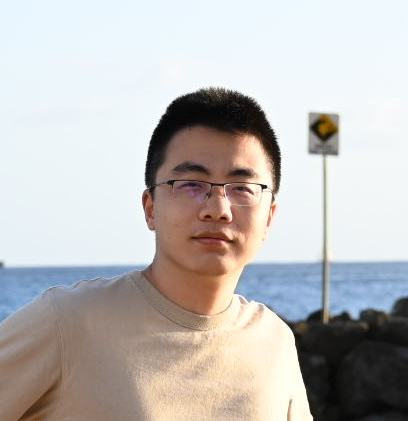
 Yue Wu
· 3 previous affiliations
- Princeton UniversitySince 2024
- Postdoc · Since 2024
- Discover2019–2024
- PhD student · 2019–2024
- Peking University2015–2019
- Undergrad student · 2015–2019
24 other authors named Yue Wu: Yue Wu (Xidian University · 292 papers), Yue Wu (Shanghai Jiao Tong University · 57 papers), Yue Wu (Alibaba Group (China) · 28 papers), Yue Wu (Carnegie Mellon University · 26 papers), Yue Wu (Amazon (United States) · 15 papers), and 19 more
Research Overview
Yue Wu focuses on large-scale reinforcement learning, language model alignment, and the theoretical foundations of preference optimization. Initially exploring representation learning and federated systems, recent work emphasizes non-transitive ranking mechanisms and self-play algorithms to improve the reasoning capabilities of frontier AI models. Currently, research centers on scalable verification, preference modeling, and inference scaling.
Research Trajectory
Yue Wu’s research trajectory demonstrates a consistent progression from the theoretical foundations of machine learning and optimization toward the practical alignment and reasoning capabilities of large language models (LLMs). During doctoral studies at the University of California, Los Angeles (UCLA), early collaborative work investigated the theoretical underpinnings of deep neural networks, exploring how identical architectures trained from different initializations converge on similar representations. This foundational interest in network behavior touched upon themes such as the broader area of Feature Specialization Through Nonlinear Training Dynamics.
A major defining theme of Wu’s subsequent research has been the mathematical modeling of preferences and ranking, particularly the relaxation of traditional transitivity assumptions. In standard ranking models, it is often assumed that if item A is preferred to B, and B to C, then A must be preferred to C—an assumption known as Strong Stochastic Transitivity. Recognizing that real-world human preferences are often noisy and intransitive, Wu collaborated on Active Ranking without Strong Stochastic Transitivity (2022). This work proposed an active learning algorithm capable of recovering exact full rankings from noisy pairwise comparisons without relying on strict transitivity, establishing sample complexity bounds that depend only on adjacent items in the true ranking.
Parallel to this work in ranking, Wu also led research in distributed optimization. As the first author of Personalized Federated Learning under Mixture of Distributions (2023), Wu introduced FedGMM, a novel personalized federated learning framework. By modeling the joint distribution of client data as a mixture of Gaussian components, this approach provided a principled mechanism to handle both covariate and concept shifts across decentralized datasets, enabling robust uncertainty quantification and rapid adaptation to new clients.
Transitioning to a postdoctoral fellowship at the Princeton AI Lab, Wu’s focus synthesized theoretical ranking models with the emerging challenges of language model alignment. This synthesis is evident in the first-author paper Borda Regret Minimization for Generalized Linear Dueling Bandits (2024). Tackling environments where a perfect transitive ranking does not exist, the research utilized the Borda score—the probability an item defeats a random opponent—to establish fundamental regret lower bounds and develop near-optimal algorithms for both stable and changing environments.
This deep theoretical grounding in dueling bandits and non-transitive preferences directly informed Wu’s highly impactful contributions to LLM alignment, advancing the research direction of Learning from Non-Transitive Human Preferences. Standard Reinforcement Learning from Human Feedback (RLHF) often relies on the Bradley-Terry model, which struggles to capture the irrationality of human preferences. In the first-author work Self-Play Preference Optimization for Language Model Alignment (2024), Wu proposed treating language model alignment as a constant-sum two-player game. By seeking the Nash equilibrium policy through iterative self-play updates, the SPPO method bypasses the limitations of parametric preference models, allowing for more flexible and accurate alignment directly from preference probabilities.
Following this breakthrough, Wu continued to refine the infrastructure of preference evaluation. In Ranking with Multiple Oracles: From Weak to Strong Stochastic Transitivity (2025), Wu co-authored a framework for ranking items—such as evaluating different LLMs—using feedback from multiple noisy sources, like diverse human annotators or automated evaluation tasks. By intelligently prioritizing the most accurate oracles for specific comparisons, the method achieved optimal sample complexity under varying degrees of stochastic transitivity.
Current Directions
Transitioning into industry research roles, including time at xAI and subsequently the Meta Superintelligence Lab, the most recent papers in the evidence indicate a strong focus on the reasoning processes, verification, and inference scaling of frontier language models. A primary area of current investigation is the reliability of LLMs in complex mathematical reasoning. Recent collaborative work introduces temporal consistency methods for verification, as detailed in Temporal Consistency for LLM Reasoning Process Error Identification (2025). This approach allows verifier models to iteratively refine their judgments based on previous assessments, significantly improving the detection of process errors in mathematical reasoning tasks.
Additionally, ongoing research addresses the structural challenges of deploying and aligning these models at scale. Recent co-authored studies investigate the pitfalls of margin-based alignment techniques like Direct Preference Optimization (DPO), specifically identifying issues of "gradient entanglement" where models fail to control the absolute probabilities of preferred versus rejected responses. Alongside these alignment refinements, current work also explores dynamic decomposition strategies to improve the efficiency and scaling of LLM inference, reflecting a comprehensive approach to building robust, verifiable, and scalable AI systems.
Profile updated
Loading new papers…
Other researchers whose papers cluster into the same research directions — a proxy for overlapping technical interests and shared intellectual neighborhoods.
See something wrong? Report a mistake