

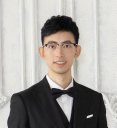
 Yue Wang
· 8 previous affiliations
- Alibaba Group (China)Since 2025
- Researcher · Since 2025
- Tongyi LabSince 2025
- Staff Algorithm Expert · Since 2025
- 01.AI (China)2023–2024
- Staff Research Scientist · 2023–2024
- SalesForce.com2021–2023
- Researcher · 2021–2023
- Salesforce (United States)2019–2023
- Senior Research Scientist · 2021–2023
- Research Intern · 2019–2020
- Applied Scientist · 2020
- Chinese University of Hong Kong2016–2020
- PhD student · 2016–2020
- Sun Yat-sen University2012–2016
- Bachelor's degree, Undergraduate,Computer Science (major) & Business Administration (minor) · 2012–2016
22 other authors named Yue Wang: Yue Wang (Nvidia (United States) · University of Southern California · 70 papers), Yue Wang (Soochow University · 56 papers), Yue Wang (53 papers), Yue Wang (Shenzhen Institute of Computing Sciences · 51 papers), Yue Wang (34 papers), and 17 more
Research Overview
Yue Wang focuses on code intelligence, multimodal large language models, and graphical user interface agents. His early research advanced neural program synthesis and unified vision-language architectures, leading to the development of foundational code models. Currently, his work centers on building and evaluating autonomous multimodal agents capable of complex reasoning and real-world device interaction.
Research Trajectory
Wang's early research explored neural sequence models for programming languages and multimodal data. In 2018, he introduced Code Completion with Neural Attention and Pointer Networks, which utilized a pointer mixture network to improve predictions for dynamically typed languages by addressing out-of-vocabulary constraints. Expanding into vision-language architectures, he contributed to Cross-Media Keyphrase Prediction: A Unified Framework with Multi-Modality Multi-Head Attention and Image Wordings (2020), which jointly modeled text and images to extract keyphrases from noisy social media posts. That same year, he developed VD-BERT: A Unified Vision and Dialog Transformer with BERT, adapting a single-stream transformer to fuse image features with multi-turn conversation history for visual dialog tasks.
During his tenure as a Senior Research Scientist at Salesforce AI Research, Wang led the development of foundational models for code intelligence. This work began with CodeT5: Identifier-aware Unified Pre-trained Encoder-Decoder Models for Code Understanding and Generation (2021), which introduced pre-training tasks that required the model to recover developer-assigned identifiers, establishing strong bimodal semantic alignment for programming and natural languages. Building on this architecture, he designed Detect-Localize-Repair: A Unified Framework for Learning to Debug with CodeT5 (2022), a system that simultaneously performs bug detection, localization, and program repair. This advanced the research direction of Repository Level Context for Neural Program Repair. He also collaborated on CodeRL: Mastering Code Generation through Pretrained Models and Deep Reinforcement Learning (2022), which integrated unit tests and reinforcement learning to improve the functional correctness of generated programs.
In 2023, Wang expanded the capabilities and efficiency of automatic program repair and code generation. He addressed data scarcity in bug fixing with Towards Low-Resource Automatic Program Repair with Meta-Learning and Pretrained Language Models, combining CodeT5 with meta-learning algorithms to resolve rare bug types using minimal examples. He further explored architectural innovations in CodeT5Mix: A Pretrained Mixture of Encoder-decoder Transformers for Code Understanding and Generation, employing a sparse mixture of experts to handle diverse code intelligence tasks. This phase culminated in CodeT5+: Open Code Large Language Models for Code Understanding and Generation, a family of models featuring a flexible architecture capable of operating in encoder-only, decoder-only, or unified modes. This work made significant contributions to the area of Hybrid Causal and Masked Pretraining for Unified Models. Additionally, he contributed to RAP-Gen: Retrieval-Augmented Patch Generation with CodeT5 for Automatic Program Repair, which integrated retrieval mechanisms into the patch generation process.
Transitioning to roles at 01.AI and subsequently as a Staff Algorithm Expert at Tongyi Lab, Wang's focus shifted toward evaluating code reasoning and developing autonomous multimodal agents. He participated in the creation of CodeEditorBench: Evaluating Code Editing Capability of LLMs (2025), a benchmark that highlighted the limitations of language models in code polishing and rewriting, contributing to the broader field of Shifting from Static Benchmarks to Dynamic Evaluation. In the domain of graphical user interfaces, he co-developed Aria-UI: Visual Grounding for GUI Instructions (2025), which utilized a pure-vision approach to ground language instructions to target elements without relying on auxiliary HTML inputs.
His recent work emphasizes real-world deployment and rigorous evaluation of GUI agents. He contributed to MAI-UI Technical Report: Real-World Centric Foundation GUI Agents (2025), which detailed a family of foundation agents utilizing device-cloud collaboration and the Model Context Protocol (MCP). As the senior investigator, he introduced MobileWorld: Benchmarking Autonomous Mobile Agents in Agent-User Interactive and MCP-Augmented Environments (2025), a high-difficulty evaluation framework designed to test long-horizon workflows and interactive clarification tasks. Most recently, he collaborated on UI-Ins: Enhancing GUI Grounding with Multi-Perspective Instruction as Reasoning (2026), which reframed GUI grounding by training models to evaluate interface elements through multiple analytical perspectives using reinforcement learning.
Current Directions
Recent work investigates the development and rigorous evaluation of autonomous multimodal agents designed to interact with graphical user interfaces (GUIs). The most recent papers in the evidence address the challenge of visual grounding, moving away from reliance on auxiliary inputs like HTML or accessibility trees in favor of pure-vision approaches. This includes framing GUI instructions as dynamic analytical pathways rather than static commands, allowing models to evaluate interface elements through multiple perspectives using reinforcement learning. Additionally, current research focuses on establishing high-difficulty benchmarks for mobile agents, testing their ability to handle long-horizon workflows, proactive user clarification, and external tool integration via protocols such as the Model Context Protocol (MCP).
Profile updated
Loading new papers…
Other researchers whose papers cluster into the same research directions — a proxy for overlapping technical interests and shared intellectual neighborhoods.
See something wrong? Report a mistake