

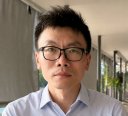
 Yue Li
· 6 previous affiliations
- McGill UniversitySince 2019
- Associate Professor · Since 2025
- Assistant Professor · 2019–2025
- Postdoctoral Research Associate · 2015–2018
- Department of Computer Science2010–2015
- PHD Student · 2010–2015
- Banff International Research Station for Mathematical Innovation and Discovery2015
- Postdoc · 2015
- University of Toronto2010–2014
- Doctor of Philosophy (Ph.D.), Computational Biology · 2012–2014
- Master of Science (MSc), Computational Biology · 2010–2012
- ISMB2014
- grad student · 2014
15 other authors named Yue Li: Yue Li (ByteDance (China) · 字节跳动 · 17 papers), Yue Li (12 papers), Yue Li (University of Amsterdam · 7 papers), Yue Li (Apple (United States) · 2 papers), Yue Li (University of Nottingham Ningbo China · University of Nottingham · 2 papers), and 10 more
Research Overview
Yue Li focuses on developing machine learning methods for computational biology, single-cell multi-omics, and electronic health records. His trajectory spans from generative topic modeling for transcriptomics to deep learning architectures for irregular clinical time-series. Recent work investigates federated learning and foundation models to improve disease prediction and genomic discovery in healthcare.
Research Trajectory
Following his doctoral studies in Computer Science and Computational Biology at the University of Toronto and a postdoctoral fellowship at MIT CSAIL, Li established his research group at McGill University. His work fundamentally addresses the challenge of integrating heterogeneous, genome-wide, and phenome-wide measurements to uncover biological patterns associated with complex diseases.
A major pillar of Li's research involves adapting generative models—particularly topic models—to the high-dimensional, sparse data characteristic of modern biology. In 2021, as senior author, he introduced a generative framework for single-cell RNA sequencing data in Learning interpretable cellular and gene signature embeddings from single-cell transcriptomic data. This work utilized a neural network encoder paired with an interpretable linear decoder to enable zero-shot transfer learning across different tissues and species. By doing so, the model produced highly interpretable gene and topic embeddings that could be linked directly to known biological pathways, offering a scalable tool for transcriptomic analysis.
Li subsequently extended these generative approaches to clinical informatics, specifically targeting the noisy and irregular nature of electronic health records (EHR). In Modeling electronic health record data using an end-to-end knowledge-graph-informed topic model, his lab developed GAT-ETM, an architecture that integrates medical knowledge graphs with EHR data. By employing Graph Attention Networks to learn medical code embeddings directly from clinical taxonomies, the model significantly improved the interpretation of sparse patient data for downstream tasks like disease prediction and drug recommendation. Alongside leading these targeted methodological advances, Li has also participated in broader collaborative efforts to structure biomedical data, such as his contribution to the development of a comprehensive biomedical knowledge graph in Biomedical discovery through the integrative biomedical knowledge hub (iBKH).
As his focus on healthcare data deepened, Li's group began addressing the temporal complexities of clinical records. Standard time-series models often struggle with the irregular sampling intervals typical of patient visits, where observations can be clustered or separated by years. To tackle this, Li led the development of TrajGPT, detailed in TrajGPT: Healthcare Time-Series Representation Learning for Trajectory Prediction. Presented at NeurIPS 2024, this novel time-series Transformer utilizes a Selective Recurrent Attention mechanism with data-dependent decay to adaptively filter out irrelevant past information. By interpreting the model through the lens of discretized ordinary differential equations (ODEs), TrajGPT captures continuous underlying health dynamics from irregularly spaced observations. This methodological shift aligns with broader challenges in the research direction of Joint Generative Modeling for Informative Missingness, where the absence or irregularity of data carries critical clinical signal.
Most recently, Li has focused on bridging expert clinical knowledge with unsupervised machine learning to scale genomic discovery. In PheCode-guided multi-modal topic modeling of electronic health records improves disease incidence prediction and GWAS discovery from UK Biobank, his lab introduced MixEHR-SAGE. This computational framework transforms messy, high-dimensional EHR data into precise, continuous disease risk scores. By combining expert medical knowledge with unsupervised machine learning, the model improves the prediction of future illnesses and demonstrates that multi-modal topic modeling can uncover genetic drivers of disease that traditional binary diagnostic criteria often miss.
Continuing to innovate in topic modeling for single-cell genomics, Li's group developed GFETM: Genome Foundation-based Embedded Topic Model for scATAC-seq Modeling, which integrates DNA sequence embeddings from Genome Foundation Models into an Embedded Topic Model decoder to improve scATAC-seq clustering and capture cell-state-specific transcription factor activity. Alongside genomic and clinical modeling, Li also contributed to broader benchmarking efforts for autonomous systems as a co-author of WebArena-Pro: A Heterogeneous, Multimodal, Reproducible Benchmark for Web Agents, a benchmark providing multi-application workflows and multimodal evaluation across text, vision, audio, and video.
Current Directions
The most recent papers in the evidence indicate an expanding focus on the robustness and scale of machine learning in healthcare and genomics. Recent work investigates federated learning frameworks designed to mitigate covariate shift—the statistical discrepancies that arise when patient demographics and clinical practices vary across different hospitals. By employing deep density estimators to re-weight patient data, these approaches aim to improve model generalization across institutions while preserving patient privacy. Additionally, ongoing research in single-cell multi-omics explores graph-based deep learning techniques to integrate RNA and ATAC sequencing data, with the goal of unraveling cell-type-specific gene regulatory networks from complex multi-modal datasets.
Profile updated
Loading new papers…
Other researchers whose papers cluster into the same research directions — a proxy for overlapping technical interests and shared intellectual neighborhoods.
See something wrong? Report a mistake