

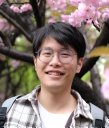
 Yuanshuo Zhang
· 2 previous affiliations
- Shanghai Jiao Tong UniversitySince 2025
- PhD student · Since 2025
- Current
- Xidian University2021–2025
- Undergrad student · 2021–2025
Research Overview
Yuanshuo Zhang focuses on large language model agent applications, graph neural networks, and robust representation learning. His early work addressed error-resilient graph learning under label noise, while his recent research investigates the evaluation and optimization of complex agentic workflows. Currently, he explores how tool-augmented agents integrate multi-source information and apply to embodied agent development.
Research Trajectory
Zhang's research initially concentrated on improving the robustness of graph neural networks in imperfect data environments. In 2024, he contributed to the research direction of Label Noise Propagation in Graph Neural Networks through the development of ERASE: Error-Resilient Representation Learning on Graphs for Label Noise Tolerance. This framework introduced an error-resilient objective combined with a decoupled label propagation strategy to maintain node classification accuracy when high-quality labeled data is limited. This work also intersects with broader efforts in Learning on Graphs with Scarce Labels and the area of Orthogonal Subspaces for Geometric Class Separation, providing mechanisms to handle real-world scenarios where training labels are unreliable.
Building on his expertise in graph-based models, Zhang transitioned toward the evaluation and optimization of large language model (LLM) agents. He introduced FLORA: GNNs as Predictors of Agentic Workflow Performances, a novel approach that utilizes graph neural networks to estimate the performance of complex agentic workflows. By modeling workflows as graphs, this method significantly reduces the need for computationally expensive LLM invocations during evaluation. Alongside the predictive model, he released FLORA-Bench, a large-scale benchmark designed to facilitate faster optimization of agent systems by demonstrating that GNNs can serve as efficient and effective performance predictors.
Continuing his focus on agent evaluation, Zhang collaborated on assessing how tool-augmented agents handle complex, multi-domain tasks. He helped develop InfoMosaic-Bench: Evaluating Multi-Source Information Seeking in Tool-Augmented Agents, a benchmark testing the ability of LLM agents to orchestrate specialized tools such as medical databases and financial feeds. The findings highlighted significant challenges in tool selection and planning, demonstrating that even advanced models struggle with multi-source integration and often perform worse when given access to more specialized tools. This research contributes to the broader area of Iterative Retrieval Augmented Generation for Multi Hop Reasoning, emphasizing the gap between simple web searches and sophisticated information synthesis.
Current Directions
The most recent papers in the evidence address the capabilities, evaluation, and limitations of general AI agents in complex environments. Recent work investigates how tool-augmented agents can be effectively benchmarked and optimized for multi-source information seeking, moving beyond single-step retrieval to orchestrate diverse, specialized tools. Additionally, Zhang's ongoing research explores the integration of LLM agents into embodied agent development, focusing on end-to-end tool use, iterative task execution for robotic systems, and instruction-following in daily scenarios.
Profile updated
| Paper | Venue | Year |
|---|---|---|
| GNNs as Predictors of Agentic Workflow PerformancesGitHubyoungsoul0731/ | arXiv | 2025 |
Loading new papers…
Other researchers whose papers cluster into the same research directions — a proxy for overlapping technical interests and shared intellectual neighborhoods.
See something wrong? Report a mistake