

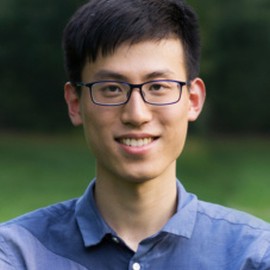
 Yuanming Hu
· 4 previous affiliations
- MeshyAISince 2021
- CEO · 2021–2030
- Current
- PhD student · 2017–2021
- Tsinghua University2013–2017
- Undergrad student · 2013–2017
Research Overview
Yuanming Hu focuses on the development of differentiable physical simulation frameworks and their application to robot learning, particularly in the context of soft-body manipulation and complex locomotion. His work addresses the limitations of traditional rigid-body simulators by introducing high-performance engines capable of simulating elastic and plastic deformations while providing the gradients necessary for efficient gradient-based optimization. By bridging the gap between physics-based simulation and neural network control, Hu contributes to the advancement of autonomous agents capable of interacting with deformable environments and executing multi-task objectives in soft robotics.
Research Trajectory
Hu’s research trajectory is defined by a consistent focus on the intersection of differentiable physics and reinforcement learning, with a specific emphasis on increasing the complexity of simulated environments and the robustness of the controllers trained within them. The early stages of this work centered on the foundational challenge of simulating soft-body physics in a way that is computationally efficient and compatible with gradient-based optimization. This involved leveraging the DiffTaichi system to support elastic and plastic deformations, providing a necessary alternative to the rigid-body simulations that dominated the field.
As the simulation capabilities matured, the focus shifted toward the optimization of neural network controllers for increasingly sophisticated tasks. This transition involved moving from static manipulation tasks—where an agent deforms a material into a target shape—to dynamic locomotion tasks requiring precise temporal coordination. During this period, the research explored the technical requirements for stable training in differentiable environments, such as the adoption of periodic activation functions and specialized loss functions to handle the high-dimensional and often non-convex landscapes of physical simulations.
Most recently, Hu has participated in the development of unified frameworks for soft robotics that support multi-task learning. This evolution reflects a move toward generalizability, where a single controller is expected to perform a variety of tasks across different physical configurations. This work integrates multiple simulation methods, including the Material Point Method (MPM) and mass-spring systems, into a cohesive automatic differentiation module. This trajectory suggests a broader goal of creating versatile, physics-aware AI agents capable of operating in diverse and unpredictable physical domains.
Representative Work
Hu’s contributions to the field are exemplified by his work on benchmarking soft-body manipulation and developing frameworks for complex robot control. These projects highlight the transition from building simulation infrastructure to refining the learning algorithms that utilize that infrastructure.
In a significant contribution to the field of soft-body simulation, Hu served as a primary contributor to the development of PlasticineLab: A Soft-Body Manipulation Benchmark with Differentiable Physics. This work addressed a critical gap in the available tools for skill learning algorithms, which had previously been restricted to rigid-body environments. By introducing a benchmark that supports differentiable elastic and plastic deformation via the DiffTaichi system, the project provided a platform for evaluating agents on their ability to manipulate "plasticine" into target configurations. The importance of this work lies in its provision of gradients through the simulation process, which allows for more direct planning and control optimization compared to derivative-free reinforcement learning methods.
Following the establishment of soft-body benchmarks, Hu participated in research aimed at scaling these techniques to more difficult physical problems. In Complex Locomotion Skill Learning via Differentiable Physics, the research team investigated the use of differentiable physics to optimize neural network controllers for locomotion. While previous applications of differentiable physics often resulted in controllers with limited generalizability, this work introduced a suite of improvements to enhance training robustness. Hu’s participation in this project involved the evaluation of batching strategies, modified Adam optimizers, and the use of periodic activation functions to manage the complexities of gradient-based learning in physical environments. This work demonstrated that unified neural network controllers could indeed achieve high levels of diversity and complexity in locomotion tasks when the underlying optimization process is sufficiently stabilized.
Hu’s more recent collaborative work continues to expand the scope of differentiable simulation into the realm of soft robotics and multi-tasking. In A Differentiable Physical Simulation Framework for Soft Robots on Multiple-Task Learning, he contributed to the development of a framework designed to train unified controllers for soft robots across multiple tasks. This framework is notable for its integration of the Material Point Method (MPM) and mass-spring systems, providing a high-performance environment for simulating deformable bodies. The research focuses on overcoming the limitations of existing controllers by improving their capability and generalizability through an automatic differentiation module. By supporting multiple task learning, this work represents a step toward more practical and versatile soft robotic systems that can adapt to varying environmental demands and physical constraints.
Current Directions
The current focus of Hu’s research appears to be the refinement of multi-task learning within differentiable physical environments. As soft robotics presents unique challenges—such as infinite degrees of freedom and complex material nonlinearities—the development of simulators that can accurately and efficiently provide gradients for these systems remains a priority. The integration of different simulation modalities, such as MPM and mass-spring models, suggests an interest in creating more comprehensive physical engines that can handle a wider array of materials and robotic structures.
Furthermore, the emphasis on unified controllers indicates a shift away from task-specific optimization toward the creation of more robust, general-purpose agents. This involves not only improving the simulation technology itself but also investigating the architectural and algorithmic choices—such as optimizer configurations and activation functions—that allow neural networks to effectively learn from the rich but often noisy gradient information provided by complex physical simulations. The ongoing objective is to enable soft robots to perform diverse tasks with a level of complexity and reliability that matches or exceeds that of their rigid-body counterparts.
Profile updated
Loading new papers…
Loading research neighbors…
See something wrong? Report a mistake