

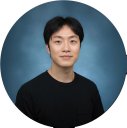
 Yuanhan Zhang
1 previous affiliation
- Nanyang Technological University2022–2026
- PhD student · 2022–2026
Research Overview
Yuanhan Zhang focuses on computer vision, multimodal foundation models, and parameter-efficient tuning. His research explores how to adapt large-scale models for real-world applications through techniques like in-context learning and instruction tuning. Recently, his work emphasizes video understanding and the development of comprehensive benchmarks to evaluate the reasoning capabilities of large multimodal models.
Research Trajectory
His early work in 2022 spanned vision model efficiency, dataset construction, and representation benchmarking. He explored domain generalization for compact models in On-Device Domain Generalization, investigating how knowledge distillation can outperform standard domain generalization methods when applied to tiny neural networks. He also led efforts to evaluate and scale visual representations, introducing an evaluation framework in Benchmarking Omni-Vision Representation Through the Lens of Visual Realms. To address the inefficiencies of blind data collection, he developed an active learning pipeline for massive dataset construction in Bamboo: Building Mega-Scale Vision Dataset Continually with Human-Machine Synergy, which introduced a framework capable of handling extensive out-of-distribution data to build a dataset of 69 million image classification annotations.
Concurrently, he addressed the computational demands of adapting large vision transformers. In Neural Prompt Search, he conceptualized existing parameter-efficient tuning methods as interchangeable "prompt modules" and proposed a search algorithm to automatically configure them for specific downstream datasets. This work contributed to research areas such as Parameter Efficient Adaptation of Large Scale Foundation Models and Strategic Placement of Modules in Deep Neural Architectures, while also intersecting with the broader directions of One Shot Neural Architecture Search with Weight Sharing and Neural Architecture Search Without Ground Truth Labels.
Moving into 2023, his focus expanded to the prompting mechanisms of large vision models. He investigated how to optimize prompt selection in What Makes Good Examples for Visual In-Context Learning?. By introducing a supervised retrieval framework, this research demonstrated how to automatically select optimal examples from a database rather than relying on random selection, advancing the area of Many-Shot In-Context Learning in Long-Context Transformers.
In 2024, his research heavily emphasized the evaluation and architectural unification of large multimodal models (LMMs). He collaborated on the development of comprehensive evaluation metrics, participating in the creation of a bilingual benchmark in MMBench: Is Your Multi-modal Model an All-Around Player? to provide fine-grained assessments of multimodal perception and reasoning. He also contributed to the LLaVA model family, helping to design LLaVA-OneVision: Easy Visual Task Transfer. This model consolidated insights across data and visual representations to handle single-image, multi-image, and video tasks within a single framework, demonstrating strong transfer learning capabilities across different modalities.
His most recent work in 2025 continues to push the boundaries of multimodal integration, particularly for complex and temporally dense data. He participated in extending LMM capabilities to diverse formats in LLaVA-Interleave: Tackling Multi-image, Video, and 3D in Large Multimodal Models, which treats various visual inputs as interleaved image-text sequences to enable emerging cross-modality skills. Addressing the challenge of processing extensive video sequences, he collaborated on Long Context Transfer from Language to Vision, which explored extrapolating the context length of language backbones to comprehend orders of magnitude more visual tokens without requiring additional video-specific training. Further advancing video comprehension, he developed a synthetic dataset for video instruction-following in LLaVA-Video: Video Instruction Tuning With Synthetic Data. This work addresses the scarcity of high-quality raw web data by generating a large-scale dataset for detailed captioning and open-ended question-answering, contributing directly to the research direction of Prioritizing Temporal Density for Video Understanding.
Current Directions
The most recent papers in the evidence indicate a strong focus on advancing large multimodal models, particularly for complex video understanding and long-context processing. Recent work investigates how to unify diverse visual inputs—spanning multi-image, video, and 3D formats—into cohesive interleaved sequences that language models can process natively. Additionally, there is an emphasis on overcoming data scarcity in video instruction tuning through the generation of high-quality synthetic datasets. This is complemented by ongoing efforts to establish robust, holistic benchmarks that accurately assess the reasoning, perception, and temporal grounding capabilities of multimodal systems across a wide variety of visual scenarios.
Profile updated
Loading new papers…
Other researchers whose papers cluster into the same research directions — a proxy for overlapping technical interests and shared intellectual neighborhoods.
See something wrong? Report a mistake