

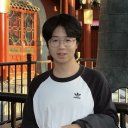
 Yuang Peng
· 4 previous affiliations
- StepFun AI (China)Since 2024
- Intern · Since 2024
- Tsinghua University2023–2026
- MS student · 2023–2026
- Megvii (China)2022–2024
- Intern · 2022–2024
- Wuhan University2019–2023
- Undergrad student · 2019–2023
Research Overview
Yuang Peng focuses on the development and evaluation of Multimodal Large Language Models (MLLMs), with a particular emphasis on the synergy between visual comprehension and generative capabilities. Peng’s work addresses the technical challenges of aligning model outputs with human intent, specifically in the context of personalized image generation and precise spatial grounding. This research trajectory spans the design of unified end-to-end architectures for interleaved document generation, the implementation of precise referring instructions for human-AI interaction, and the creation of automated, human-aligned benchmarking systems to resolve the "crisis of confidence" in traditional evaluation metrics.
Research Trajectory
The evolution of Peng’s research reflects a transition from foundational multimodal integration to the specialized problems of evaluation and reinforcement-driven perception. In 2023, Peng’s contributions were centered on the architectural requirements for unified multimodal models. This period involved participation in the development of frameworks that sought to treat comprehension and creation as complementary tasks rather than isolated functions. By moving away from external feature extractors and toward direct sampling in raw multimodal space, this work aimed to reduce information loss and enable the generation of free-form, mixed-media content.
During this same period, Peng contributed to research on interactive visual systems, specifically focusing on how MLLMs process spatial information. This involved exploring "precise referring instructions"—using points and bounding boxes as prompts—to improve the granularity of human-AI interaction. This interest in spatial reasoning extended to camera-based 3D perception, where Peng participated in efforts to optimize temporal fusion in Bird's-Eye-View (BEV) mapping, balancing the computational overhead of long-term history integration with the need for rich temporal context.
In 2024 and 2025, Peng’s focus shifted significantly toward the problem of Rationale First Automated Evaluation. Recognizing that traditional metrics like CLIP or DINO often fail to capture the nuances of Balancing Fidelity and Editability in Text-to-Image Personalization, Peng led the development of new benchmarking standards. This work introduced automated evaluation pipelines that leverage advanced multimodal models to provide assessments that more closely mirror human judgment, particularly for personalized text-to-image tasks.
Current Directions
Peng’s recent work, extending into 2025 and 2026, explores the application of reinforcement learning (RL) and scaling laws to visual perception and generation. This includes participation in the development of "perception policies," which adapt the rule-based RL successes seen in large language models to the visual domain. These frameworks aim to improve performance in fine-grained tasks such as object detection and optical character recognition (OCR) by optimizing reward designs and identifying the role of perceptual perplexity in model training.
Furthermore, Peng is involved in efforts to scale autoregressive image generation. This research explores the use of continuous image tokens and flow-matching heads to bridge the gap between the next-token prediction paradigm of LLMs and the high-fidelity output of diffusion models. This direction suggests a continued interest in unified architectures that can handle diverse "characters"—ranging from plain text and mathematical formulas to complex geometric shapes—within a single, elegant end-to-end model.
Representative Work
DreamBench++: A Human-Aligned Benchmark for Personalized Image Generation As the lead author of this work, Peng addressed the limitations of existing automated metrics for personalized image generation. The paper introduces a benchmark automated by advanced multimodal GPT models, using a "self-aligned" prompting strategy and task reinforcement to ensure the evaluation aligns with human preferences. By scaling the dataset to 150 diverse subjects and 1,350 prompts, the framework achieved a significant improvement in alignment over traditional metrics, providing a more reliable tool for assessing the tension between subject fidelity and prompt adherence.
DreamLLM: Synergistic Multimodal Comprehension and Creation In this collaborative effort, Peng contributed to the design of DreamLLM, a framework that treats multimodal understanding and generation as a unified process. The model operates by modeling both language and image posteriors through direct sampling in raw multimodal space, avoiding the constraints of fixed feature extractors like CLIP. This approach allows for the generation of interleaved documents containing both text and images, establishing a baseline for models that can both "see" and "draw" within a single sequence-to-sequence objective.
ChatSpot: Bootstrapping Multimodal LLMs via Precise Referring Instruction Tuning Peng participated in the development of ChatSpot, an MLLM designed to enhance human-AI interactivity through Unified Multi-modal Prompting for Interactive Visual Segmentation. The research introduced the use of diverse reference representations, such as points and boxes, as prompts to refer to specific image regions. This method enables finer-grained interaction and improves the model's ability to focus on regions of interest, moving beyond the limitations of purely linguistic instructions in multimodal contexts.
Perception-R1: Pioneering Perception Policy with Reinforcement Learning Contributing to this 2025 study, Peng worked on adapting reinforcement learning techniques to create a scalable "perception policy" for visual models. The framework optimizes reward design to improve performance in structured visual tasks like object counting and OCR. The research demonstrates that a relatively small 2B-parameter model, when trained with these RL-driven policies, can achieve results that rival or surpass specialized expert models in specific perceptual domains.
NextStep-1: Toward Autoregressive Image Generation with Continuous Tokens at Scale In this work, Peng was part of a team developing a 14B-parameter autoregressive model that utilizes continuous image tokens. By integrating a lightweight flow-matching head, the model attempts to combine the scaling advantages of autoregressive "next-token" prediction with the visual quality typically associated with diffusion models. This research represents a significant step toward high-fidelity, large-scale generative models that maintain strong prompt adherence.
Exploring Recurrent Long-term Temporal Fusion for Multi-view 3D Perception Peng contributed to this exploration of temporal fusion strategies for camera-based 3D perception. The paper investigates a recurrent fusion pipeline that allows for the efficient integration of historical information in Bird's-Eye-View (BEV) mapping. The research identifies a simple yet effective recurrent strategy that captures long-term temporal context without the prohibitive computational and memory costs associated with parallel fusion methods, enhancing the performance of autonomous perception systems.
Profile updated
| Paper | Venue | Year |
|---|---|---|
| DreamLLM: Synergistic Multimodal Comprehension and CreationGitHubRunpeiDong/ | ICLR | 2024 |
Loading new papers…
Other researchers whose papers cluster into the same research directions — a proxy for overlapping technical interests and shared intellectual neighborhoods.
See something wrong? Report a mistake