

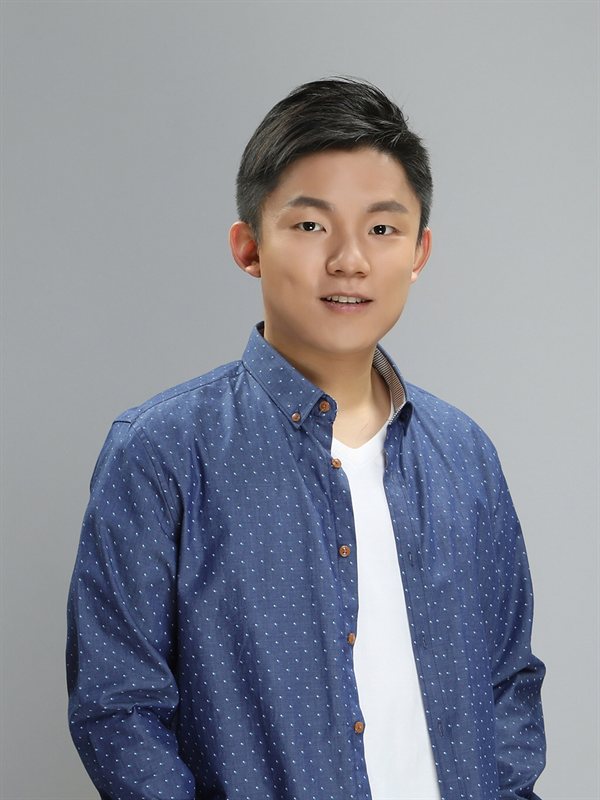
 Yuanchao Shu
· 4 previous affiliations
- Zhejiang UniversitySince 2022
- Full Professor · Since 2022
- Doctor of Philosophy (PhD), Electrical and Electronics Engineering · 2010–2015
- Microsoft (United States)Current
- Current
- Principal Researcher · 2015–2022
- Research Intern · 2012–2013
- University of Michigan2013–2015
- Joint PhD Student · 2013–2015
- Visiting Researcher · 2012
Research Overview
Yuanchao Shu focuses on mobile computing, ubiquitous sensing, and the optimization of edge-assisted systems. His research addresses the challenges of resource-constrained environments, ranging from energy-efficient neighbor discovery in wireless sensor networks to the scaling of complex video analytics across large-scale camera deployments. By leveraging spatiotemporal correlations, acoustic signals, and collaborative learning frameworks, Shu develops systems that enhance the capabilities of commodity hardware in domains such as indoor navigation, automotive diagnostics, and ubiquitous user interfaces.
Research Trajectory
Shu’s early work was rooted in the fundamental challenges of wireless sensor networks (WSNs), particularly the trade-off between energy consumption and communication latency. Between 2011 and 2016, he investigated neighbor discovery mechanisms in low-duty-cycle networks, where nodes remain in sleep states for significant periods to conserve power. His early contributions involved selective reference mechanisms that utilized the spatiotemporal properties of node neighborhoods to reduce discovery delay and overhead. This line of inquiry evolved from static network analysis to mobile sensor environments, where high mobility necessitates even more rapid connection establishment. In Group-Based Neighbor Discovery in Low-Duty-Cycle Mobile Sensor Networks, Shu and his colleagues moved beyond traditional pairwise discovery models—which rely on passive, pre-scheduled wake-up overlaps—to a proactive group-based reference system. This approach allowed nodes to share wake-up schedules within a group, significantly improving the probability of discovery in dynamic wildlife tracking and urban sensing scenarios.
In the late 2010s, Shu’s research expanded into localization and navigation systems, focusing on reducing the deployment burden of indoor positioning. While traditional indoor navigation often requires extensive site surveys or pre-collected data, Shu explored "bootstrap-free" models. As the lead author of Incrementally-deployable Indoor Navigation with Automatic Trace Generation, he developed a scalable peer-to-peer navigation system that utilizes a leader-follower model. This system integrates cloud services to process and generate navigation traces automatically, allowing for flexible navigation over paths that were not explicitly pre-mapped.
During this same period, Shu began addressing the limitations of mobile devices in executing complex machine learning tasks. He investigated collaborative learning frameworks that balance the computational power of the cloud with the data privacy and latency benefits of end devices. This work, exemplified by the development of the Colla framework, sought a middle ground for behavior prediction tasks, such as location change or app launches, by allowing cloud and devices to learn collectively and continuously despite data heterogeneity.
Since 2019, a significant portion of Shu’s work has been dedicated to scaling video analytics and object detection at the edge. As organizations deployed massive camera networks for spatial monitoring, the compute costs of real-time inference became a primary bottleneck. Shu participated in several projects aimed at making these costs sublinear relative to the number of cameras. This research involved exploiting spatial and temporal correlations across camera feeds to prune search spaces and optimizing GPU memory management on edge boxes. His work in this area addresses the "resource tension" of edge deployments, where limited hardware must support an increasing number of complex vision models.
Parallel to his work on edge systems, Shu has maintained a consistent interest in ubiquitous sensing, specifically using acoustic signals to turn ordinary surfaces and devices into interactive interfaces. Starting with the UbiTap project in 2018 and continuing through recent work in 2024, he has explored how acoustic dispersion and resonance can be used for touch localization and material identification. This research path demonstrates a focus on making sophisticated sensing capabilities ubiquitous by removing the dependency on specialized hardware and instead utilizing the microphones and speakers already present in commodity smartphones and earphones.
Representative Work
Mobile and Wireless Systems
Shu’s contributions to mobile networking are centered on optimizing the efficiency of discovery and communication in intermittent environments. In Group-Based Neighbor Discovery in Low-Duty-Cycle Mobile Sensor Networks, he addressed the limitations of passive discovery in mobile applications like wildlife tracking. By proposing a mechanism where nodes proactively refer wake-up schedules among a group, the research demonstrated a significant reduction in discovery delay compared to existing pairwise designs. This work provided a theoretical and experimental basis for managing the energy-latency trade-off in highly dynamic, low-power networks.
Indoor Navigation and Localization
Addressing the scalability issues of indoor positioning, Shu led the development of the FollowUs system in Incrementally-deployable Indoor Navigation with Automatic Trace Generation. The research identified that the high burden of deployment and bootstrapping was the primary barrier to the widespread use of indoor navigation. By implementing a leader-follower model that supports real-time trace-following and automatic trace generation through cloud integration, the system achieved a level of flexibility and ease of deployment that traditional localization-based systems lacked.
Collaborative and Edge Computing
Shu has explored the synergy between cloud infrastructure and edge devices to improve user behavior modeling. In Collaborative learning between cloud and end devices: an empirical study on location prediction, he served as a key contributor to the Colla framework. This research addressed the impediments of data heterogeneity and the limited computing power of smartphones. The study proposed a collaborative approach that allows for continuous learning on end devices while leveraging cloud resources to build more robust predictive models for applications such as location change prediction.
Scalable Video Analytics
In the domain of edge-based computer vision, Shu has participated in research aimed at optimizing large-scale camera networks. In Spatula: Efficient cross-camera video analytics on large camera networks, he contributed to a system designed to track objects of interest across multiple cameras efficiently. Spatula leverages spatial and temporal cross-camera correlations to prune the search space of a query identity, thereby reducing both communication and computation costs. This work is part of a broader effort to enable real-time analytics on edge compute boxes where resources are strictly limited.
Ubiquitous Acoustic Sensing
Shu’s work in ubiquitous computing often focuses on repurposing acoustic signals for interaction and sensing. In S-UbiTap: Leveraging Acoustic Dispersion for Ubiquitous and Scalable Touch Interface on Solid Surfaces, he contributed to a method that transforms any flat solid surface into a touch input space. By analyzing the physical properties of sound as it travels through different materials, the system enables touch localization using only the commodity microphones found in standard IoT devices and smartphones. This approach circumvents the need for specialized touch-sensitive hardware.
More recently, Shu has applied similar acoustic principles to the problem of liquid identification. In ASLiquid: Non-Intrusive Liquid Counterfeit Identification with Your Earphones, he participated in the development of a system that uses commercial off-the-shelf earphones to identify liquid counterfeits. The system operates by inducing acoustic resonance within a container and correlating the resulting resonance patterns with changes in liquid density and solute composition. This research addresses practical challenges such as hardware heterogeneity across different earphone models and the need for non-intrusive, cost-effective identification methods in daily life.
Profile updated
Loading new papers…
Other researchers whose papers cluster into the same research directions — a proxy for overlapping technical interests and shared intellectual neighborhoods.
See something wrong? Report a mistake