

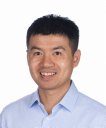
 Yuan Fang
· 4 previous affiliations
- Singapore Management UniversitySince 2018
- Associate Professor · Since 2025
- Assistant Professor · 2018–2025
- DBS Bank2017–2018
- Researcher · 2017–2018
- Researcher · 2014–2017
- PhD student · 2009–2014
1 other author named Yuan Fang: yuan fang (1 paper)
Research Overview
Yuan Fang focuses on graph representation learning, information networks, and the integration of large language models with structural data. His early work explored semi-supervised learning and robust graph neural networks for long-tailed distributions. More recently, his research emphasizes prompt learning for graphs, few-shot adaptation, and the development of general-purpose graph foundation models.
Research Trajectory
Fang's early research investigated the foundational properties of learning on graphs. In Graph-based Semi-supervised Learning: Realizing Pointwise Smoothness Probabilistically (2014), he explored the dimensions of smoothness in semi-supervised learning, developing probabilistic realizations to improve label propagation. As graph neural networks (GNNs) became the dominant paradigm for relational data, his focus shifted toward addressing structural imbalances in real-world networks. This is exemplified by Tail-GNN: Tail-Node Graph Neural Networks (2021), which introduced a novel architecture specifically designed to learn robust embeddings for the large fraction of nodes that possess very few links, a common challenge in long-tailed degree distributions.
Recognizing the heavy reliance of GNNs on task-specific supervision, Fang's trajectory subsequently pivoted toward adapting parameter-efficient paradigms from natural language processing to graph domains. A major milestone in this arc was GraphPrompt: Unifying Pre-Training and Downstream Tasks for Graph Neural Networks (2023), which proposed a prompting framework to narrow the objective gap between pre-training and downstream graph tasks. He expanded this approach in HGPrompt: Bridging Homogeneous and Heterogeneous Graphs for Few-Shot Prompt Learning (2024), utilizing a dual-template and dual-prompt mechanism to align tasks across complex, heterogeneous structures. These contributions have been central to advancing the research direction of Prompt Learning for Graph Neural Networks, the related field of Parameter Efficient Prompt Tuning for Graph Neural Networks, and the broader area of Learning on Graphs with Scarce Labels.
By 2025, Fang's work increasingly emphasized the transition from specialized models to unified architectures. He co-authored the comprehensive perspective Graph Foundation Models: Concepts, Opportunities and Challenges (2025), which outlines the paradigm shift toward models pre-trained on extensive graph data for broad adaptation. This aligns with his active contributions to the research direction of Task Unification for General Purpose Graph Foundation Models.
A significant portion of his recent work focuses on the intersection of textual semantics and graph topology, contributing heavily to the research area of Bridging Text Semantics and Graph Topology. To address the lack of resources for complex graphs where linked nodes have diverse attributes, his group introduced HeTGB: A Comprehensive Benchmark for Heterophilic Text-Attributed Graphs (2025). He also developed methods for aligning these modalities, such as Quantizing Text-attributed Graphs for Semantic-Structural Integration (2025). Exploring advanced reasoning capabilities, he proposed GCoT: Chain-of-Thought Prompt Learning for Graphs (2025) and subsequently provided a rigorous mathematical foundation for this approach in Clustering as Reasoning: A $k$-Means Interpretation of Chain-of-Thought Graph Learning (2026), demonstrating that CoT reasoning on graphs is mathematically equivalent to $k$-means clustering. Additionally, he has explored dynamic environments through Retrieval Augmented Generation for Dynamic Graph Modeling (2025).
Alongside core methodological advances, Fang has applied graph learning to diverse domains. In computational chemistry, he has investigated molecular graph representation learning through MolGA: Molecular Graph Adaptation with Pre-trained 2D Graph Encoder (2025) and Unified Molecule Pre-training with Flexible 2D and 3D Modalities: Single and Paired Modality Integration (2025). In the financial sector, he synthesized applications in A Comprehensive Review of Financial Knowledge Graphs (2025). His collaborative work extends to industry-scale recommender systems, addressing temporal distribution shifts in A Probabilistic Framework for Temporal Distribution Generalization in Industry-Scale Recommender Systems (2025), and to open-vocabulary computer vision in Learning to Identify Seen, Unseen and Unknown in the Open World: A Practical Setting for Zero-Shot Learning (2025). Finally, addressing the critical need for model transparency, he contributed to the research direction of Explaining Predictions in Graph Neural Networks with On the probability of necessity and sufficiency of explaining Graph Neural Networks: A lower bound optimization approach (2025), introducing a structural causal model framework to generate comprehensive explanations.
Current Directions
The most recent papers in the evidence indicate a strong focus on the convergence of large language models and graph machine learning. Current work investigates how to effectively integrate semantic information from text-attributed graphs with complex, heterophilic structural topologies. A major ongoing theme is the development of advanced reasoning frameworks for graphs, such as adapting Chain-of-Thought prompting and retrieval-augmented generation to relational data. Additionally, Fang continues to explore the theoretical underpinnings of these methods, seeking to build general-purpose graph foundation models that can operate efficiently across diverse domains—from molecular chemistry to dynamic recommendation systems—with minimal task-specific fine-tuning.
Profile updated
Loading new papers…
Other researchers whose papers cluster into the same research directions — a proxy for overlapping technical interests and shared intellectual neighborhoods.
See something wrong? Report a mistake