

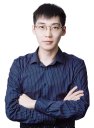
 Yu Yao
· 2 previous affiliations
- The University of SydneySince 2019
- Lecturer · Since 2023
- Current
- PhD student · 2019–2023
- Postdoc · 2023
4 other authors named Yu Yao: Yu Yao (University of Michigan · 7 papers), Yu Yao (The University of Tokyo · 2 papers), Yu Yao (2 papers), Yu Yao (Chaohu University · Southeast University · 1 paper)
Research Overview
Yu Yao focuses on the development of reliable and aligned machine learning systems, with a primary emphasis on robustness to label noise, interpretable representations, and the alignment of large-scale models with human understanding. His research addresses the fundamental challenges of training models on imperfect data, particularly through the lens of Identifiability in Noisy Label Learning. Yao’s work spans theoretical frameworks for class-prior estimation and causal modeling to practical applications in multimodal generation and the reliability of large language model (LLM) agent workflows. Currently a Lecturer at the University of Sydney, his research trajectory reflects a systematic progression from addressing data corruption in supervised learning to ensuring the consistency and trustworthiness of complex, multi-agent autonomous systems.
Research Trajectory
The early stages of Yao’s research focused on the theoretical foundations of learning from incomplete or corrupted supervision. In 2020, he addressed critical limitations in Positive-Unlabeled (PU) learning, specifically the problem of class-prior estimation (CPE). Traditional CPE methods relied heavily on the "irreducibility" assumption—the requirement that the support of the positive data distribution cannot be entirely contained within the support of the negative data distribution. In Towards Mixture Proportion Estimation without Irreducibility, Yao proposed methods to rethink CPE when this assumption is violated, preventing the systematic overestimation of class priors that occurs in standard frameworks.
Following this, Yao’s work moved toward Correcting Label Corruption with Noise Transition Matrices. This research direction is centered on the transition matrix, a mathematical construct that models the probability of a clean label being flipped to a noisy one. Yao’s contributions in this area sought to move beyond simple, uniform noise models toward instance-dependent noise, where the probability of error depends on the specific features of the data point. In Instance-dependent Label-noise Learning under a Structural Causal Model, he utilized causal reasoning to disentangle the relationship between instances and labels, demonstrating that unsupervised data could be leveraged to correct label noise when the clean label is a cause of the instance.
As his work matured, Yao began integrating these theoretical insights into more complex domains, such as computer vision and multimodal learning. This period involved refining Transition Matrix Estimation for Robust Label Noise Learning by incorporating self-supervised learning techniques. By using self-supervision to infer latent clean information, Yao and his collaborators improved the accuracy of transition matrix estimation in scenarios where clean labels are entirely absent. This methodology was applied to specialized tasks like edge detection, where PNT-Edge: Towards Robust Edge Detection with Noisy Labels by Learning Pixel-level Noise Transitions introduced a pixel-level displacement field to recover sharp boundaries from misaligned and noisy annotations.
His recent work has shifted toward the reliability of generative models and autonomous agents. This includes investigating the dependencies within LLM-agent workflows and the alignment of multimodal generative systems. This evolution reflects a broader interest in "Aligned Machine Learning," ensuring that as models become more capable and autonomous, their internal reasoning and external outputs remain consistent with human intent and physical reality.
Current Directions
Yao’s current research is concentrated on three primary pillars: the reliability of multi-agent systems, multimodal alignment, and individualized reinforcement learning. A significant focus is the investigation of whether dependencies induced by LLM-agent workflows can be trusted. He has identified that many modern multi-agent systems suffer from a "conditional independence" flaw, where subtasks are treated as isolated events, leading to misaligned outputs. His work in this area proposes frameworks for sequential verification and cross-model consensus to maintain consistency across complex task histories.
In the realm of multimodal generation, Yao is exploring how to align disparate data streams, such as audio and video, without losing modality-specific nuances. This involves developing masking mechanisms that identify shared semantic features while ignoring irrelevant noise. Furthermore, he has participated in research regarding individualized reinforcement learning, which seeks to identify latent, persistent traits in agents to tailor strategies to specific environments or users. This direction also touches upon Efficient Spatiotemporal Reasoning with Selective State Space Models, aiming to reduce the computational complexity of processing long-sequence video data.
Yao also maintains an interest in the broader implications of Disentangling Independent Motion from Camera Ego-motion and Mitigating Compounding Errors in Autoregressive Physical Simulators. These interests converge on the goal of creating machine learning systems that are not only accurate but also robust to the dynamic and often noisy nature of real-world environments.
Representative Work
Towards Mixture Proportion Estimation without Irreducibility In this first-author work, Yao addresses a fundamental bottleneck in PU learning: the estimation of the class prior (the proportion of positive instances in the unlabeled set). He challenges the standard irreducibility assumption, which is often unverifiable in practice. By rethinking the CPE problem, the paper provides a framework for estimation that remains robust even when the positive and negative distributions have overlapping supports, thereby expanding the applicability of PU learning to more realistic datasets where the "anchor point" or irreducibility conditions do not hold. Towards Mixture Proportion Estimation without Irreducibility
Instance-dependent Label-noise Learning under a Structural Causal Model This paper introduces a causal perspective to the problem of instance-dependent label noise. Yao argues that in many common datasets, the clean label $Y$ is a cause of the instance $X$. Under this structural causal model, the distributions of $P(X)$ and $P(Y|X)$ are entangled, suggesting that unlabeled data contains valuable information about the noise process. The work proposes a method to exploit this causal structure to correct label noise, providing a more principled approach than purely discriminative methods that ignore the data-generating process. Instance-dependent Label-noise Learning under a Structural Causal Model
Can Dependencies Induced by LLM-Agent Workflows Be Trusted? As the first author of this 2025 study, Yao identifies a critical failure mode in multi-LLM agent systems. He demonstrates that the common practice of breaking tasks into subtasks often relies on an implicit assumption of conditional independence, which leads to cascading errors and inconsistent results. To mitigate this, he introduces the SEQCV framework, which enforces sequential execution conditioned on the entire task history and uses real-time cross-model consensus to verify subtask outputs. This work is central to his current focus on the reliability of autonomous agentic workflows. Can Dependencies Induced by LLM-Agent Workflows Be Trusted?
Improving the Estimation of Instance-dependent Transition Matrix by using Self-supervised Learning In this second-author paper, Yao contributes to a method for accurately estimating the noise transition matrix by leveraging self-supervised learning. The core challenge in label-noise learning is the absence of clean labels to guide the estimation of how labels are corrupted. By using self-supervised tasks to learn robust feature representations, the proposed method can better infer the underlying clean information, leading to more accurate transition matrices and, consequently, more consistent classifiers. This work was later expanded into a comprehensive study in IEEE Transactions on Pattern Analysis and Machine Intelligence. Improving the Estimation of Instance-dependent Transition Matrix by using Self-supervised Learning
PNT-Edge: Towards Robust Edge Detection with Noisy Labels by Learning Pixel-level Noise Transitions Applying label-noise theory to computer vision, Yao co-authored this work on robust edge detection. The paper addresses the problem of "noisy" edges—annotations that are often blurred, shifted, or missing in large-scale datasets. The PNT-Edge model learns a pixel-level displacement field that maps clean, sharp edges to the observed noisy ones. By explicitly modeling this corruption process at the pixel level, the model can recover high-fidelity edges even when trained on poor-quality annotations, demonstrating the practical utility of transition-based noise modeling. PNT-Edge: Towards Robust Edge Detection with Noisy Labels by Learning Pixel-level Noise Transitions
Aligning What Matters: Masked Latent Adaptation for Text-to-Audio-Video Generation In this collaborative work, Yao participated in the development of SAVA (Selective Audio-Visual Alignment), a framework designed for synchronized text-to-audio-video generation. The research addresses the difficulty of aligning modalities that do not always share the same information (e.g., background noise that has no visual counterpart). SAVA utilizes a learnable masking mechanism to isolate and align only the shared semantic features between the latent spaces of audio and video models. This selective alignment ensures that the generated outputs are synchronized where it matters most, while preserving the unique characteristics of each modality. Aligning What Matters: Masked Latent Adaptation for Text-to-Audio-Video Generation
Profile updated
Loading new papers…
Other researchers whose papers cluster into the same research directions — a proxy for overlapping technical interests and shared intellectual neighborhoods.
See something wrong? Report a mistake