

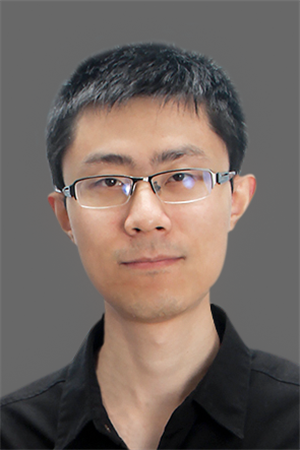
 Yu-Xiong Wang
· 2 previous affiliations
- Assistant Professor · Current
- Carnegie Mellon UniversityCurrent
- PhD student · Current
Research Overview
Yu-Xiong Wang focuses on computer vision, machine learning, and robotics, with an emphasis on open-world perception and meta-learning. His trajectory spans early foundational work in few-shot learning and model regression to recent advancements in generative modeling and agent learning. Currently, his research addresses the integration of generative and discriminative AI to enable autonomous agents to perceive and act in complex, dynamic environments.
Research Trajectory
Wang’s early research established a foundation in machine learning and computer vision, beginning with a comprehensive review of the field in Nonnegative Matrix Factorization: A Comprehensive Review (2013). He soon focused on the challenge of learning from limited data. In Model recommendation: Generating object detectors from few samples (2015), he introduced an approach to predict model performance on new tasks using a matrix of model-task ratings, bypassing the need for large annotated datasets. This interest in small-sample learning evolved into meta-learning frameworks, such as the model regression networks proposed in Learning to Learn: Model Regression Networks for Easy Small Sample Learning (2016), which learned category-agnostic transformations to improve novel class recognition. Addressing the long-tailed distributions typical of real-world data, Learning to Model the Tail (2017) transferred meta-knowledge from data-rich head classes to data-poor tail classes, contributing significantly to the area of Addressing Overfitting in Few-Shot Learning. He further expanded on this by incorporating hallucinated training examples in Low-Shot Learning From Imaginary Data (2018), advancing the research direction of Generative Data Augmentation for Low Data Regimes.
Moving into dynamic and open-world environments, Wang's work began to address the temporal and categorical constraints of traditional vision systems. Towards Streaming Perception (2020) challenged the use of offline metrics for real-time embodied agents, arguing for evaluation methods that account for a continuously moving world. Returning to few-shot challenges with a novel perspective, On the Importance of Distractors for Few-Shot Classification (2021) demonstrated that pushing task-specific images away from unlabeled, unrelated "distractor" images in representation space improves decision boundaries. In the broader area of Class Agnostic Localization for Open World Object Detection, his research on Semi-Supervised Object Detection in the Open World (2023) introduced a framework that leverages unsupervised localization to detect and learn from unknown objects. Concurrently, he explored complex physical environments; as a collaborator on InterDiff: Generating 3D Human-Object Interactions with Physics-Informed Diffusion (2023), he helped develop methods for anticipating physically valid whole-body motions, aligning with the direction of Physics Constrained Generative Human Motion Synthesis.
In recent years, Wang's trajectory has increasingly focused on foundation models, generative AI, and reinforcement learning. Investigating the research direction of The Representational Bottleneck of Frozen Foundation Models, Frozen Transformers in Language Models Are Effective Visual Encoder Layers (2024) revealed that unmodified transformer blocks from large language models can effectively process visual data across 2D, 3D, and video modalities. His work on autonomous systems includes Self-Guided Hierarchical Exploration for Generalist Foundation Model Web Agents (2025), which proposed a hierarchical training framework enabling web agents to learn complex tasks without human demonstrations. In the generative space, contributing to areas such as Preserving Tiny Features Against Spatial Resolution Degradation, Virtual Fitting Room: Generating Arbitrarily Long Videos of Virtual Try-On from a Single Image (2025) tackled temporal drifting in minute-scale video generation. Similarly, HDEdit: Editing Videos and 3D Scenes with Video Diffusion Through Hierarchical Task Decomposition (2026) introduced a training-free framework that uses large language models to decompose and execute complex scene edits while preserving original content.
Wang has also made recent strides in agent learning and control. Capturing Visual Environment Structure Correlates with Control Performance (2026) demonstrated that a vision model's capacity to decode full environmental states serves as a highly accurate proxy for robotic control performance, bypassing expensive simulation rollouts. Addressing sample inefficiency in policy training, Boosting Reinforcement Learning with Verifiable Rewards via Randomly Selected Few-Shot Guidance (2026) showed how a minimal set of supervised fine-tuning data can significantly enhance reinforcement learning with verifiable rewards. Finally, Latent Wasserstein Adversarial Imitation Learning (2026) tackled the data-intensive nature of traditional imitation learning, proposing methods to train agents when expert actions are unobservable and data is scarce. Further advancing reinforcement learning and agent reasoning, Not All Reasoning Generalizes: A Case Study on Learning Generalizable Reasoning Strategies in RLVR (2026) analyzed why models abandon derivation under out-of-distribution shifts in reinforcement learning with verifiable rewards, demonstrating how co-training on bijective tasks incentivizes robust reasoning strategies. Concurrently, Wang participated in developing AgriManager: A Framework and Benchmark for LLM-RL Generalization in Agricultural Management (2026) to benchmark LLM policy generalization across distributional and schema shifts across diverse crop simulators, as well as PIVOT: A Unified Agentic Framework for Streaming Long-Video Understanding (2026), which introduced an agentic planner-controlled memory framework for answering temporal queries over continuous video streams.
Current Directions
The most recent papers in the evidence indicate a strong focus on scaling foundation models for autonomous agents and complex generative tasks. Current work investigates hierarchical planning and exploration for web agents, as well as the use of visual environment structures as proxies for robotic control performance. Additionally, recent research addresses the sample efficiency of reinforcement learning and imitation learning, seeking to train capable agents using minimal expert demonstrations or unobservable action data. In the generative and agentic domains, ongoing efforts focus on maintaining temporal consistency in streaming long-video understanding, analyzing reasoning generalization under reinforcement learning, and enabling instruction-guided editing of 3D scenes through task decomposition.
Profile updated
Loading new papers…
Other researchers whose papers cluster into the same research directions — a proxy for overlapping technical interests and shared intellectual neighborhoods.
See something wrong? Report a mistake