

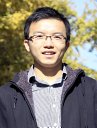
 Yu Jiang
· 1 previous affiliation
- Tsinghua UniversitySince 2019
- Associate Professor · Since 2019
6 other authors named Yu Jiang: Yu Jiang (Nanyang Technological University · 7 papers), Yu Jiang (2 papers), Yu Jiang (ClearMotion (United States) · Symbotic Inc · 2 papers), Yu Jiang (1 paper), Yu Jiang (Jilin University · 1 paper), and 1 more
Research Overview
Yu Jiang focuses on automated software testing, vulnerability detection, and the reliability of complex systems, with a particular emphasis on fuzzing methodologies. His trajectory spans from early work in formal verification for embedded systems to the development of highly scalable fuzzing frameworks for enterprise databases, IoT infrastructure, and distributed systems. Recently, his research investigates performance degradation and state-aware testing in database management systems and distributed architectures.
Research Trajectory
Yu Jiang's early research addressed the reliability of hardware-software interfaces, specifically contributing to the area of automated generation of formal specifications and proofs. In 2013, he explored the Design and optimization of multi-clocked embedded systems using formal technique, introducing a framework that combined timed automata and synchronous dataflow. This approach enabled the unified modeling of control- and data-oriented behaviors, allowing for the detection of subtle synchronization bugs that traditional methods often missed. By the late 2010s, his focus shifted toward scalable automated testing, particularly fuzzing. This transition was marked by the development of EnFuzz: Ensemble Fuzzing with Seed Synchronization among Diverse Fuzzers in 2019. Contributing to the broader area of instance specific algorithm selection and portfolios, this framework synchronized interesting test cases across diverse fuzzing tools to significantly improve path coverage and vulnerability detection over individual fuzzers.
Building on these automated testing foundations, his research expanded to address the complexities of enterprise-scale infrastructure and connected devices. In 2021, he led an investigation into the Industry Practice of Coverage-Guided Enterprise-Level DBMS Fuzzing, applying coverage-guided techniques to complex, distributed database management systems to overcome the limitations of traditional blackbox testing in industrial settings. That same year, he collaborated on Brief Industry Paper: Catching IoT Malware in the Wild Using HoneyIoT, helping to design a scalable honeypot framework capable of recording malicious behaviors and analyzing vulnerabilities in Internet of Things environments.
In 2022, his group produced a cluster of advancements in both core fuzzing infrastructure and specialized database testing. To address the strict input validation that typically hinders database fuzzing, he directed the development of Griffin : Grammar-Free DBMS Fuzzing, an approach designed to test databases effectively without relying on complex, system-specific SQL grammars. Simultaneously, he oversaw work on Unicorn: detect runtime errors in time-series databases with hybrid input synthesis, which utilized hybrid input synthesis to bypass mismatched query specifications and uncover implicitly handled exceptions in time-series databases. His work also targeted the fundamental performance bottlenecks of fuzzing itself; he led the creation of Odin: on-demand instrumentation with on-the-fly recompilation to reduce the overhead of runtime probes during testing. Additionally, he contributed to PATA: Fuzzing with Path Aware Taint Analysis, further refining the precision of vulnerability discovery by integrating path-awareness into taint analysis.
The scope of his automated testing research subsequently broadened to include consensus mechanisms, cyber-physical systems, and distributed architectures. In 2023, he explored vulnerabilities in decentralized networks with Tyr: Finding Consensus Failure Bugs in Blockchain System with Behaviour Divergent Model, utilizing behavior divergent models to identify critical flaws in distributed ledgers. Concurrently, he guided research into the resilience of critical infrastructure, proposing a guided fuzzing approach in Finding Causally Different Tests for an Industrial Control System to comprehensively test systems against sensor and actuator manipulations. Moving into complex distributed environments, he investigated the risks of incorrect failure handling in Chronos: Finding Timeout Bugs in Practical Distributed Systems by Deep-Priority Fuzzing with Transient Delay (2024), introducing a framework that dynamically injects fine-grained delays to expose critical system hang-ups and crashes.
His most recent work in 2025 continues to push the boundaries of database and distributed system reliability. He investigated cross-node operations in Finding Metadata Inconsistencies in Distributed File Systems via Cross-Node Operation Modeling, developing models to capture the complex interactions that lead to state discrepancies across distributed nodes. In the domain of database management, he directed the development of PUPPY: Finding Performance Degradation Bugs in DBMSs via Limited-Optimization Plan Construction, which targets flaws in query optimizers that inadvertently reduce system efficiency. Furthermore, he led research into the often-overlooked interfaces between applications and databases with Coni: Detecting Database Connector Bugs via State-Aware Test Case Generation, addressing the domain-specific challenges of exploring intricate connector interactions.
Current Directions
The most recent papers in the evidence address the reliability and performance of distributed architectures and database management systems. Current work investigates the detection of logical and performance-related flaws, such as metadata inconsistencies in distributed file systems and performance degradation bugs caused by complex query optimizers. Additionally, there is an ongoing focus on testing the peripheral components and interfaces of data systems, including state-aware test case generation for database connectors and the injection of transient delays to uncover timeout vulnerabilities in distributed environments.
Profile updated
Loading new papers…
Other researchers whose papers cluster into the same research directions — a proxy for overlapping technical interests and shared intellectual neighborhoods.
See something wrong? Report a mistake