

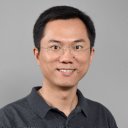
 Yu Cao
· 3 previous affiliations
- University of MinnesotaSince 2023
- Full Professor · Since 2023
- Arizona State University2004–2023
- Full Professor · 2015–2023
- Associate Professor · 2009–2015
- Assistant Professor · 2004–2009
- PhD student · 1997–2002
6 other authors named Yu Cao: Yu Cao (Shanghai Jiao Tong University · 59 papers), Yu Cao (University of Massachusetts System · University of Massachusetts Lowell · 5 papers), Yu Cao (Queen Mary University of London · 5 papers), Yu Cao (Tencent (China) · 5 papers), Yu Cao (Beijing University of Chemical Technology · 1 paper), and 1 more
Research Overview
Yu Cao focuses on algorithm-hardware co-design, in-memory computing architectures, and the efficient deployment of large-scale machine learning models. His early work explored nanoelectronic design and FPGA-based accelerators before expanding into chiplet-based systems and in-sensor processing. Currently, his research addresses the scalability of vision transformers and mixture-of-experts models through optimized routing, token reduction, and advanced 3D integration.
Research Trajectory
He began by addressing foundational hardware reliability, developing the Predictive Technology Model for Robust Nanoelectronic Design. As machine learning workloads grew, his focus shifted toward hardware acceleration. He explored the Technology-design co-optimization of resistive cross-point array for accelerating learning algorithms on chip and subsequently developed a Throughput-Optimized OpenCL-based FPGA Accelerator for Large-Scale Convolutional Neural Networks, addressing the compute and memory bottlenecks of early deep learning models.
Alongside hardware design, he investigated algorithmic efficiency. In 2020, he introduced an acquisitive learning framework in Noise-based Selection of Robust Inherited Model for Accurate Continual Learning, which balances knowledge preservation and acquisition through segmented training.
Returning to hardware architecture, he tackled the scaling limits of monolithic in-memory computing (IMC). He introduced SIAM: Chiplet-based Scalable In-Memory Acceleration with Mesh for Deep Neural Networks, a benchmarking simulator for evaluating multi-chiplet IMC architectures. This line of inquiry expanded into comprehensive reviews and specialized applications, including the overview In-Memory Computing for AI Accelerators: Challenges and Solutions. He also extended IMC principles to non-machine-learning domains, developing A 65-nm RRAM Compute-in-Memory Macro for Genome Processing and SHIFFT: A Scalable Hybrid In-Memory Computing FFT Accelerator.
A major theme in his trajectory is optimizing visual processing pipelines from the sensor to the algorithm. He proposed Improving the Efficiency of CMOS Image Sensors through In-Sensor Selective Attention, which uses low-precision saliency detection to filter pixels before they leave the sensor. At the algorithmic level, he developed Transformer-Based Selective Super-resolution for Efficient Image Refinement and Patch-based Selection and Refinement for Early Object Detection, both of which selectively process informative image patches to reduce computational overhead. He bridged these algorithmic advances with hardware implementations in High Throughput FPGA-Based Object Detection via Algorithm-Hardware Co-Design.
As model sizes continued to scale, his work increasingly focused on advanced packaging and sparse architectures. He developed HISIM: Analytical Performance Modeling and Design Space Exploration of 2.5D/3D Integration for AI Computing to evaluate complex multi-die systems. Collaborating on large-scale model deployment, he contributed to the research direction of Mitigating the All-to-All Communication Bottleneck in Distributed MoEs. This included participation in Mozart: Modularized and Efficient MoE Training on 3.5D Wafer-Scale Chiplet Architectures, which maps Mixture-of-Experts (MoE) logic onto 3.5D hardware, and Occult: Optimizing Collaborative Communications across Experts for Accelerated Parallel MoE Training and Inference, which prunes redundant GPU communications. These efforts advance the broader areas of Load Balancing for Scalable Mixture of Experts and Locality Aware Routing for Sparse Mixture of Experts.
He also collaborated on optimizing spatial computing for edge devices, participating in the development of RTGS: Real-Time 3D Gaussian Splatting SLAM via Multi-Level Redundancy Reduction. His recent work extends these efficiency principles to vision transformers. He oversaw the development of the Select and Pack Transformer in Enhancing Vision Transformers for Object Detection via Context-Aware Token Selection and Packing, which dynamically batches informative image tokens to improve throughput, contributing to the broader area of Token Reduction for Efficient Vision Transformers.
Current Directions
Recent work investigates the scalability of massive neural network architectures, particularly focusing on sparse models and vision transformers. A primary focus is mitigating the communication bottlenecks inherent in Mixture-of-Experts (MoE) models. By co-designing routing algorithms with advanced 3.5D wafer-scale chiplet hardware, this research seeks to optimize expert placement and eliminate redundant inter-GPU communications during both training and inference.
Additionally, ongoing efforts address the computational demands of high-resolution computer vision. This involves developing context-aware token selection mechanisms that dynamically identify and pack the most informative features, maintaining high accuracy in object detection while significantly reducing the computational footprint of vision transformers. Furthermore, the exploration of real-time 3D scene representation on resource-constrained edge devices highlights a continued commitment to algorithm-hardware co-design for spatial computing.
Profile updated
Loading new papers…
Other researchers whose papers cluster into the same research directions — a proxy for overlapping technical interests and shared intellectual neighborhoods.
See something wrong? Report a mistake