

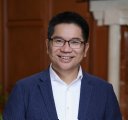
 Youzuo Lin
· 2 previous affiliations
- Associate Professor · Since 2024
- Current
- Los Alamos National Laboratory2010–2024
- Researcher · 2010–2024
Research Overview
Youzuo Lin focuses on scientific machine learning, computational wave imaging, and physics-guided deep learning. His work bridges traditional physics-based solvers and data-driven methods to address complex inverse problems in geoscience and medical imaging. Recently, his research emphasizes hybrid architectures, generative models, and unified latent space frameworks for full-waveform inversion and limited-angle tomography.
Research Trajectory
Lin's early published work includes research on computational methods for information retrieval, such as applying Krylov subspace methods to multiple queries (Multiple Queries of Information Retrieval Using Krylov Subspace Method).
By 2022, his focus had firmly shifted toward scientific machine learning, particularly addressing the computational bottlenecks of 3D Full-Waveform Inversion (FWI). He introduced architectures like InversionNet3D to significantly reduce the memory footprint and computational cost required to reconstruct high-resolution subsurface velocity models (InversionNet3D: Efficient and Scalable Learning for 3-D Full-Waveform Inversion). A major theme in this period was overcoming the scarcity of labeled data in the research area of Physics-Guided Deep Learning for Subsurface Characterization. To this end, his group developed techniques that reconstruct complex subsurface properties, such as CO2 saturation, using extremely weak supervision and pseudo-labels derived from physics-informed source properties (Exploring Multi-physics with Extremely Weak Supervision). They also formulated unsupervised learning approaches that integrate partial differential equations (PDEs) and convolutional neural networks in a continuous loop, eliminating the need for expensive ground-truth velocity maps (Unsupervised Learning of Full-Waveform Inversion: Connecting CNN and Partial Differential Equation in a Loop). Additionally, he explored spatio-temporally constrained data augmentation using variational autoencoders to generate synthetic training data that respects geophysical laws, improving the detection of subtle subsurface leakages (Making Invisible Visible: Data-Driven Seismic Inversion With Spatio-Temporally Constrained Data Augmentation).
Recognizing the need for standardized resources in the broader area of Deep Learning Inversion of Seismic Waveform Data, Lin led the development of large-scale benchmark datasets. This effort began with the release of a multi-structural dataset encompassing diverse geological domains (OpenFWI: Large-scale Multi-structural Benchmark Datasets for Full Waveform Inversion) and later expanded to include multiparameter data for elastic FWI, incorporating both P- and S-wave velocities to advance carbon-zero energy exploration ($\mathbf{\mathbb{E}^{FWI}}$: Multiparameter Benchmark Datasets for Elastic Full Waveform Inversion of Geophysical Properties).
Concurrently, his research investigated fundamental mathematical properties underlying visual and physical data. In the direction of Overcoming the Causality Curse in Visual Sequence Modeling, he contributed to the discovery that images can be modeled as solutions to a shared set of one-way wave equations, enabling high-fidelity reconstruction through a first-order autoregressive process (On the Hidden Waves of Image). This theoretical inquiry extended to the latent spaces of neural networks. His team identified an "auto-linear phenomenon" where self-supervised autoencoders for seismic data and velocity maps naturally develop linearly correlated latent spaces, facilitating highly efficient subsurface imaging that generalizes well to new geologies (Auto-Linear Phenomenon in Subsurface Imaging). They further demonstrated that diverse inverse problems—such as FWI, computed tomography (CT), and electromagnetic inversion—share hidden structural properties within their latent representations despite being governed by different physical equations (On a Hidden Property in Computational Imaging).
In 2024, Lin provided a comprehensive roadmap for the evolution of computational wave imaging, detailing the transition from traditional solvers to hybrid models and addressing persistent challenges in the research direction of Mitigating Cycle Skipping in Full Waveform Inversion (Physics and Deep Learning in Computational Wave Imaging). He also translated these physics-guided generative AI methods into practical tools for edge devices, enabling real-time geophysical monitoring (EdGeo: A Physics-guided Generative AI Toolkit for Geophysical Monitoring on Edge Devices).
More recently, Lin's work has increasingly leveraged advanced generative models and expanded into medical imaging. He explored diffusion-based generative AI for ultrasound computed tomography (Enhanced AI for Science using Diffusion-based Generative AI - A Case Study on Ultrasound Computing Tomography) and developed frameworks that utilize pretrained diffusion models as regularizing priors for solving complex inverse PDE problems, even with noisy or missing data (RED-DiffEq: Regularization by denoising diffusion models for solving inverse PDE problems with application to full waveform inversion). He also continued to refine weak supervision techniques for environmental applications like CO2 saturation imaging (Weak Supervision Multigeophysical Inversion for CO2 Saturation Imaging).
In the area of Bidirectional Consistency for Joint Forward and Inverse Learning, he collaborated on a unified theoretical framework that treats subsurface imaging tasks as translations between latent manifolds, yielding single architectures capable of simultaneously solving forward and inverse problems (A Unified Framework for Forward and Inverse Problems in Subsurface Imaging using Latent Space Translations). His recent medical imaging research addresses severe signal distortions and sparse sensor arrays. He proposed a hybrid two-stage framework combining time-reversal acoustics with transformer-based deep learning for transcranial ultrasound tomography (BrainPuzzle: Hybrid Physics and Data-Driven Reconstruction for Transcranial Ultrasound Tomography). Finally, contributing to the research direction of Reconstructing the Invisible in Limited Angle Tomography, his group released a large-scale benchmark dataset designed to facilitate the development of real-time, high-fidelity machine learning models for prostate ultrasound computed tomography (OpenPros: A Large-Scale Dataset for Limited View Prostate Ultrasound Computed Tomography).
Current Directions
The most recent papers in the evidence indicate a strong focus on applying scientific machine learning to complex medical imaging and advanced inverse problems. Recent work investigates hybrid reconstruction frameworks that combine physical principles—such as time-reversal acoustics—with deep learning to overcome severe signal distortions in transcranial ultrasound. Additionally, there is an ongoing effort to address limited-angle tomography in clinical settings through the creation of large-scale, specialized benchmark datasets for prostate imaging. Methodologically, current research explores the use of pretrained diffusion models as generative priors for solving inverse partial differential equations, as well as unified latent space frameworks that simultaneously handle forward and inverse modeling tasks.
Profile updated
Loading new papers…
Other researchers whose papers cluster into the same research directions — a proxy for overlapping technical interests and shared intellectual neighborhoods.
See something wrong? Report a mistake