

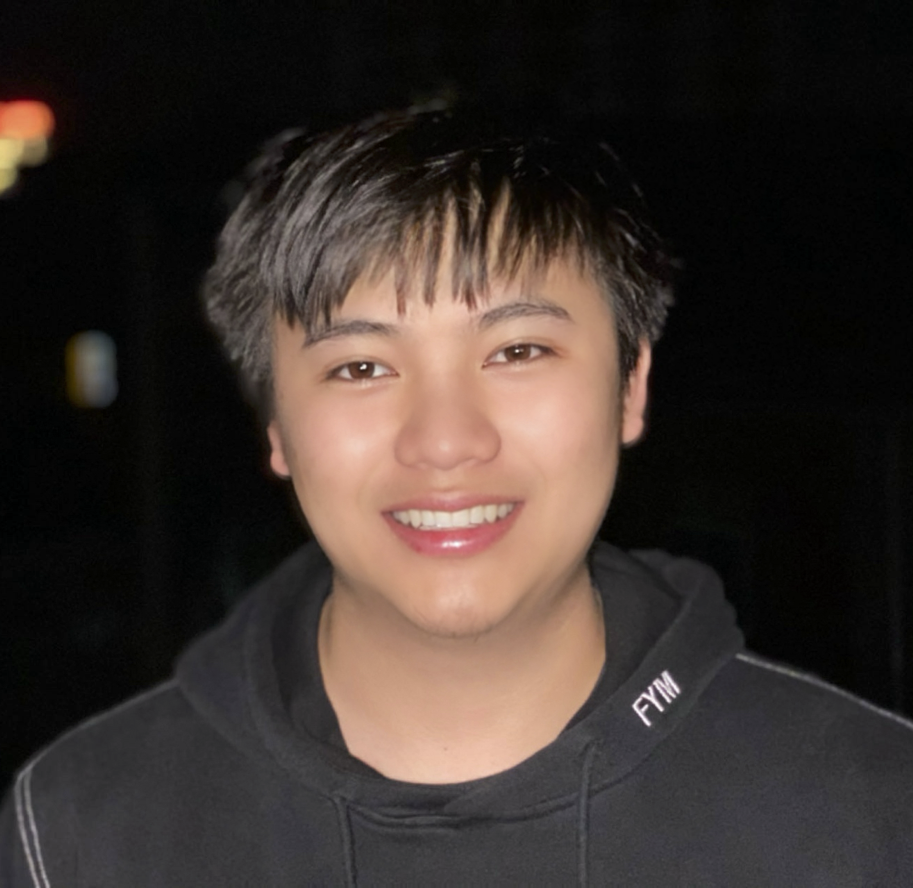
 Youtian Lin
· 5 previous affiliations
- Nanjing UniversitySince 2024
- PhD student · Since 2024
- Researcher · 2023–2024
- Taichi Graphic2023
- Intern · 2023
- Harbin Institute of Technology2022–2023
- PhD student · 2022–2023
- Harbin Engineering University2018–2021
- MS student · 2018–2021
Research Overview
Youtian Lin focuses on 3D and 4D reconstruction, neural rendering, and generative models for complex visual scenes. His early work addressed efficient object detection in aerial imagery before shifting toward dynamic scene reconstruction and scalable 3D generation. Currently, he investigates high-fidelity, animatable 3D asset creation and sparse volumetric representations for large-scale generative modeling.
Research Trajectory
Youtian Lin’s early research addressed challenges in 2D computer vision, specifically focusing on remote sensing and aerial imagery. In 2019, he introduced IENet, a one-stage, anchor-free detector designed to efficiently identify oriented objects in aerial images. By proposing a novel geometric transformation for bounding boxes and an interactive embranchment module, this work advanced the research direction of Learning Oriented Bounding Boxes for Arbitrary Object Detection. He subsequently collaborated on TOSO (2020), which utilized a Student’s-T distribution to improve orientation target detection. Together, these projects contributed to the broader area of Efficient Single Stage Object Detection for Edge Hardware, emphasizing computational efficiency without sacrificing accuracy.
Following these foundational contributions in 2D vision, his focus shifted toward the complexities of 3D and 4D scene representation. To address the computational bottlenecks associated with rendering dynamic scenes, he developed Ced-NeRF (2024), a compact and efficient method for dynamic neural radiance fields. This work mitigated the overfitting and artifacts common in hybrid representations, pushing forward the area of Feed-Forward 4D Gaussian Reconstruction for Dynamic Scenes. Building on the rapid advancements in point-based rendering, he then introduced Gaussian-Flow (2024). This approach utilized a Dual-Domain Deformation Model to capture the time-dependent attributes of 3D Gaussian particles across both polynomial and Fourier domains, enabling fast dynamic scene reconstruction and contributing to the study of Local Rigidity Priors for Dynamic 3D Scenes. During this period, he also collaborated on Relightable 3D Gaussians (2024), a framework that decomposed scenes into normals and BRDF materials to enable real-time rendering under novel lighting conditions via point-based ray tracing.
As his work in 3D representations matured, he began exploring scalable generative models for 3D assets. With collaborators, he developed Direct3D (2024), a native 3D generative model that scales to in-the-wild input images without relying on multi-view diffusion or SDS optimization. By encoding high-resolution shapes into a continuous latent triplane space using a Diffusion Transformer, this work intersected with the research direction of Structural Preservation via Attention Feature Injection. He subsequently helped scale this architecture in Direct3D-S2 (2025), which introduced a Spatial Sparse Attention mechanism to achieve gigascale 3D generation at highly efficient computational costs.
Most recently, his trajectory has expanded to include high-fidelity texturing and animatable character generation. He participated in the development of TEXTRIX (2025), which generates seamless textures directly within a sparse 3D voxel grid rather than relying on 2D projections, advancing the area of Joint Synthesis of 3D Geometry and Surface Appearance. In 2026, he contributed to Anime-Ready, a framework designed to generate controllable, fully animatable 3D anime characters from single images or text prompts. By utilizing a specialized parametric body model and component-wise garment generation, this work bridges the gap between AI-generated models and production-ready assets.
Current Directions
The most recent papers in the evidence indicate a strong focus on scaling native 3D generative models and improving the utility of AI-generated 3D assets for downstream applications. A primary theme is the use of sparse volumetric representations—such as spatial sparse attention and sparse voxel grids—to overcome the memory and computational limits of high-resolution 3D generation. Recent work investigates how to bypass traditional 2D projection methods in favor of generating geometry and textures directly in 3D space. Additionally, there is an active effort to move beyond static 3D meshes by incorporating parametric body models and modular generation pipelines, ensuring that the resulting assets are fully animatable and ready for deployment in interactive environments.
Profile updated
Loading new papers…
Other researchers whose papers cluster into the same research directions — a proxy for overlapping technical interests and shared intellectual neighborhoods.
See something wrong? Report a mistake