

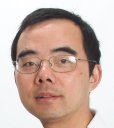
 Youtao Zhang
· 1 previous affiliation
- University of PittsburghSince 2020
- Full Professor · Since 2020
Research Overview
Youtao Zhang focuses on computer architecture, with a primary emphasis on the performance, reliability, and efficiency of memory and storage systems, AI/ML model acceleration, and emerging quantum computing architectures. His research addresses the fundamental bottlenecks in modern computing hardware, ranging from the physical constraints of non-volatile memory technologies like Phase Change Memory (PCM) and 3D NAND flash to the orchestration of resources in multi-GPU and multi-tenant machine learning environments. Recently, his work has expanded to include hardware security, specifically adversarial attacks on temporal graph neural networks, and the optimization of photonic quantum computing systems.
Research Trajectory
The early stages of Zhang’s research were heavily concentrated on the challenges of non-volatile memory (NVM) technologies, which were emerging as potential replacements or supplements for traditional DRAM. Between 2012 and 2016, his work focused on Phase Change Memory (PCM), particularly the complexities introduced by Multi-level Cell (MLC) configurations. While MLC PCM offered higher density and lower cost-per-bit, it suffered from high write power requirements and significant latency. Zhang’s research during this period introduced fine-grained power budgeting techniques to manage the iterative write processes inherent in MLC PCM, aiming to improve write throughput without compromising reliability. He also investigated the endurance issues of high-density PCM, proposing "cell morphing" strategies that accounted for process variation to extend the lifetime of memory modules.
As solid-state drive (SSD) technology matured, Zhang’s focus shifted toward the architectural limitations of Flash-based storage. Starting around 2018, he addressed the physical and logical bottlenecks of 3D NAND flash, such as program disturbance and the rigid constraints of plane-level parallelism. His work in this area explored the use of approximate computing in storage, where error-resilient data could be stored using faster, less precise write operations to mitigate the performance and lifetime degradation caused by die stacking. This period also saw an interest in high-performance sensing and communication systems, particularly in Sub-Nyquist Sampling for Wideband Systems, which required efficient data handling at the intersection of hardware and signal processing.
In the early 2020s, Zhang transitioned toward the acceleration of machine learning workloads and the optimization of GPU architectures. This shift was driven by the increasing demand for efficient model training and inference. His research explored GPU multi-tenancy, kernel fusion, and the overheads of address translation in multi-GPU systems. By investigating the efficiency of page table walks under unified virtual memory (UVM), he identified critical latency penalties that hindered the scalability of multi-GPU platforms. This work laid the foundation for more recent explorations into dynamic GPU reconfiguration and temperature-aware computational storage.
Current Directions
Zhang’s current research is characterized by a multi-disciplinary approach to high-efficiency computing, spanning AI acceleration, quantum architecture, and hardware security. A major current focus is the development of frameworks for efficient machine learning training and inference. This includes the design of dependency-aware training frameworks for temporal graph neural networks (TGNNs) and the optimization of resource utilization within GPU Streaming Multiprocessors (SMs) through static kernel fusion. He is also investigating the "tug-of-war" between model retraining and inference in multi-tenant environments, seeking to balance model accuracy with strict latency deadlines.
In the realm of quantum computing, Zhang is exploring the architectural support for measurement-based and photonic quantum computers. His recent work involves using reinforcement learning to guide graph state generation and developing wire-cutting techniques to reduce fusion operations in quantum circuits. These efforts aim to make quantum hardware more scalable and efficient.
Furthermore, Zhang has expanded his research into hardware-centric security. This includes identifying and defending against novel adversarial attacks on TGNNs, particularly in scenarios where an attacker has limited future knowledge. He has also participated in collaborative research regarding the security of Vision Transformers, contributing to the understanding of patch-based adversarial attacks. His recent work in computational storage has also addressed the physical limitations of hardware, such as preventing thermal throttling in high-performance SSDs through cooperative compression frameworks that balance tasks between the host CPU and the drive’s hardware engine.
Representative Work
FPB: Fine-grained Power Budgeting to Improve Write Throughput of Multi-level Cell Phase Change Memory addresses the power constraints of MLC PCM. Traditional power management schemes often resulted in low write throughput because they did not account for the iterative nature of the MLC write process. Zhang proposed a fine-grained budgeting approach that allocates power more dynamically, allowing for higher concurrency and improved performance while maintaining the strict power limits required for write reliability.
Wear Relief for High-Density Phase Change Memory Through Cell Morphing Considering Process Variation examines the endurance challenges of PCM as it scales into the deep submicrometer regime. The paper introduces a "cell morphing" strategy that allows PCM cells to switch between different density modes (MLC, TSC, and SLC) based on their wear levels and the presence of process variation. This approach enhances memory endurance by balancing the load across cells with varying physical characteristics, mitigating the impact of the weaker endurance found in high-density modes.
ApproxFTL: On the Performance and Lifetime Improvement of 3-D NAND Flash-Based SSDs tackles the program disturbance issues inherent in 3D NAND flash. By introducing an approximate-write aware flash translation layer, the research demonstrates that reducing maximal threshold voltages and tightening guard bands for error-resilient data can significantly improve both performance and SSD lifetime. This work highlights the potential for cross-layer optimizations that leverage application-level data characteristics to overcome physical hardware limitations.
Boosting the Performance of SSDs via Fully Exploiting the Plane Level Parallelism investigates the most restrictive level of parallelism in SSDs. Plane-level parallelism typically requires identical operations to be performed on the same addresses across different planes. Zhang’s research identifies that these restrictions often lead to underutilization of the hardware. The paper proposes methods to relax these constraints for both host accesses and internal SSD operations, thereby maximizing the available bandwidth and reducing latency in high-performance storage systems.
Trans-FW: Short Circuiting Page Table Walk in Multi-GPU Systems via Remote Forwarding explores the address translation bottleneck in multi-GPU systems operating under unified virtual memory. The study identifies that page table walks are a significant source of latency due to thread queuing and memory access overheads. Zhang proposed a remote forwarding mechanism to "short circuit" these walks, improving the efficiency of address translation and enabling better performance scaling as more GPUs are added to a system.
Adaptive Kernel Fusion for Improving the GPU Utilization While Ensuring QoS addresses the underutilization of resources within individual GPU Streaming Multiprocessors. While task co-location is a common strategy for improving throughput, it often fails to optimize resource use at the sub-SM level. Zhang proposed "Aker," a static kernel fusion and scheduling approach that improves the utilization of CUDA and Tensor cores while maintaining Quality-of-Service (QoS) for co-located tasks. This work is particularly relevant for modern machine learning applications that require high-density computation.
Profile updated
Loading new papers…
Other researchers whose papers cluster into the same research directions — a proxy for overlapping technical interests and shared intellectual neighborhoods.
See something wrong? Report a mistake