

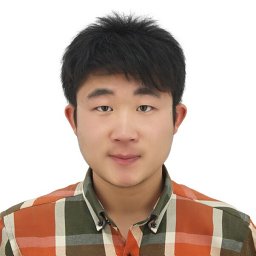
 Youshan Zhang
· 7 previous affiliations
- Yeshiva UniversitySince 2022
- Curriculum Director, M.S. in Artificial Intelligence · Since 2023
- Assistant Professor · 2022–2025
- Chuzhou UniversitySince 2025
- Full Professor · Since 2025
- Cornell University2021–2022
- Postdoctoral Researcher · 2021–2022
- Cornell Tech2021–2022
- Postdoc · 2021–2022
- Seagate (Ireland)2019–2021
- Data Analyst Intern · 2021
- Image Processing & Machine Learning · 2019
- Lehigh University2017–2021
- PhD student · 2021
- Teaching Assistant · 2020
- Research Assistant · 2017–2020
- University of Southern California2015–2017
- Master's degree, Neuroimaging and Informatics · 2017
- MS student · 2015–2017
Research Overview
Youshan Zhang focuses on transfer learning, computer vision, and the application of visual modeling techniques to complex audio processing. His early work addressed unsupervised domain adaptation and manifold learning to improve model generalization across visual domains. More recently, his research investigates generative AI, diffusion models, and state-space architectures for high-fidelity audio denoising, medical image synthesis, and specialized language modeling.
Research Trajectory
Zhang’s early research explored computer vision and shape analysis, exemplified by his work on ShapeNet: Age-focused Landmark Shape Prediction with Regressive CNN in 2019. He subsequently dedicated significant focus to unsupervised domain adaptation (UDA), addressing the high cost of manual data annotation by transferring knowledge from labeled to unlabeled domains. This foundational problem is detailed in Unsupervised Domain Adaptation for Visual Recognition. To improve distribution alignment between source and target domains, he developed the Deep Spherical Manifold Gaussian Kernel for Unsupervised Domain Adaptation, which maps data onto a spherical manifold and utilizes a geodesic loss alongside an easy-to-hard pseudo-label refinement process. Continuing to optimize these pipelines, he contributed to Efficient Pre-Trained Features and Recurrent Pseudo-Labeling in Unsupervised Domain Adaptation, a framework that bypasses expensive model fine-tuning by selecting optimal pre-trained extractors and iteratively refining target predictions. He synthesized these methodologies and the broader area of Iterative Pseudo-labeling for Semi-Supervised Learning in his comprehensive 2021 review, A Survey of Unsupervised Domain Adaptation for Visual Recognition.
Around 2023, Zhang’s trajectory expanded into the research direction of Processing One Dimensional Signals as Two Dimensional Images, where he began treating audio denoising as a high-fidelity image generation task. In Complex Image Generation SwinTransformer Network for Audio Denoising, he adapted the SwinTransformer architecture to process complex-valued data in the Fourier domain, enforcing strict image-quality constraints on spectrograms. This work intersects with the area of Hybrid Time-Frequency Loss Optimization. He applied these visual-audio techniques to bioacoustics in BirdSoundsDenoising: Deep Visual Audio Denoising for Bird Sounds, converting natural bird recordings into spectrogram images for segmentation—a contribution to the broader area of Overcoming the Stationary Noise Assumption in Signal Enhancement. He further refined this approach for complex signal mixtures using vision transformers in Vision Transformer Segmentation for Visual Bird Sound Denoising.
Recently, Zhang has integrated diffusion models into his signal processing and computer vision research. In Complex Image-Generative Diffusion Transformer for Audio Denoising, he replaced traditional U-Nets with a Diffusion Transformer (DiT) featuring sparse attention to handle complex-valued spectrograms. He also explored hybrid architectures in Diffusion Gaussian Mixture Audio Denoise, combining the iterative refinement of diffusion with Gaussian Mixture Models to approximate real-world noise distributions that standard models fail to capture.
Beyond audio, his work in generative AI extends to medical imaging and language models. He contributed to the research direction of Generative Diffusion in Compressed Latent Spaces through Leapfrog Latent Consistency Model (LLCM) for Medical Images Generation, which introduced a numerical solver to generate high-resolution medical images in very few steps. In the domain of natural language, he explored the area of Specializing Large Language Models for Expert Domains by developing KatzBot: Revolutionizing Academic Chatbot for Enhanced Communication, an AI system designed to navigate hyper-local university contexts and complex administrative queries.
His most recent work continues to probe the fundamentals and efficiency of generative models. He investigated the theoretical properties of diverse sampling in The deficit of new information in diffusion models: a focus on diverse samples. In image processing, he participated in developing CAST-LUT: Tokenizer-Guided HSV Look-Up Tables for Purple Flare Removal, decoupling color correction into HSV channels for mobile-efficient artifact removal. Finally, he advanced neural speech synthesis with MambaVoiceCloning: Efficient and Expressive Text-to-Speech via State-Space Modeling and Diffusion Control, leveraging the Mamba architecture to achieve linear-time complexity and eliminate attention layers during inference.
Current Directions
The most recent papers in the evidence indicate a strong focus on optimizing the efficiency and architectural foundations of generative models across multiple modalities. Recent work investigates the use of state-space models, such as the Mamba architecture, to achieve linear-time complexity in text-to-speech synthesis and audio generation, bypassing the computational bottlenecks of traditional attention mechanisms. Additionally, ongoing research addresses the theoretical limits of information generation in diffusion models and explores novel tokenization and look-up table strategies for real-time image artifact removal.
Profile updated
Loading new papers…
Other researchers whose papers cluster into the same research directions — a proxy for overlapping technical interests and shared intellectual neighborhoods.
See something wrong? Report a mistake