

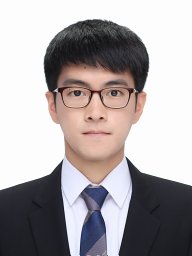
 Youngwook Kim
· 2 previous affiliations
- Kookmin UniversitySince 2024
- Assistant Professor · Since 2024
- Seoul National University2014–2024
- PhD student · 2018–2024
- Postdoc · 2024
- Bachelor's degree, Civil and Environmental Engineering · 2014–2018
2 other authors named Youngwook Kim: Youngwook Kim (Korea Telecom (South Korea) · Yonsei University · 3 papers), Youngwook KIM (1 paper)
Research Overview
Youngwook Kim focuses on the intersection of computer vision and robust machine learning, with a particular emphasis on developing algorithms that remain effective under conditions of imperfect supervision. Kim’s work addresses the technical challenges of weakly supervised multi-label classification (WSML) and the application of deep learning to medical image analysis. By investigating the internal dynamics of neural networks—such as the memorization effect and the scaling of attribution scores—Kim develops methods to mitigate the impact of noisy or partial annotations in complex datasets.
Research Trajectory
Kim’s research trajectory began with a focus on the fundamental behavior of deep neural networks when trained on datasets with incomplete or noisy labels. In 2022, Kim investigated how the Robust Deep Learning through the Memorization Effect could be leveraged in multi-label settings. While the memorization effect—where models prioritize learning clean patterns before fitting noise—was well-documented in multi-class classification, Kim’s work extended this understanding to the more complex multi-label domain. This research established a framework for treating unobserved labels as potential noise, allowing for the development of rejection-based strategies to improve model robustness.
In 2023, Kim’s focus shifted toward the interpretability and explainability of models trained on partial data. This phase of research examined the "explanation gap" that occurs when models are denied full label sets. By analyzing how false negative labels (labels that exist in reality but are missing from the training set) affect a model’s visual attribution, Kim identified that while models might still identify correct regions of interest, the confidence and scaling of these explanations are significantly degraded. This work provided a bridge between the practical constraints of data annotation and the theoretical requirements for reliable model explanations.
More recently, Kim has transitioned toward the domain of medical image analysis, specifically addressing the problem of deformable image registration. This shift represents an evolution from focusing on label noise to addressing task complexity and model generalizability. By moving into the medical domain, Kim’s work contributes to the broader clinical goals of High Sensitivity Diagnostics for Early Stage Disease Intervention and Resolving Clinical Mimicry in Acute and Inflammatory Disease. The current focus involves creating modular, "plug-in" solutions that enhance existing medical imaging architectures without requiring fundamental redesigns, primarily through the use of curriculum learning.
Current Directions
Kim’s current research is centered on improving the generalizability of medical image analysis tools. A primary challenge in this field is that many deep learning solutions are over-fitted to specific datasets or architectures, making them difficult to deploy in diverse clinical environments. Kim is addressing this by developing curriculum-based schedulers that progressively increase the difficulty of the registration task during training. This approach allows models to build a foundational understanding of global spatial relationships before attempting to resolve the fine-grained, non-linear deformations required for high-precision medical tasks.
This work has significant implications for complex surgical and diagnostic procedures. For instance, improved deformable registration is a prerequisite for the successful planning of Vascularized Autologous Tissue for Complex Surgical Reconstruction, where precise alignment of anatomical structures is critical. Furthermore, in scenarios requiring Staged Intervention for Physiological Stabilization and Definitive Repair, robust registration techniques enable clinicians to track physiological changes over time with greater accuracy. Kim’s ongoing work also intersects with the need for specialized diagnostics, such as the Targeted Disruption of the Bacterial Biofilm Matrix, where high-resolution imaging and precise registration are necessary to monitor the efficacy of localized treatments.
Representative Work
In Large Loss Matters in Weakly Supervised Multi-Label Classification, Kim (as first author) explored the Weakly Supervised Multi-Label Classification (WSML) task, where only a subset of labels is provided for each image. The research reframed unobserved labels as noisy negative labels and empirically demonstrated that the memorization effect occurs in multi-label settings. By identifying that models learn clean representations before memorizing noisy labels, Kim proposed a method to reject high-loss samples during training, thereby preventing the model from incorporating incorrect label assumptions. This work provided a critical empirical foundation for training multi-label classifiers on large-scale, partially labeled datasets.
Continuing the investigation into partial annotation, Kim served as the lead author on Bridging the Gap between Model Explanations in Partially Annotated Multi-label Classification. This study addressed the negative impact of false negative labels on model interpretability. Kim observed that models trained with partial labels often produce attribution scores that highlight the correct spatial regions but at a much lower magnitude than models trained on full labels. The paper proposed a method to bridge this gap, ensuring that model explanations remain useful for human practitioners even when the underlying training data is incomplete. This research is particularly relevant for high-stakes domains where understanding the "why" behind a model's prediction is as important as the prediction itself.
In A Plug-In Curriculum Scheduler for Improved Deformable Medical Image Registration, Kim contributed as a second author to the development of a novel curriculum learning framework for medical imaging. Recognizing that many improvements in deformable registration are limited by their specificity to certain architectures, the team proposed a "plug-in" scheduler. This scheduler progressively increases the complexity of the registration task, allowing the model to learn in a more structured and stable manner. This approach demonstrated performance gains across various existing registration methods without requiring changes to their core loss functions or network structures, highlighting a path toward more modular and adaptable medical AI tools.
Profile updated
Loading new papers…
Loading research neighbors…
See something wrong? Report a mistake