

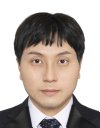
 Youngmin Oh
· 6 previous affiliations
- Samsung (South Korea)Since 2018
- Researcher · Since 2018
- InfiniTreeCurrent
- Current
- 삼성전자2017–2025
- Principal Researcher · 2024–2025
- Senior Researcher · 2017–2024
- Computational Science Research Center2016–2017
- Senior Researcher · 2016–2017
- Beijing Computational Science Research Center2016–2017
- Researcher · 2016–2017
- Doctor of Philosophy - PhD, 수학 (PDE) · 2009–2016
- Bachelor's degree, Mathematics · 2005–2009
2 other authors named Youngmin Oh: Youngmin Oh (Samsung (South Korea) · Yonsei University · 6 papers), Youngmin Oh (Electronics and Telecommunications Research Institute · 1 paper)
Research Overview
Youngmin Oh focuses on machine learning optimization, reinforcement learning theory, and artificial intelligence for electronic design automation. His early work addressed nonlinear partial differential equations and fluid dynamics before transitioning to sample-efficient reinforcement learning and experience replay mechanisms. Currently, he investigates theoretical and applied multi-armed bandit problems alongside automated circuit optimization.
Research Trajectory
Oh’s early research background is rooted in applied mathematics, specifically analyzing the stability and dynamics of physical systems. He directed research on Stability, Instability, and Bifurcation in Electrified Thin Films, exploring the mathematical properties of thin film equations. He also contributed to the study of fluid dynamics in The vanishing surface tension limit for the Hele-Shaw problem, investigating the existence and uniqueness of perturbed solutions near zero surface tension. Building on this foundation in nonlinear systems, he developed a Variational approach to powder-binder separation in Poiseuille and Couette flows, deriving essential conditions to predict the time-evolution of powder separation independent of initial conditions. This early period aligns with the broader research areas of Bifurcation Engineering for Nonlinear System Control and Asymptotic Stability and Global Attractors in Nonlinear Evolution Equations.
Transitioning into machine learning, Oh began focusing on off-policy reinforcement learning, particularly the optimization of experience replay buffers. To address the biases and redundancies inherent in independent transition sampling, he introduced a learning-based sampling method in Learning to Sample with Local and Global Contexts in Experience Replay Buffer. Continuing this trajectory, he proposed Model-augmented Prioritized Experience Replay, which identifies auxiliary features to support temporal difference (TD) errors in calculating priority scores, mitigating the impact of inaccurate Q-value estimations. This body of work significantly advances the research direction of Prioritized Experience Replay for Efficient Reinforcement Learning and contributes to the area of Growing the Planning Horizon for Stable Reinforcement Learning.
Concurrently, Oh applied machine learning optimization techniques to electronic design automation (EDA) while working at InfiniTree. He participated in the development of GRAFT: Graph-Assisted Reinforcement Learning for Automated SSD Firmware Testing, an approach combining graph representation and reinforcement learning to generate efficient test cases while maintaining backward compatibility. Extending deep reinforcement learning to analog circuit design, he developed CRONuS: Circuit Rapid Optimization with Neural Simulator. This method utilizes a neural surrogate simulator to augment datasets and enable stable policy training without the high computational costs of interacting with a real simulator. His work in EDA also includes TraceFormer: S-parameter Prediction Framework for PCB Traces based on Graph Transformer, which leverages graph transformers for predictive modeling in printed circuit boards.
In recent years, Oh’s research has expanded into continual learning and bandit problems. He collaborated on Prevalence of Negative Transfer in Continual Reinforcement Learning: Analyses and a Simple Baseline, which investigates how previous knowledge can hinder new task acquisition and proposes a reset-and-distill baseline to address this issue, contributing to the broader area of Mitigating Negative Transfer in Lifelong Learning. Most recently, his theoretical focus has shifted to complex decision-making under uncertainty. He introduced Robust Linear Dueling Bandits with Post-serving Context under Unknown Delays and Adversarial Corruptions, addressing the challenges of incomplete information, delayed feedback, and adversarial data corruption. He further advanced this domain with Neural Variance-aware Dueling Bandits with Deep Representation and Shallow Exploration, proposing an algorithm that utilizes neural networks to model complex user preferences while significantly reducing computational requirements.
Current Directions
The most recent papers in the evidence indicate a strong theoretical and algorithmic focus on sequential decision-making and continual learning. Recent work investigates contextual dueling bandits, particularly addressing real-world complexities such as delayed feedback, adversarial data corruption, and the need for variance-aware exploration. This involves leveraging deep neural networks to model complex user preferences while optimizing for computational efficiency and theoretical network size constraints. Additionally, ongoing research addresses the challenges of continual reinforcement learning, specifically identifying and mitigating negative transfer when agents acquire new tasks over time.
Profile updated
Loading new papers…
Other researchers whose papers cluster into the same research directions — a proxy for overlapping technical interests and shared intellectual neighborhoods.
See something wrong? Report a mistake