

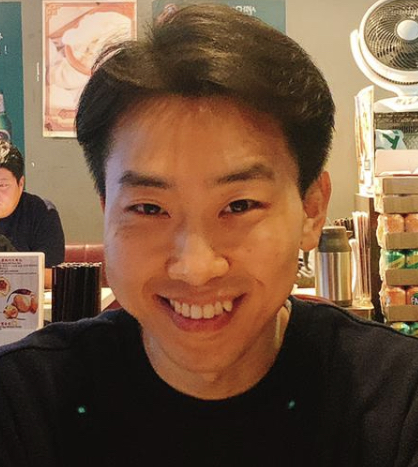
 Youngkyoon Jang
· 11 previous affiliations
- RivianSince 2026
- Staff ML Engineer · Since 2026
- Senior Research Scientist · 2022–2026
- Huawei Technologies (China)2022–2026
- Senior Research Scientist · 2022–2026
- Imperial College London2021–2023
- Visiting Researcher · 2023
- Research Associate · 2021–2022
- disguise2022
- Software Engineer (Research Specialist) · 2022
- University of Bristol2018–2021
- postdoc · 2018–2021
- University of Cambridge2016–2018
- Postdoc · 2016–2018
- Queen Mary University of London2016–2018
- Postdoc · 2016–2018
- Postdoc · 2015–2016
- Doctor of Philosophy (Ph.D.), Augmented Reality, Ubiquitous Virtual Reality, Pattern Recognition, Computer Vision · 2012–2015
- PhD student · 2008–2012
- Sangmyung University2007–2008
- MS student · 2007–2008
Research Overview
Youngkyoon Jang focuses on computer vision and human-computer interaction, with specific emphasis on egocentric vision, facial analysis, and novel view synthesis. His trajectory spans from early work on hand-gesture recognition in virtual reality to the development of single-shot neural architectures for affective computing. Most recently, his research addresses high-fidelity human head view synthesis and the stabilization of perceptual pipelines for human-robot interaction.
Research Trajectory
Youngkyoon Jang’s early research investigated object recognition and user interaction from egocentric viewpoints. In 2014, he and his collaborators explored how camera motion in wearable video could be leveraged to improve object recognition, proposing novel set-of-sets representations to accumulate visual evidence across varying viewpoints and lighting conditions in Video-Based Object Recognition Using Novel Set-of-Sets Representations.
Building on this egocentric perspective, he developed methods for fine-grained hand tracking and interaction. He introduced a probabilistic inference framework for detecting clicking actions and estimating occluded fingertip positions from single-depth image sequences in 3D Finger CAPE: Clicking Action and Position Estimation under Self-Occlusions in Egocentric Viewpoint. This work enabled bare-hand interaction with virtual objects. He subsequently extended these interaction paradigms into virtual reality, designing a natural user interface framework called Meta-Gesture. Detailed in Metaphoric Hand Gestures for Orientation-Aware VR Object Manipulation With an Egocentric Viewpoint, this system allowed users to select and manipulate small virtual objects using gestures modeled after everyday tool use, supported by a stable 3D palm pose estimator.
Around 2017, his focus expanded into facial analysis and affective computing in unconstrained environments. He addressed the computational overhead of traditional face processing pipelines by developing SmileNet: Registration-Free Smiling Face Detection In The Wild. This fully convolutional neural network simultaneously performed face detection and smile recognition without requiring prior face cropping or alignment. He later generalized this single-shot architecture in Registration-free Face-SSD: Single shot analysis of smiles, facial attributes, and affect in the wild, creating a real-time framework capable of handling multiple face-related classification and regression tasks concurrently.
In recent years, his work has addressed the robustness of perceptual systems and the challenges of 3D human digitization. To improve the reliability of computer vision in human-robot interaction, he proposed a Message Passing Framework for Vision Prediction Stability in Human Robot Interaction. This approach mitigated the noise inherent in isolated perceptual channels—such as object detection, human pose estimation, and action recognition—by modeling their contextual interactions to produce more stable predictions of user states.
Concurrently, he has made significant contributions to the field of neural rendering and novel view synthesis for human heads. With collaborators, he introduced ILSH: The Imperial Light-Stage Head Dataset for Human Head View Synthesis, providing high-resolution, light-stage-captured data to advance the development of photorealistic human avatars. Building on this dataset, he led the organization and evaluation of a major academic competition, culminating in VSCHH 2023: A Benchmark for the View Synthesis Challenge of Human Heads, which benchmarked state-of-the-art methods for synthesizing novel camera views from sparse training images.
Current Directions
The most recent papers in the evidence indicate a dual focus on 3D human digitization and robust embodied perception. A primary current direction involves novel view synthesis for human heads, where he develops datasets and benchmarks to evaluate neural rendering techniques and advance the creation of photorealistic avatars. Alongside this work in 3D vision and computer graphics, he investigates methods to stabilize multi-channel visual predictions in human-robot interaction scenarios, ensuring that robotic systems can reliably interpret user states and actions in complex, noisy environments.
Profile updated
Loading new papers…
Other researchers whose papers cluster into the same research directions — a proxy for overlapping technical interests and shared intellectual neighborhoods.
See something wrong? Report a mistake