

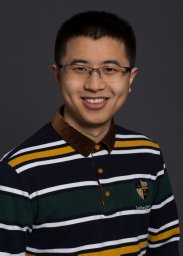
 Youjie Li
· 5 previous affiliations
- ByteDance (China)Since 2023
- Staff+ Research Scientist, Tech Lead · Since 2026
- Staff Research Scientist, Tech Lead · 2025–2026
- Researcher · 2023–2025
- Postdoc · 2023
- Doctor of Philosophy (PhD), ECE · 2016–2022
- Research Intern · 2019
- Texas A&M University2013–2016
- MS student · 2013–2016
Research Overview
Youjie Li focuses on distributed deep learning, communication-efficient training architectures, and system optimization for large-scale models. His trajectory spans early work on gradient compression and decentralized aggregation protocols to hardware-software co-design for reinforcement learning. Most recently, his research addresses the memory and communication bottlenecks of training massive neural networks and graph convolutional networks on commodity hardware.
Research Trajectory
Li’s early research investigated the communication bottlenecks inherent in distributed machine learning, focusing on techniques to reduce the bandwidth required for synchronizing gradients across multiple compute nodes. In 2018, he collaborated on the development of GradiVeQ: Vector Quantization for Bandwidth-Efficient Gradient Aggregation in Distributed CNN Training. This work addressed the limitations of scalar quantization techniques when applied to decentralized aggregation protocols like ring all-reduce. By exploiting linear correlations between convolutional neural network gradients, the GradiVeQ technique compresses gradients effectively, contributing to the broader area of Overcoming the Communication Wall in Distributed Training.
Building on the need for more efficient distributed architectures, Li introduced Pipe-SGD: A Decentralized Pipelined SGD Framework for Distributed Deep Net Training. Moving beyond traditional parameter server architectures, this research analyzed AllReduce-based setups and proposed timing models to improve actual wall-clock training time. This framework advanced several distinct research areas, including Decentralized Architectures for Scalable Distributed Learning and the research direction of Overlapping Communication and Computation in Distributed Deep Learning. Furthermore, the framework provided insights relevant to the area of Balancing Compression Efficiency and Computational Overhead and the broader field of Staleness Mitigation in Asynchronous Federated Learning.
In 2019, Li shifted focus to the distinct workload characteristics of distributed reinforcement learning (RL). Unlike standard deep neural network training, distributed RL generates orders of magnitude more iterations with much smaller, yet highly frequent, gradient aggregations, making the process highly latency-critical. To address this, he presented Accelerating distributed reinforcement learning with in-switch computing., proposing a hardware-software co-design approach that leverages network switches to perform gradient aggregation, thereby significantly reducing the network communication time that otherwise dominates RL training iterations.
As the size of deep neural networks continued to scale, Li’s research evolved to address the hardware constraints of training massive models. His work in 2021 and 2022 focused on democratizing access to large-scale AI by optimizing training on standard hardware. He explored these themes in Doing more with less: training large DNN models on commodity servers for the masses, investigating system-level optimizations to bypass traditional resource limits. He subsequently developed Harmony: Overcoming the hurdles of GPU memory capacity to train massive DNN models on commodity servers, which introduced mechanisms to manage memory and computational resources efficiently when GPU capacity is insufficient for massive model parameters.
Concurrently, Li collaborated on scaling the training of Graph Convolutional Networks (GCNs), which present unique distributed training challenges due to the need to partition large graph structures across multiple accelerators. He participated in the design of BNS-GCN: Efficient Full-Graph Training of Graph Convolutional Networks with Partition-Parallelism and Random Boundary Node Sampling, which utilized partition-parallelism to manage full-graph training. To further mitigate the prohibitive overhead of communicating node features and gradients among partitions, he co-developed PipeGCN: Efficient Full-Graph Training of Graph Convolutional Networks with Pipelined Feature Communication. By pipelining inter-partition communication with intra-partition computation, PipeGCN effectively hides communication latency, advancing the research direction of Communication Efficient Distributed Training for Large Scale Graphs.
Current Directions
The most recent papers in the evidence address the scalability limits of training massive machine learning models across diverse architectures. A primary focus is on overcoming GPU memory capacity constraints to enable the training of massive deep neural networks on standard commodity servers, thereby reducing the reliance on specialized, high-end accelerator clusters. Concurrently, recent work investigates the distributed training of large-scale Graph Convolutional Networks (GCNs). This involves developing algorithmic and system-level techniques—such as partition-parallelism, boundary node sampling, and pipelined feature communication—to mitigate the prohibitive overhead of inter-node communication during full-graph training.
Profile updated
Loading new papers…
Other researchers whose papers cluster into the same research directions — a proxy for overlapping technical interests and shared intellectual neighborhoods.
See something wrong? Report a mistake