

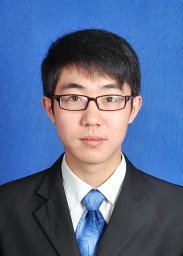
 Yongyong Chen
· 3 previous affiliations
- Harbin Institute of TechnologySince 2024
- Full Professor · Since 2026
- Associate Professor · 2024–2025
- Jiangsu Ocean University2020–2023
- Assistant Professor · 2020–2023
- University of Macau2017–2020
- PhD student · 2017–2020
Research Overview
Yongyong Chen focuses on machine learning and computer vision, with specific applications in computational imaging, medical imaging, and multi-modal learning. His research trajectory spans from foundational optimization theory for low-rank tensor approximation to the development of deep unfolding networks for complex inverse problems. Currently, his work addresses zero-shot image restoration, dynamic MRI reconstruction, and robust multi-view clustering in the presence of incomplete data.
Research Trajectory
Yongyong Chen’s early research concentrated on advancing low-rank matrix and tensor approximations for image processing and denoising. In 2017, he introduced Denoising of Hyperspectral Images Using Nonconvex Low Rank Matrix Approximation, establishing a foundation for handling high-dimensional visual data. Recognizing that standard matrix factorization often fails to capture local spatial and spectral structures, he subsequently developed Tensor Nuclear Norm-Based Low-Rank Approximation With Total Variation Regularization. This model unified the global low-rank prior of tensor data with total variation regularization to preserve spatial-spectral continuity in multispectral images. Extending these mathematical frameworks to color image processing, he proposed Low-Rank Quaternion Approximation for Color Image Processing in 2020. By encoding color pixels as pure quaternions rather than independent scalars, this approach fully leveraged the high correlation among RGB channels. During this period, he also applied tensor learning to clustering problems, as seen in Multi-view subspace clustering via simultaneously learning the representation tensor and affinity matrix.
Between 2021 and 2023, his focus expanded into refining tensor ranks and addressing estimation biases in multi-view learning. A central challenge in low-rank tensor representation is that convex approximations often provide biased estimations of the tensor rank function. To overcome this, he developed Partial Tubal Nuclear Norm Regularized Multi-view Learning and Generalized Nonconvex Low-Rank Tensor Approximation for Multi-View Subspace Clustering, capturing high-order correlations across multiple views more accurately. This work contributed significantly to the broader research direction of Managing Hyperparameter Sensitivity in Multi-View Clustering. He further explored the area of Tighter Nonconvex Surrogates for Low Rank and Sparse Recovery and the direction of Logarithmic Rank Surrogates for Low-Rank Recovery, evidenced by his research on Weighted Schatten p-norm minimization with logarithmic constraint for subspace clustering. In 2023, he continued to refine these optimization techniques with Asymmetry total variation and framelet regularized nonconvex low-rank tensor completion.
By 2024, Chen’s trajectory demonstrated a significant integration of deep learning architectures, compressive sensing, and state-space models. Advancing the research direction of Snapshot Compressive Hyperspectral Image Reconstruction, his team developed DiffSCI: Zero-Shot Snapshot Compressive Imaging via Iterative Spectral Diffusion Model. This framework successfully adapted pre-trained RGB diffusion models to reconstruct high-quality multispectral images from single compressed 2D measurements without requiring MSI-specific training. He also explored related compressive imaging techniques in Dual Prior Unfolding for Snapshot Compressive Imaging.
A major theme of his recent work is the area of Deep Unfolding Networks for Inverse Problems, where traditional optimization algorithms are unrolled into neural network layers. This is exemplified by LLEMamba: Low-Light Enhancement via Relighting-Guided Mamba with Deep Unfolding Network, which combined the mathematical interpretability of Retinex theory with the linear computational complexity of Mamba state-space models. He also addressed blocking artifacts in high-resolution imaging with Block Image Compressive Sensing with Local and Global Information Interaction, introducing a dual-branch network that utilizes CNNs for local detail and Transformers for global communication. Beyond imaging, he applied optimal transport to data efficiency, proposing Feature Distribution Matching by Optimal Transport for Effective and Robust Coreset Selection to ensure small data subsets perfectly mirror the feature distribution of massive datasets.
In 2025 and 2026, his research has increasingly tackled dynamic medical imaging and the robustness of multi-view learning systems in noisy or incomplete environments. Contributing to the area of Automated Regularization Tuning for Inverse Problems, he developed Smooth Tensor Qatar Riyal Decomposition for Dynamic MRI Reconstruction. This method utilizes a computationally efficient tensor decomposition to reconstruct high-quality medical videos from highly undersampled data, preserving structural integrity better than traditional matrix-based approaches. His team also addressed missing data modalities in Global Graph Propagation with Hierarchical Information Transfer for Incomplete Contrastive Multi-view Clustering. Furthermore, he participated in collaborative efforts to improve anomaly detection and clustering boundaries, contributing to Reliable Neighborhood-Aware Multi-View Outlier Detection—which uses dynamic reliability scores to prevent outlier propagation—and Dual-stage Contrastive Learning-enhanced Multi-view Variational Clustering, which integrates contrastive learning into Variational Autoencoders to handle scale discrepancies and clarify fuzzy cluster boundaries. In computational imaging, Chen also contributed to Dem2TA: Beyond Pixels, Towards Perception, a framework that integrates fidelity-supervised demosaicing into task-oriented image signal processor adaptation to optimize downstream machine perception.
Current Directions
The most recent papers in the evidence indicate a strong focus on integrating rigorous mathematical priors with modern deep learning architectures to solve complex inverse problems and multi-view learning challenges. Recent work investigates dynamic MRI reconstruction, utilizing efficient tensor decompositions to preserve structural integrity and sharp local edges in highly undersampled medical videos. Additionally, his research addresses the robustness of multi-view learning systems, focusing on incomplete data scenarios, outlier detection, and the use of contrastive learning to clarify cluster boundaries and manage scale discrepancies across different data sources. A continuing theme is the development of deep unfolding networks that maintain the interpretability of traditional optimization while achieving the computational efficiency of state-space models and diffusion priors for zero-shot image restoration.
Profile updated
Loading new papers…
Other researchers whose papers cluster into the same research directions — a proxy for overlapping technical interests and shared intellectual neighborhoods.
See something wrong? Report a mistake